
Tag

Engine, Trans, F/I & Tuning

Browsing

Community Member Credit: iansw

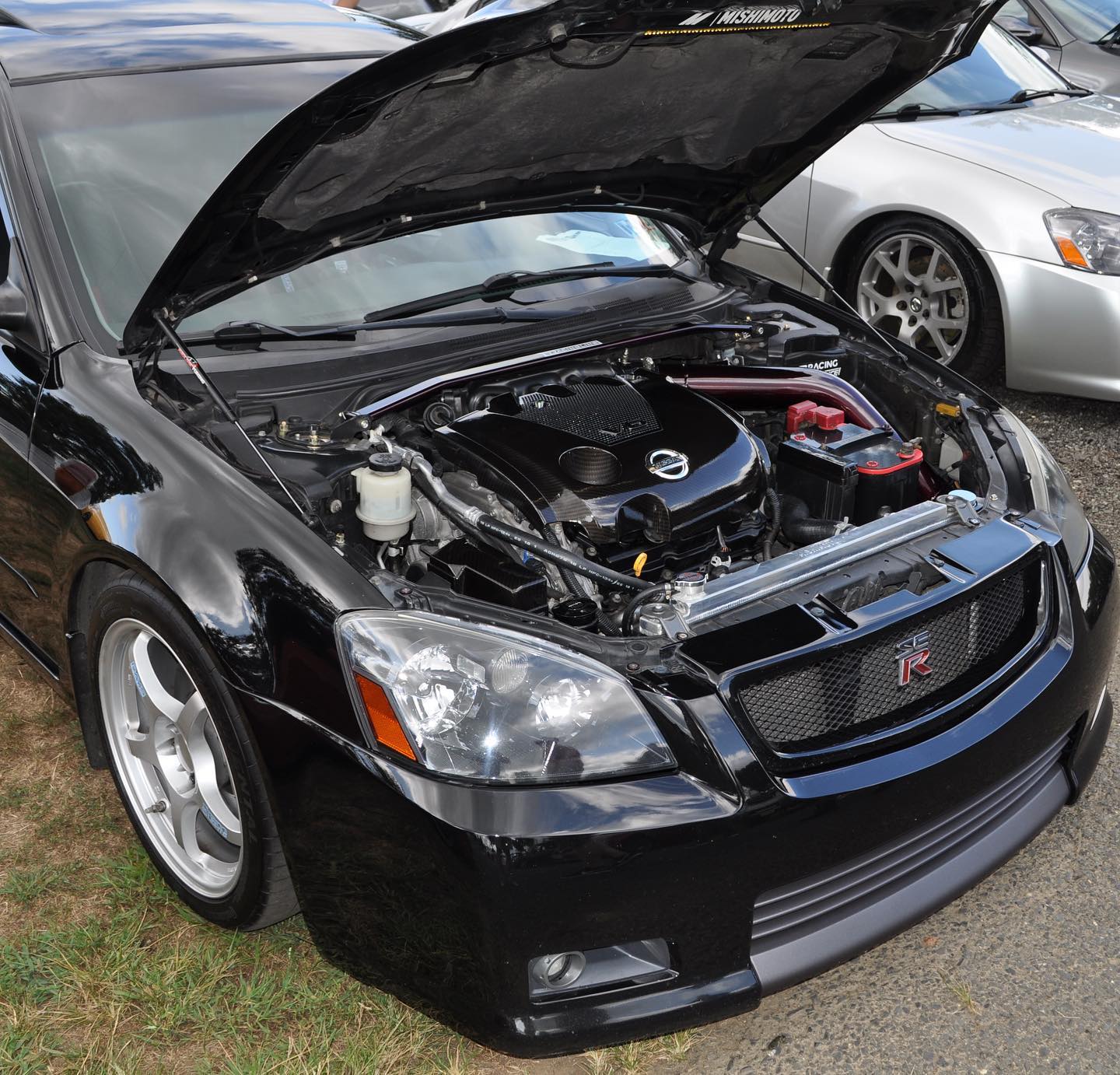
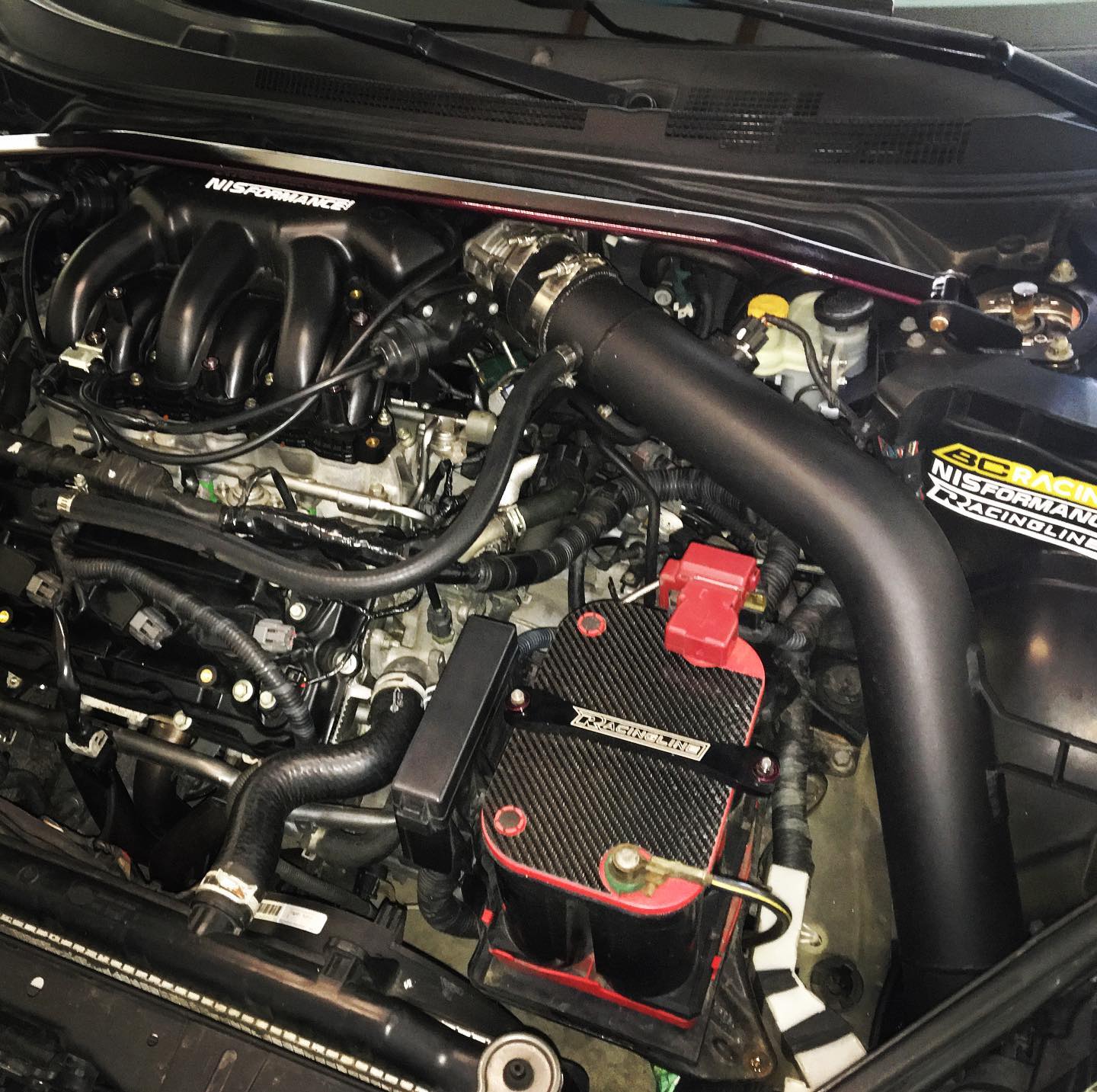
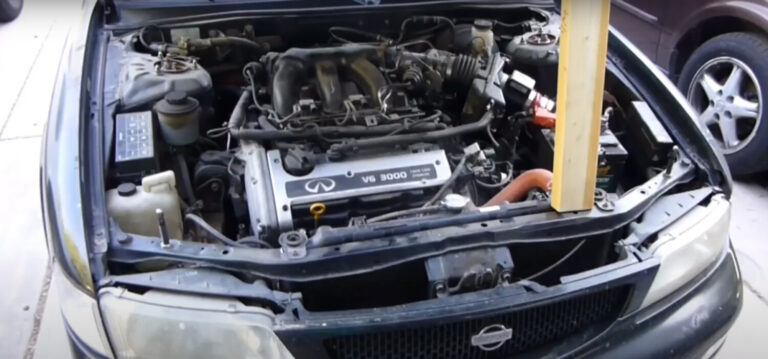
So I’ve been asked to do a write-up on how to make the Z32 MAF setup work with the JWT ECU + 370cc Injectors while Supercharged on the charged side.

Symptoms:

With the Z32 MAF on the charged side and stock Stillen piping the car idles horribly, bucks hard when cold, and is generally not drivable.

Solution:

The Stock Stillen piping doesn’t work well with this setup. After spending a year trying to figure out if it was compressor surge, vacuum leak, etc, etc it turned out the reason (And solution) is quite simple.

I needed 3″ Piping.

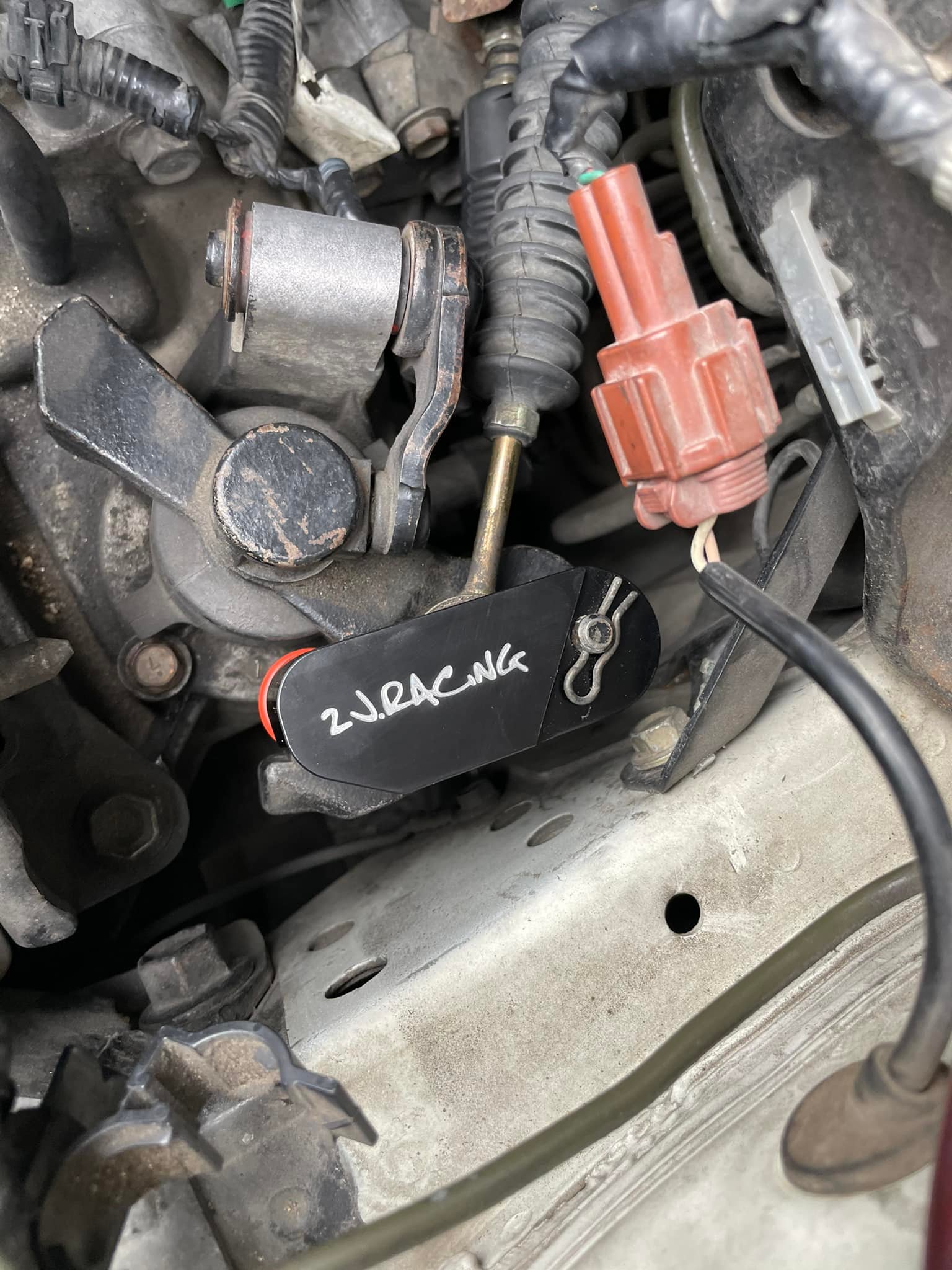
The reason is not compressor surge or any performance boost with 3″ piping. The reason is simply that with the flange on the stock Stillen piping facing the way it faces, it causes the MAF harness to face up or down.

It must face towards the battery – like this:

As soon as I had the 3″ piping in originally (With the harness facing up) – it still idled and ran horribly especially when cold.

Turned the MAF 90 degrees – and problem solved.

Loading

Community Member Credit: murphys_law

I recently acquired a set of VHR injectors as shown below. Information seems to indicate that they flow approximately 385cc at 51psi, which translates to ~355cc at 43.5psi(3 bar.)

In my testing, these work extremely well in the bolt-on DE and have just enough fuel to handle the typical NA modified VQ. The duty cycle for a bolt-on car peaks right around 70%, so that should keep them in a good safe range for just about any VQ or HR that is naturally aspirated(this car makes about 260whp in a mustang dyno.)

I failed to mention it, but they are obviously plug-n-play for the Vq35(besides tuning of course).

Next to a GTR injector.

Same 12 hole spray pattern, albeit with smaller holes(less flow.)

Loading

Community Member Credit: Schmellyfart

This an overview of the main items and modifications required to install a 2007+ Altima and 2009+ Maxima VQ35DE engine into a vehicle using a VQ30DE(K) Engine Control Unit (ECU).

Blue highlighted items need to be fabricated. Some items are produced by me (or in the design process) to make this swap easier.
Red highlighted items are new gaskets that are highly suggested to replace. I usually source my OEM gaskets from nissanpartsdeal.com.

This is intended only as reference material. Refer to the Factory Service Manual (FSM) for Removal and Installation procedures as well as torque specifications. I am not responsible for any damages blah blah.

  2007+ Altima 2009+ Maxima
Upper Intake Manifold Smaller Ports Larger Ports
Throttle Body 70mm 75mm

*Maxima and Altima Upper Intake Manifolds are interchangeable*

Timing Components

  • To use the newer engine with the older ECU, all timing components and sensors will need to be replaced with that of a VQ30.
  • Cam adapters will be needed for this specific engine. –Currently available from schmellyfart@gmail.com. ‘StephenMax’ type Cam Adapters will NOT work.
  • VQ30 Outer Timing Cover and Access Plates
  • VQ30 Inner Timing Cover
  • VQ30 Water Pump 21010-31U85
  • VQ30 Timing Chains
  • VQ30 Timing Gears
                • 1 Crank Sprocket
                • 2 Exhaust Cam Sprockets
                • 4 Intake Cam Sprockets
  • VQ30 Intake Cam Bolts – to be used on VQ35 Exhaust Cams
                • (VQ35 Exhaust Cam bolts to be used on VQ35 Intake Cams)
                • Torque Cam bolts to VQ35 spec.
  • Water Pump O-Rings
                • Seal- O Ring 21049-ZL80B
                • Seal- O Ring 21049-ZL80C
  • Block to Timing Cover O Rings
                • Seal- O Ring 15066-ZL80B
                • Seal- O Ring 15066-ZL80D
  • Front Crank Seal
                • Inspect VQ35 Seal – Sometimes this seal is new enough where is can be reused and inserted into VQ30 Outer Timing Cover.
                • Seal-Oil, Crankshaft Front 13510-31U10
  • VQ30 Timing Chain Guides
  • Main Timing Chain Tensioner
                • Either VQ30 or VQ35 Main Timing Chain Tensioner & Guide may be used, but they must not be mixed together. For example:
                • VQ30 Main Timing Chain Tensioner & VQ30 Main Timing Chain Guide
                • VQ35 Main Timing Chain Tensioner & VQ35 Main Timing Chain Guide
  • VQ35 Secondary Timing Chain Tensioners
                • These may need replacing depending on age of the engine because the VQ35 Timing Chain creates different grooves in the tension than the VQ30 Timing Chain that will be installed. Use only VQ35 Secondary Timing Chain Tensioners.
Oil Pans – A few options:

  • VQ30 upper oil pan, lower oil pan, and oil pick up tube.
  • VQ30 upper oil pan, VQ35 lower oil pan, VQ35 oil pick up tube.
                • VQ35 lower oil pan is deeper and narrower than VQ30 lower oil pan.
                • Pro: reduced chance of oil starvation on hard cornering
                • Con: Reduced ground clearance
  • Use dipstick that matches your lower oil pan!

Water Pipes

  • VQ30 Water Outlet Pipe (transmission side of engine)- VQ30 uses two coolant sensors, VQ35 uses one.
  • 2x Water Outlet Pipe Gaskets -11062-31U00
  • Water Inlet Pipe (Near Front Valve Cover)
                  • The HR head on these VQ35 has an extra port at the Water Inlet Connector for the Oil cooler. I personally found the Oil Cooler to interfere with Crank Sensor, so I removed mine – YMMV. If removing the oil cooler, this hole will need to be plugged via tap and hole plug, or Water Inlet block off plate – (Pending field test) . (Oil Cooler removal will also require VQ30 Oil filter stud 11024-4P10A and Water Jacket Blind Plug 11051-60U2A). Once blocked off, VQ30 or VQ35 Water Inlet Connector can be used.
  • Gasket-Water Inlet 13050-31U05
  • Thermostat
                  • If VQ35 Thermostat is used, approx. 2” of the lower radiator hose will need to be cut off of Thermostat end to fit. (2002-2003 Maxima Lower radiator hose MIGHT work without trimming – not yet verified)
    • VQ30 Thermostat will bolt up without issue.
  • Thermostat Gasket: Gasket-Water Inlet 13050-31U00

Injector Clips

  • 1995-1999 Maxima needs VQ35 Injector clips soldered/crimped and sealed to the engine harness
  • 2000-2001 Maxima Injector clips require no modification.

Fuel Rail

  • VQ35 has a returnless fuel rail.
                • Convert to returnless fuel system using guides on Maxima.org (Easier)
                • Modify VQ30DE-K Fuel Rail to fit VQ35 and retain return fuel system (Harder)

Throttle Body

  • The original Throttle Body (TB) is driven electronically, the VQ30 ECU requires a cable driven TB. Due to confined space around Throttle Flange, options are limited. A custom throttle body adapter or modified throttle body is necessary (Finalizing Design).
                • 70mm 2001 Pathfinder TB w/ adapter. This TB is ideal due to OEM quality, TPS bolts up, and its Idle Air Control Valve (IACV) works very well with the VQ30 ECU. Minor wire harness modification required for IACV.
                • Heavily modified Mustang (Foxbody or SN95) TB
                • Heavily modified Q45 TB
                • Heavily modified VQ35 TB converted from electronic to cable.

Exhaust Studs

  • Cylinder 5 and 6 exhaust studs must be removed and installed in opposite holes in order to reuse older VQ30 headers or exhaust manifolds.

Valve Covers

  • VQ30 valve covers fit, but are also heavier. I would only recommend using the front VQ30 valve cover and spark plug cover if you want to keep it stealthy. Some Coil pack shenanigans may be required. Rear VQ30 valve cover is not recommended as the Upper Intake Manifold (UIM) does not clear the coil packs.

Emissions

  • Optional depending on personal preference. All emissions systems can be retained with the exception of EGR. Take good notes and mark the inlet/outlet of every emissions part, all can be reconnected to VQ35 UIM. Simplified Vacuum Hose routing diagram coming soon.

VIAS

  • Mine are currently installed but not controlled. Currently awaiting testing to verify optimal setup with VQ30 ECU.

Loading

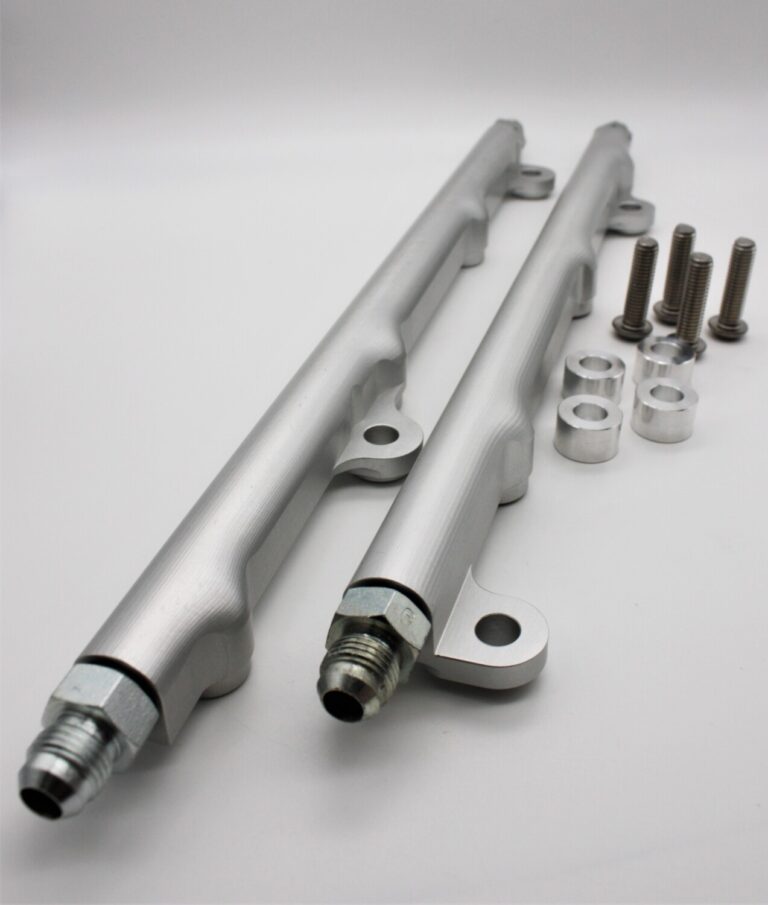
Our 350z Fuel Rails are machined from billet T6061 Aluminum stock. The rail has a larger bore diameter than stock, allowing fuel flow to increase 350% more over stock (as seen above). The rail comes clear anodized to help protect against the elements. The rail is tapped to accept dash 6 fittings. Our rails are unique in the fact that you can either use your stock injectors or use taller aftermarket bosch style injectors to upgrade your fuel system. The rail comes with four dash 6 O-ring to dash 6 AN fittings, aluminum spacers to allow use with either style injectors, and stainless button head hardware.

Important Note: These fuel rails fit the 2002-2008 VQ35DE Nissan Maxima. Additionally, 350z injectors fit on Maxima rail with no issue. A 350z rail is not needed if just changing the injectors.

Price: $175.00

Loading

Community Member Credit: Maximeltman

Notes:

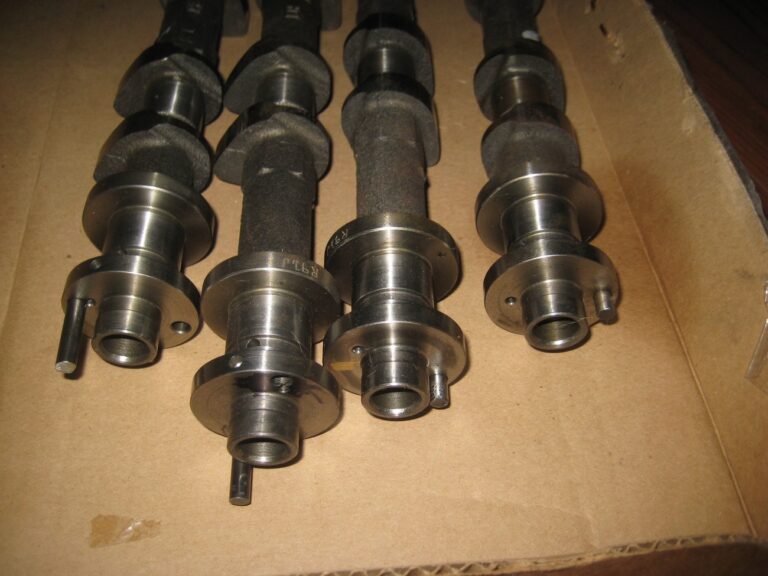
  • Includes the vq35 secondary gears & chains, and vq30 primaries, and crankshaft gear misc vq35 lifters. These are what my engine came with and it does work this way. You don’t need cam spacers.
  • These came from an engine that I bought a few years ago, and it was prepped (or so I was told by the person who sold it to me) by Tilly, and the way he did it required the 3.5 secondary gears, so it’s just the standard degree for the 3.5 swaps.

Loading

Community Member Credit: Jungmin Jungmin

Since the radiator coolant conducts electricity, the stray voltage will travel through it to find a ground. To prevent this from happening make sure the engine and frame are correctly grounded.

Install:

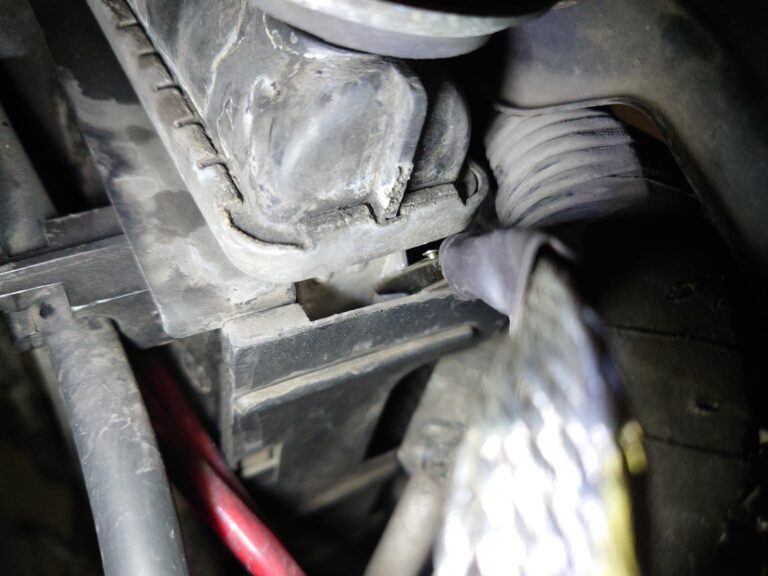
  • I used 460mm (18.11in) flat braided wire with one end ring terminal just like regular ground wire and the other end alligator clip.
  • Alligator clip clamps to the radiator while ring terminal bolts onto the chassis ground point.

Readings:

I got better scan data on the effectiveness of the radiator ground. The car tested is SM525V so basically applicable to all A32 variants. *The car has 2 point custom ground, and the comparison is between additional radiator ground.

Radiator fan operating time reduced. Probably means the cooling effect has improved since coolant temperature is the same.

This is before the radiator ground. Highlighted data is injector operation. The 2 data points at the bottom are AFR alpha and AFR alpha (rear bank).
Before radiator ground: Injector operation 2.9ish ms, AFR alpha 104% and 102%

This is the data after radiator ground: Injector operation 2.8~2.7ish mS, AFR alpha 101% and 99%.

This is data from the same car with radiator ground.

Loading