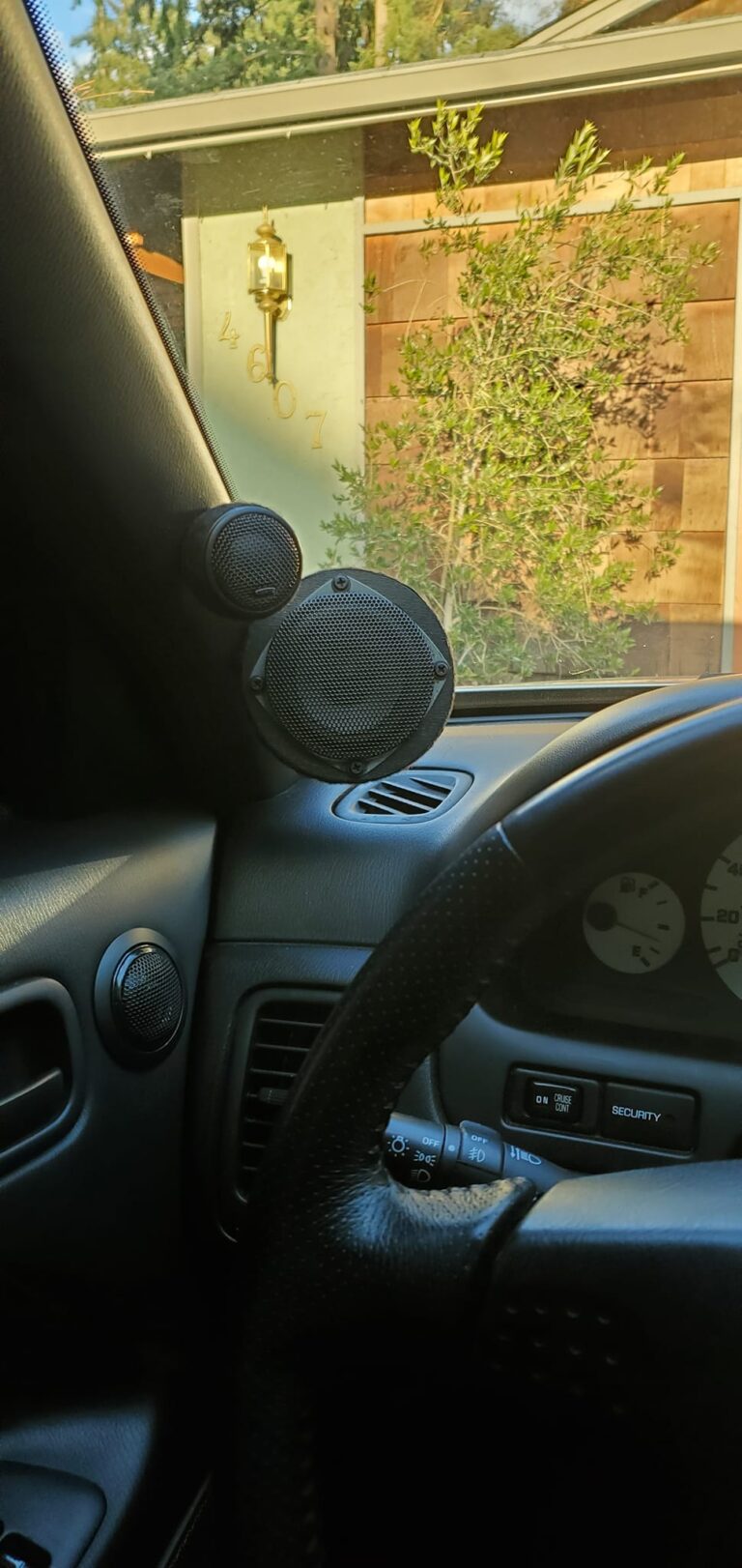
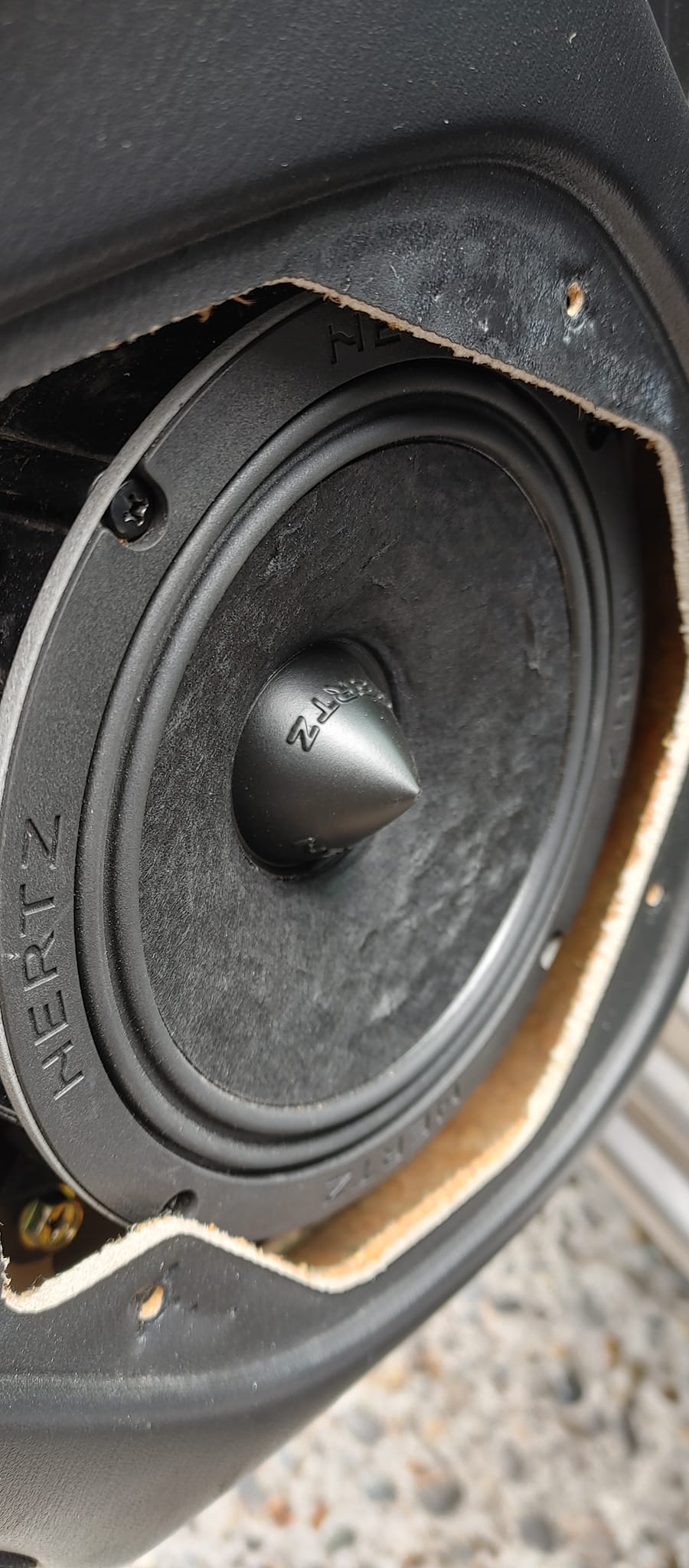
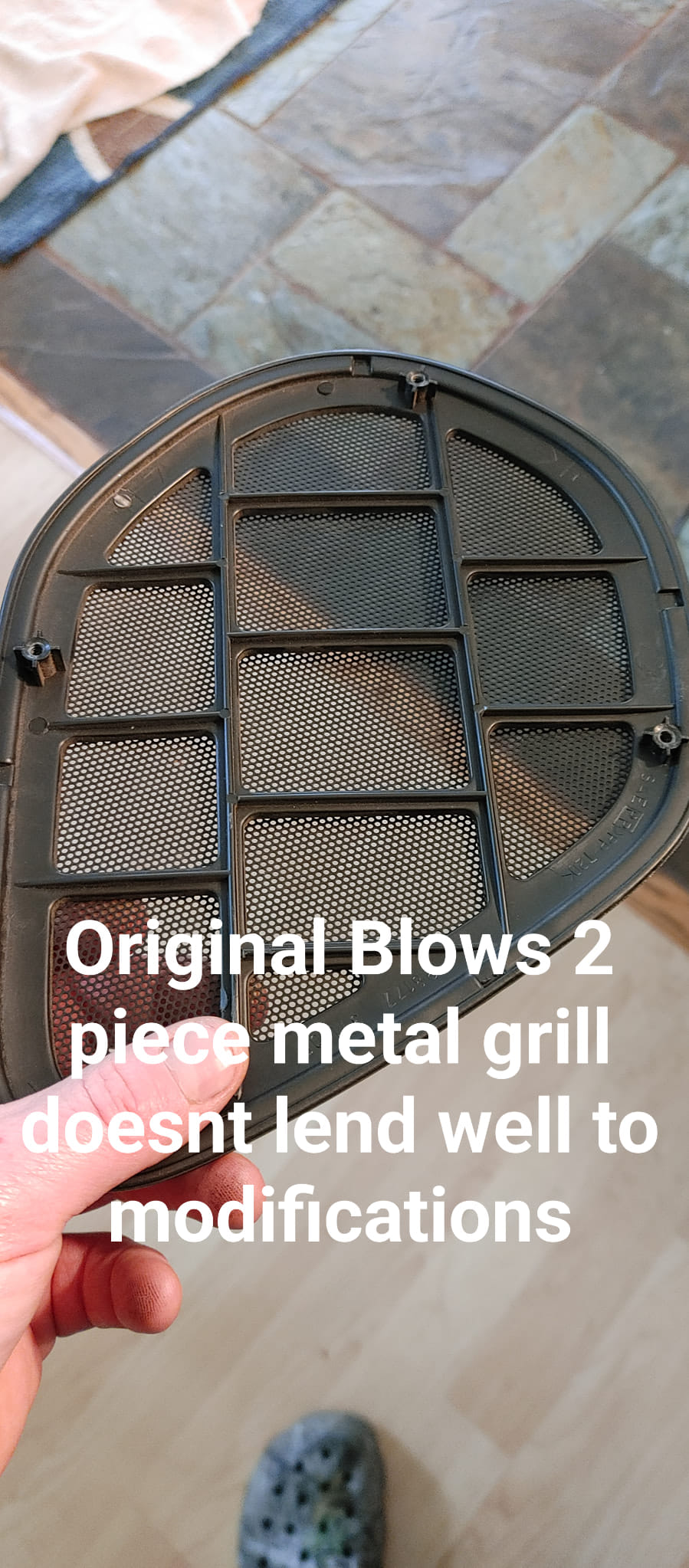
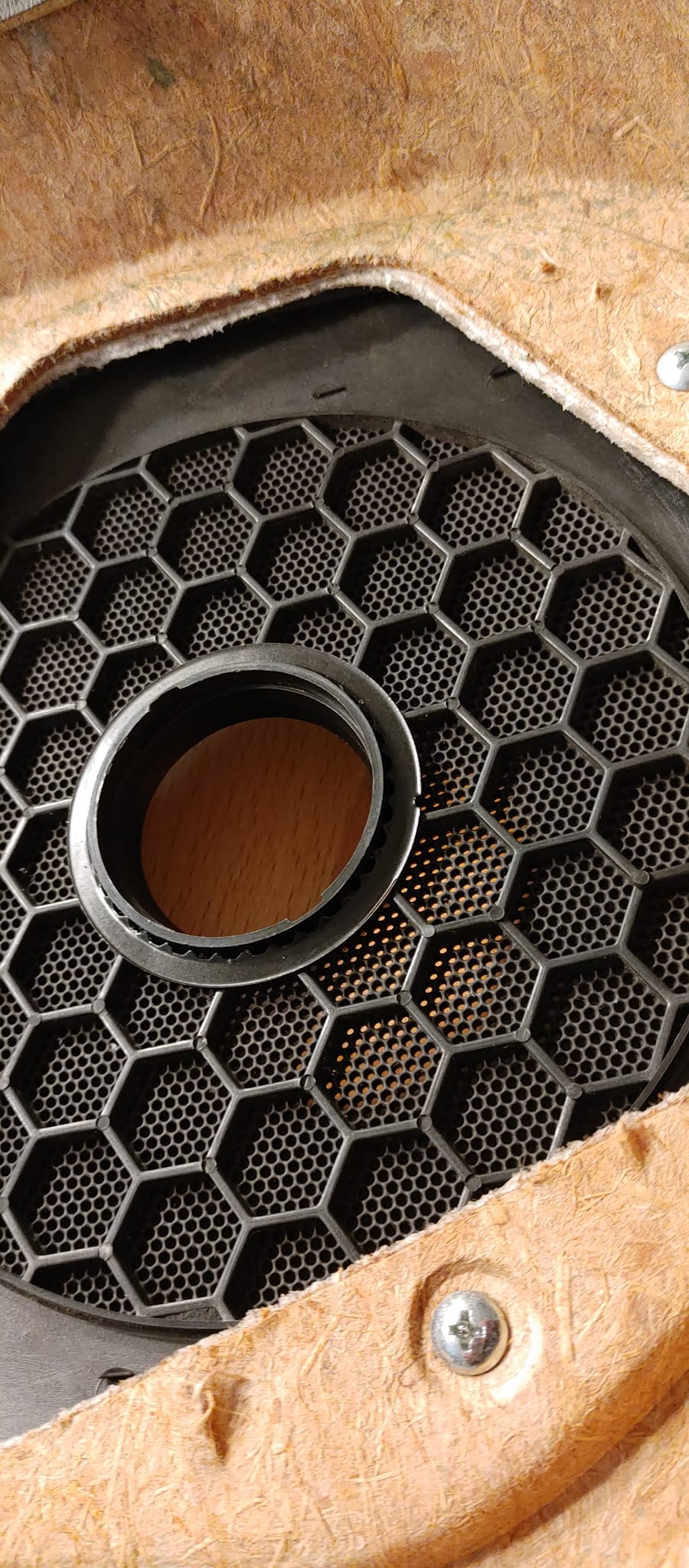
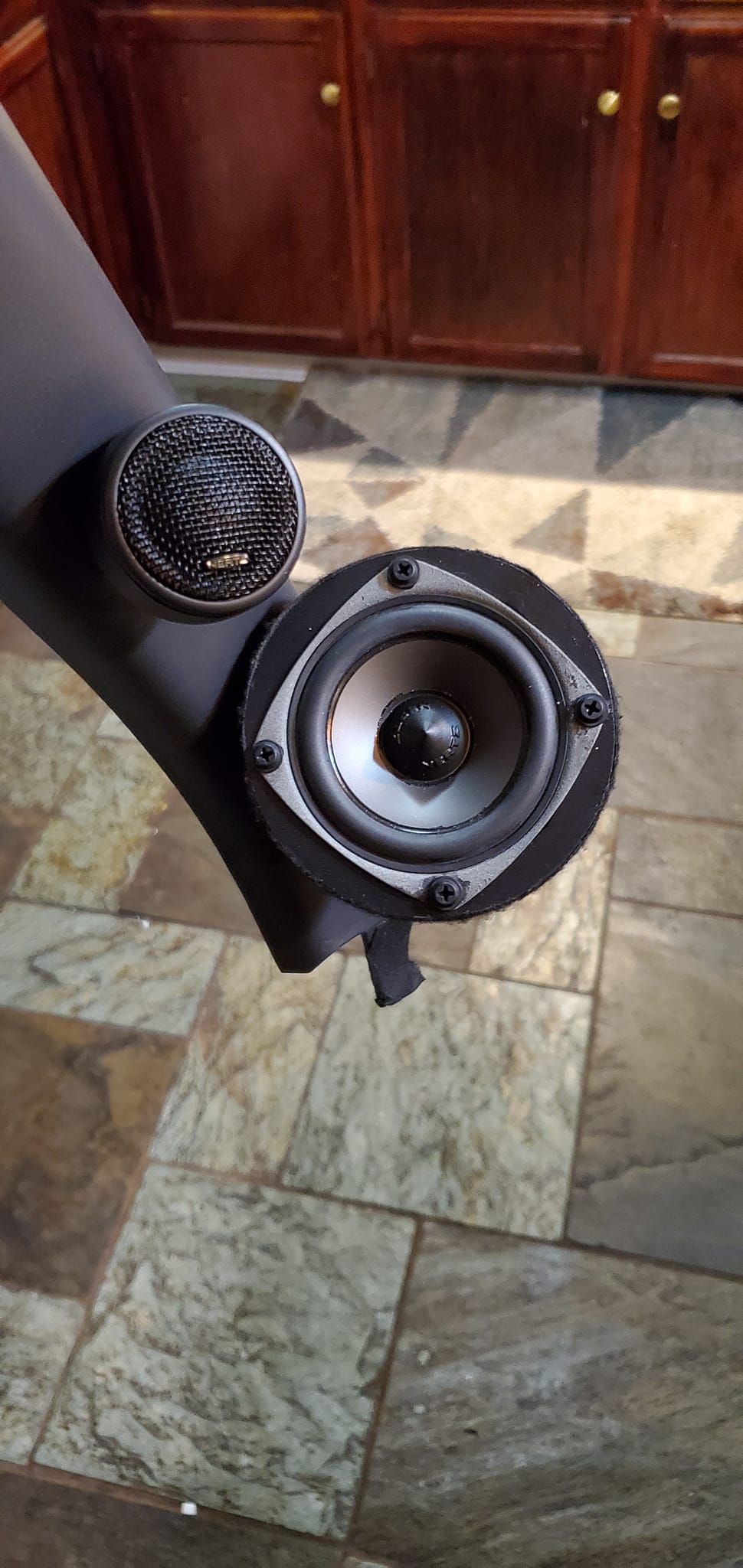
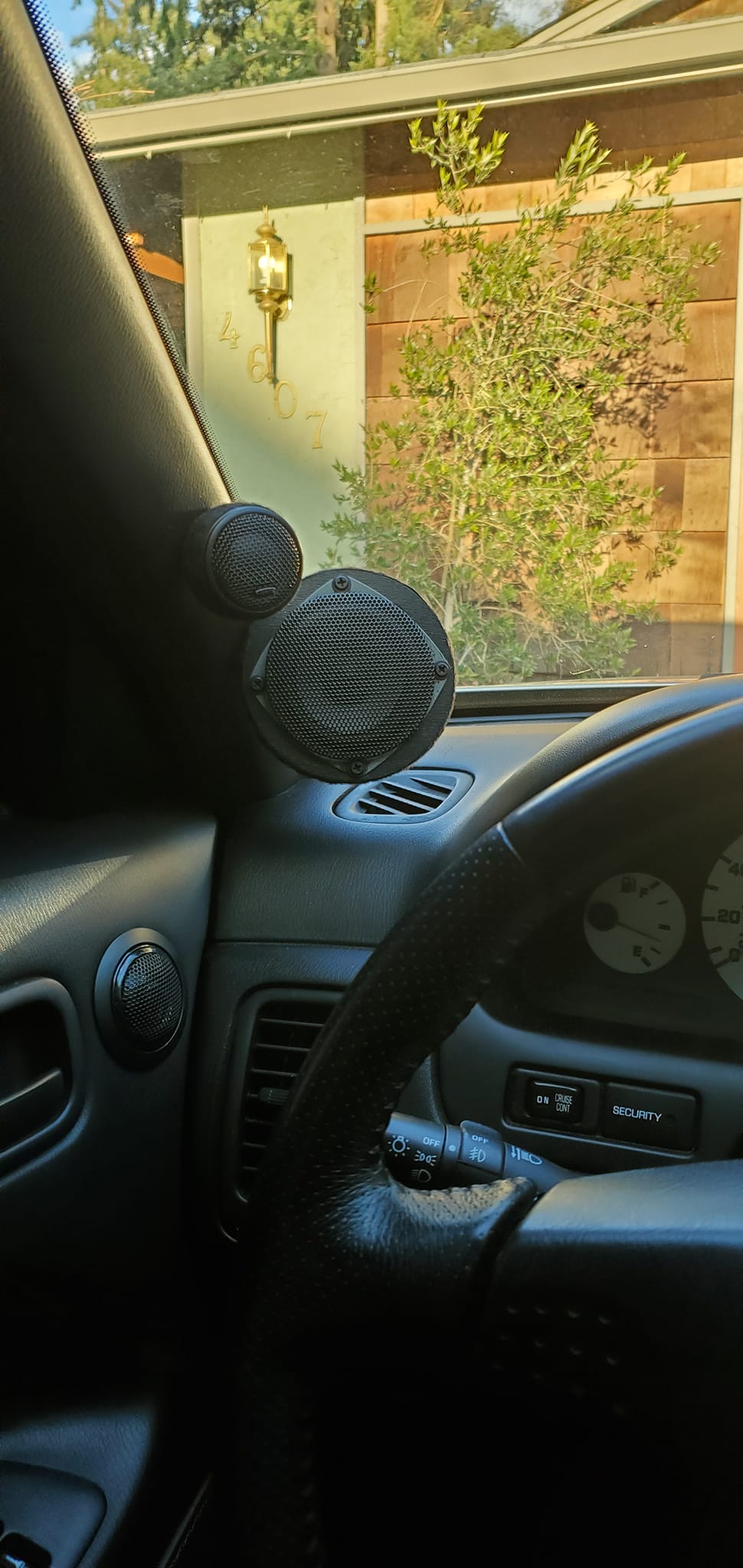
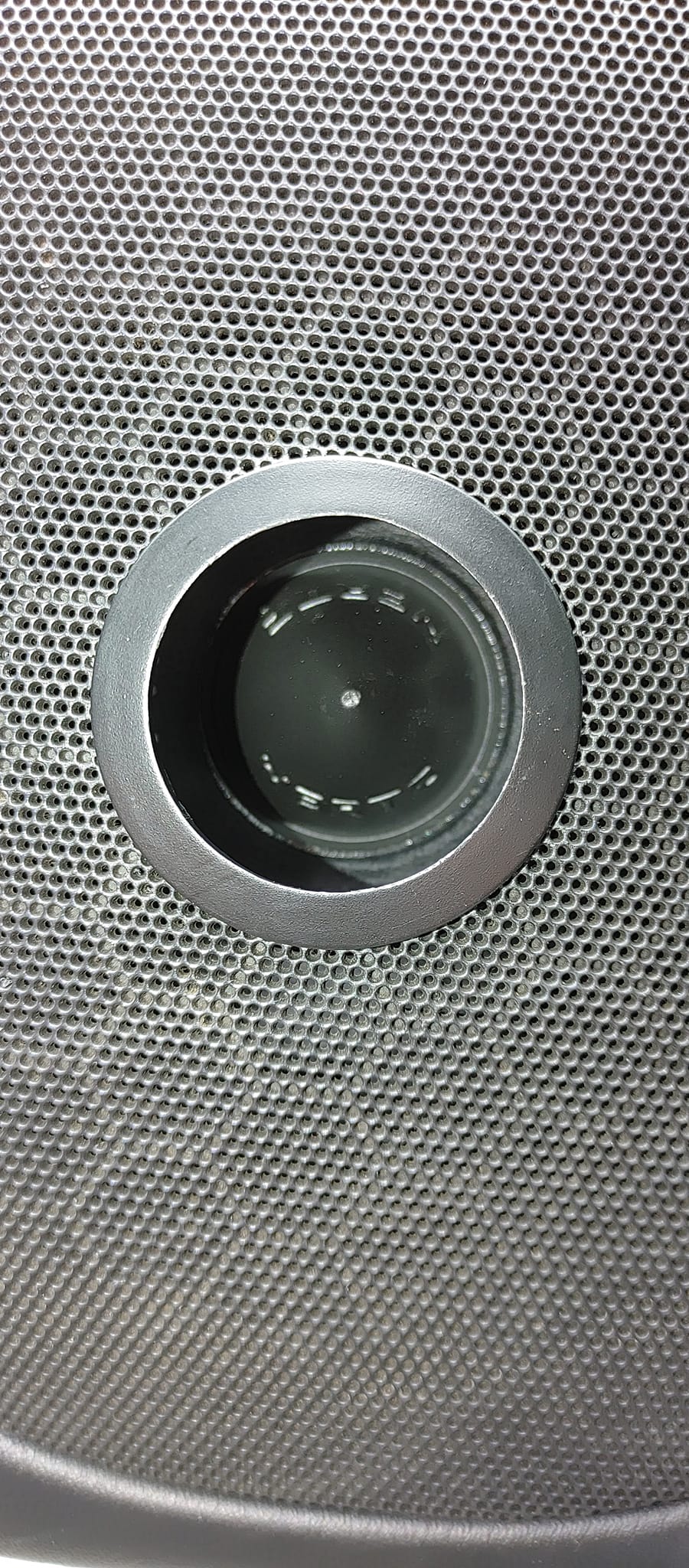
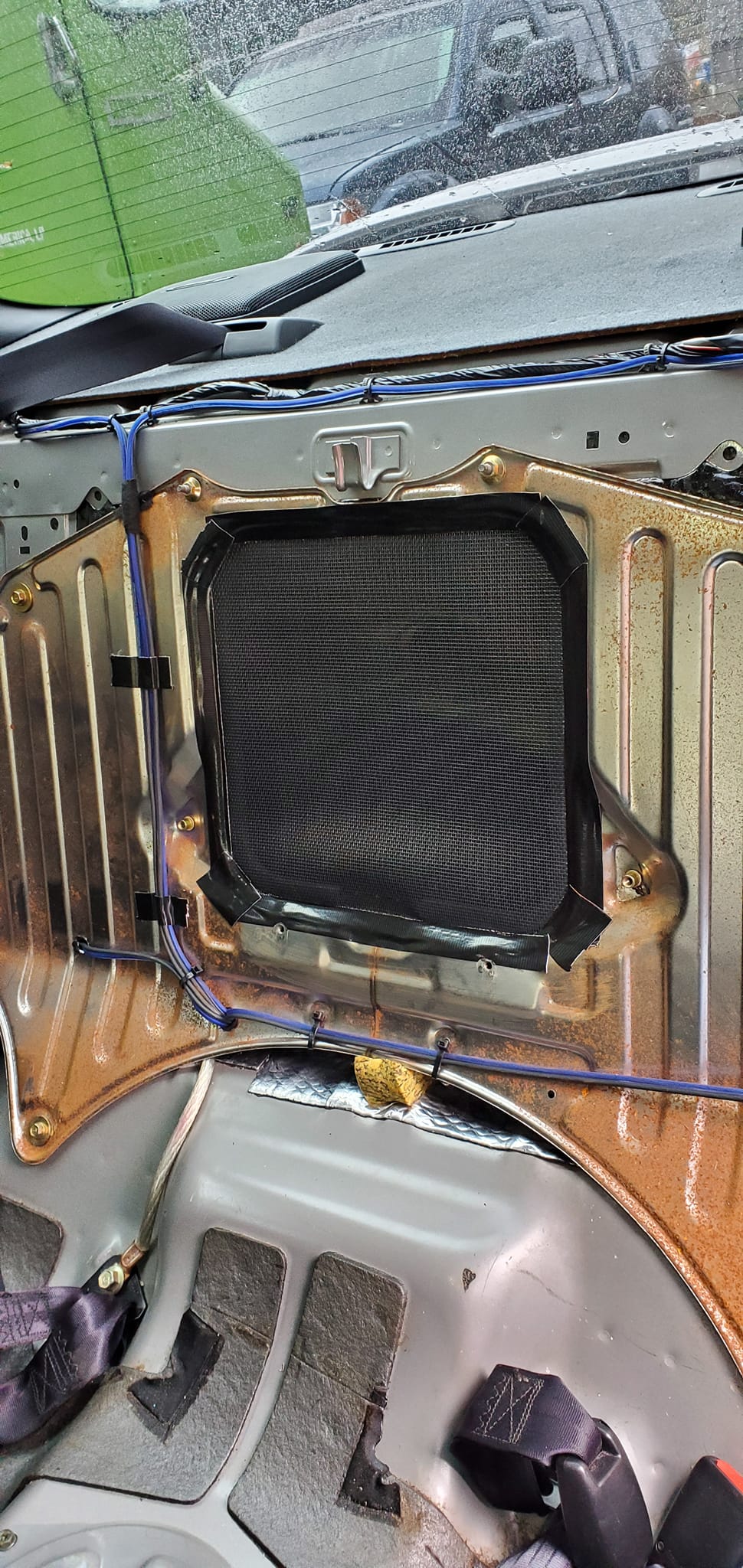
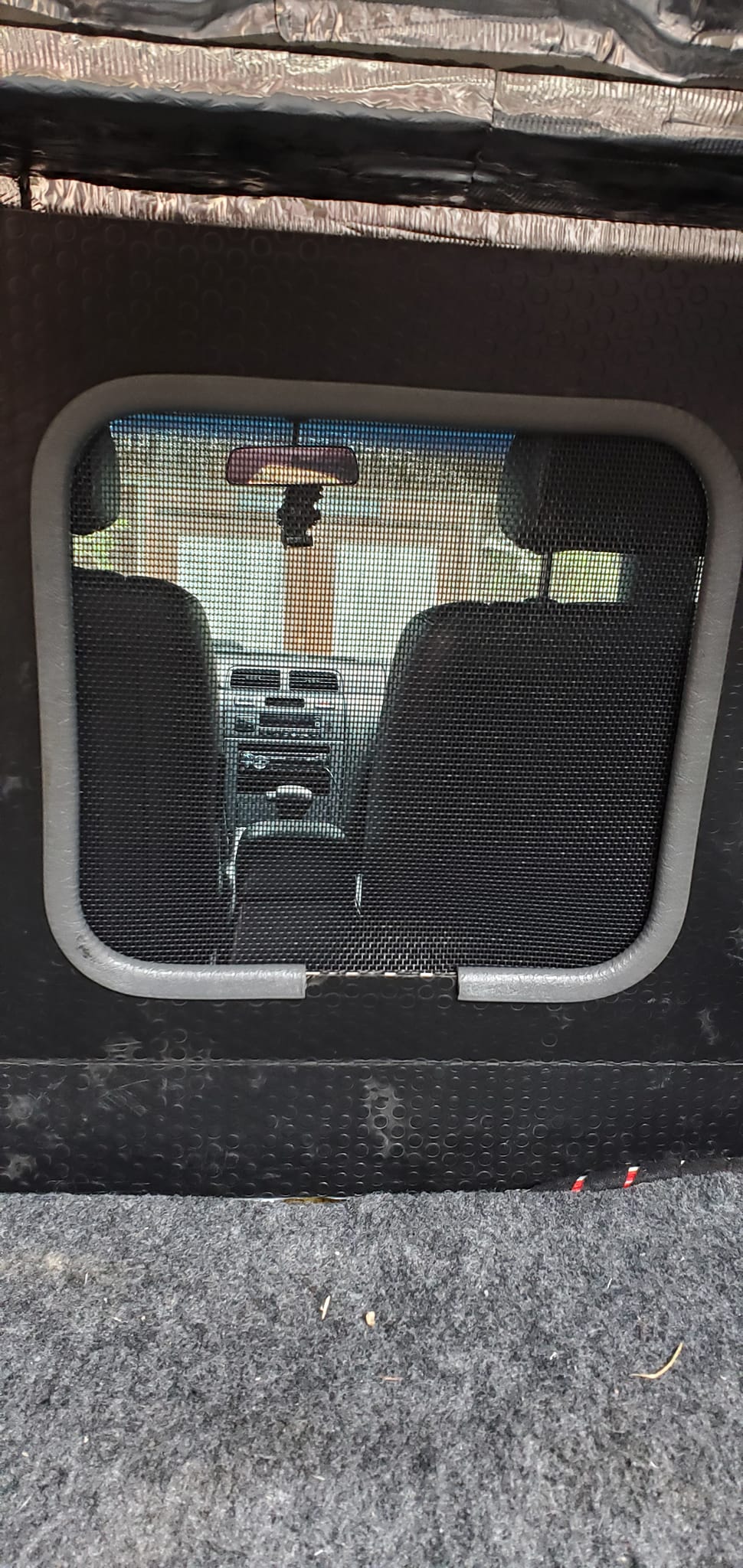
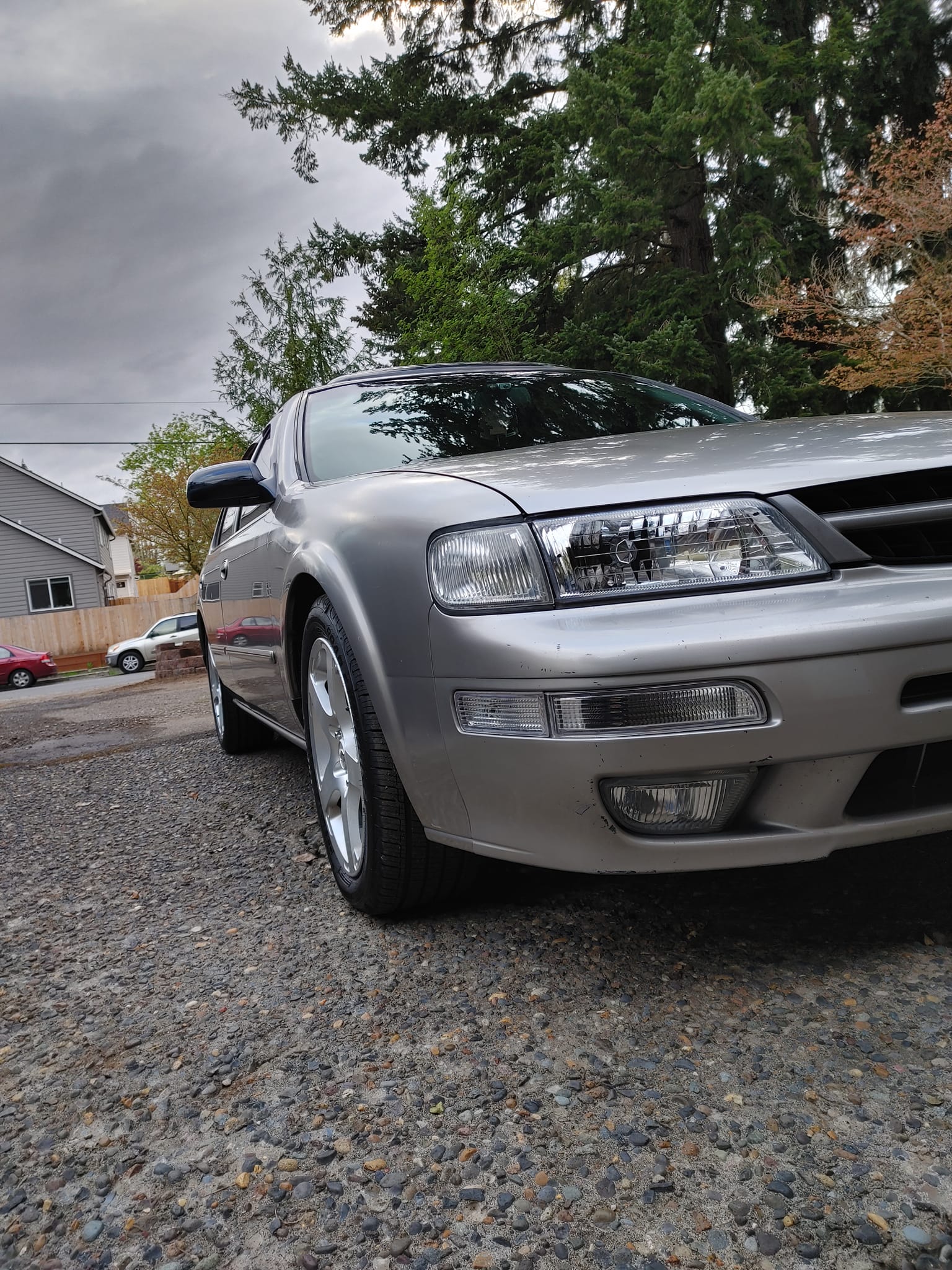
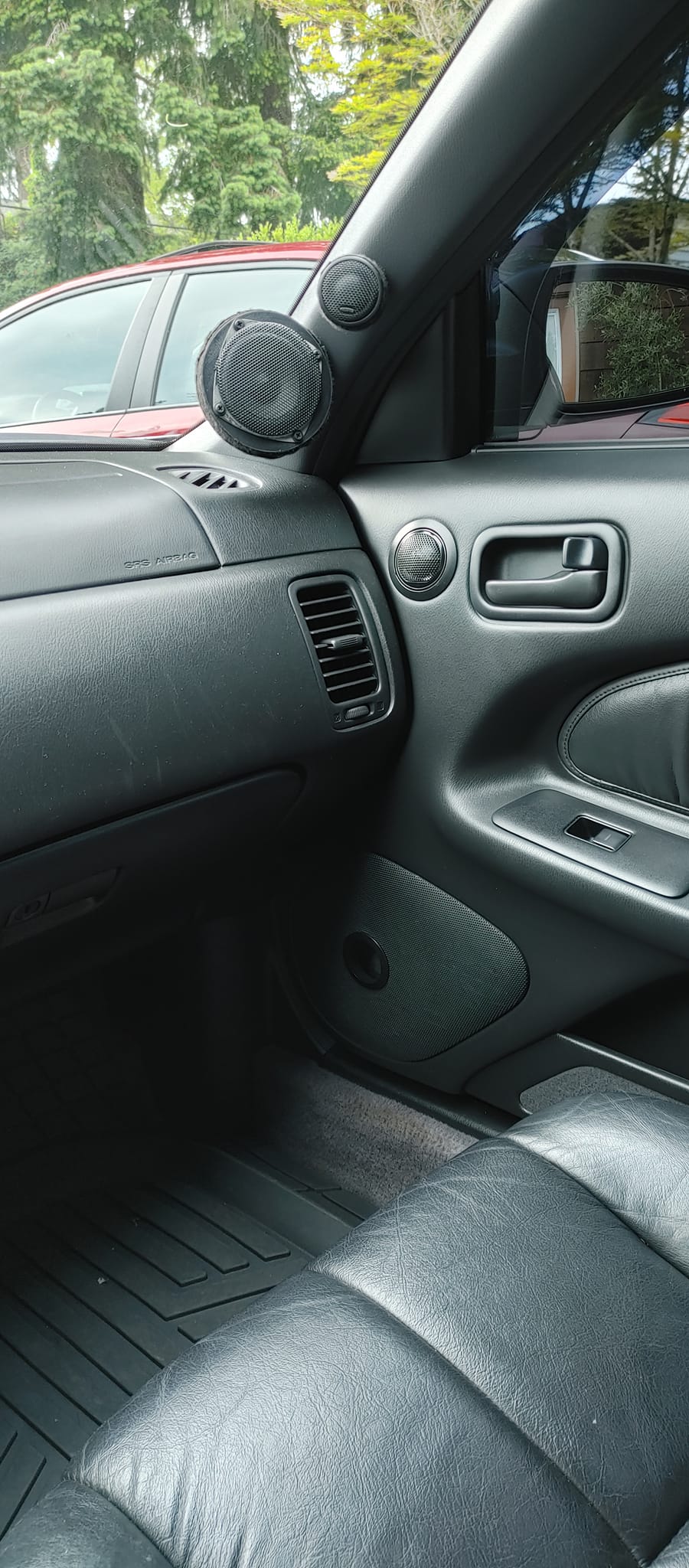
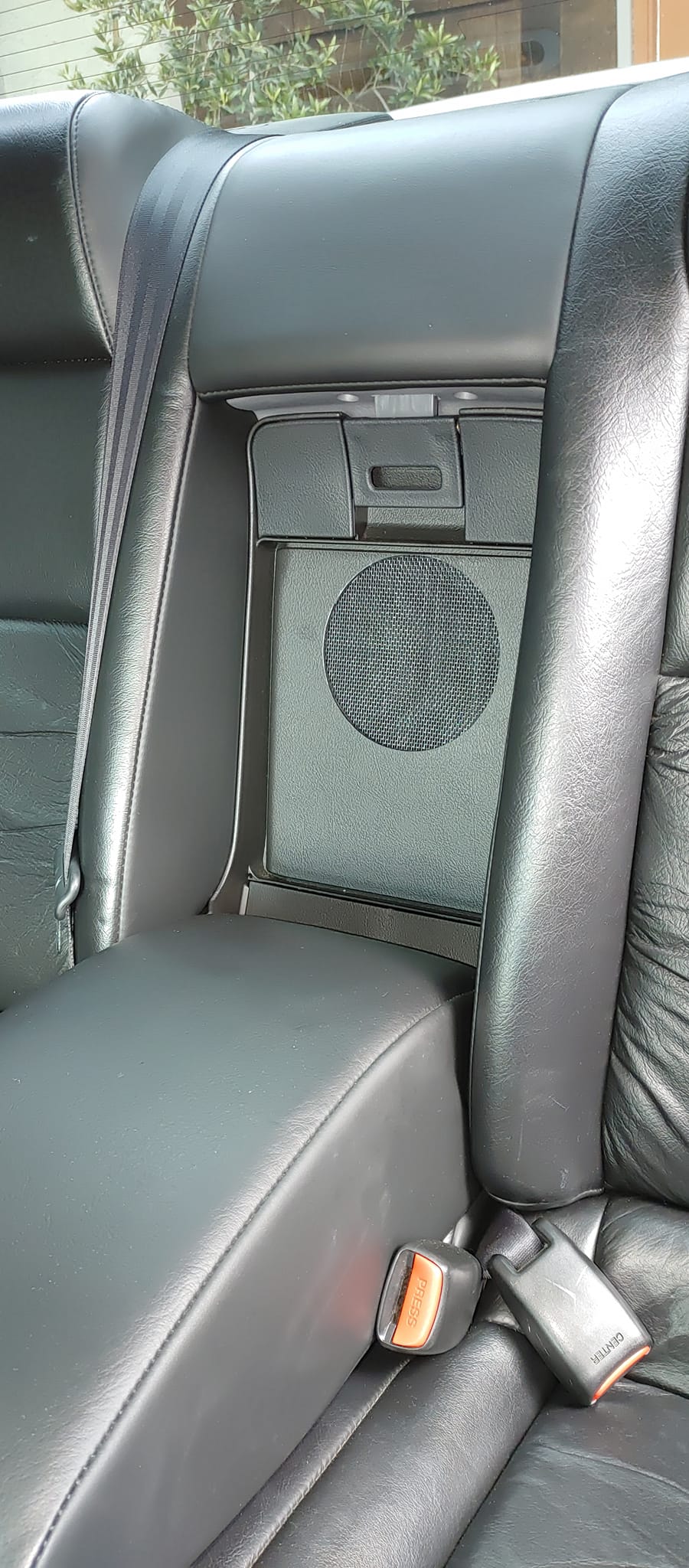
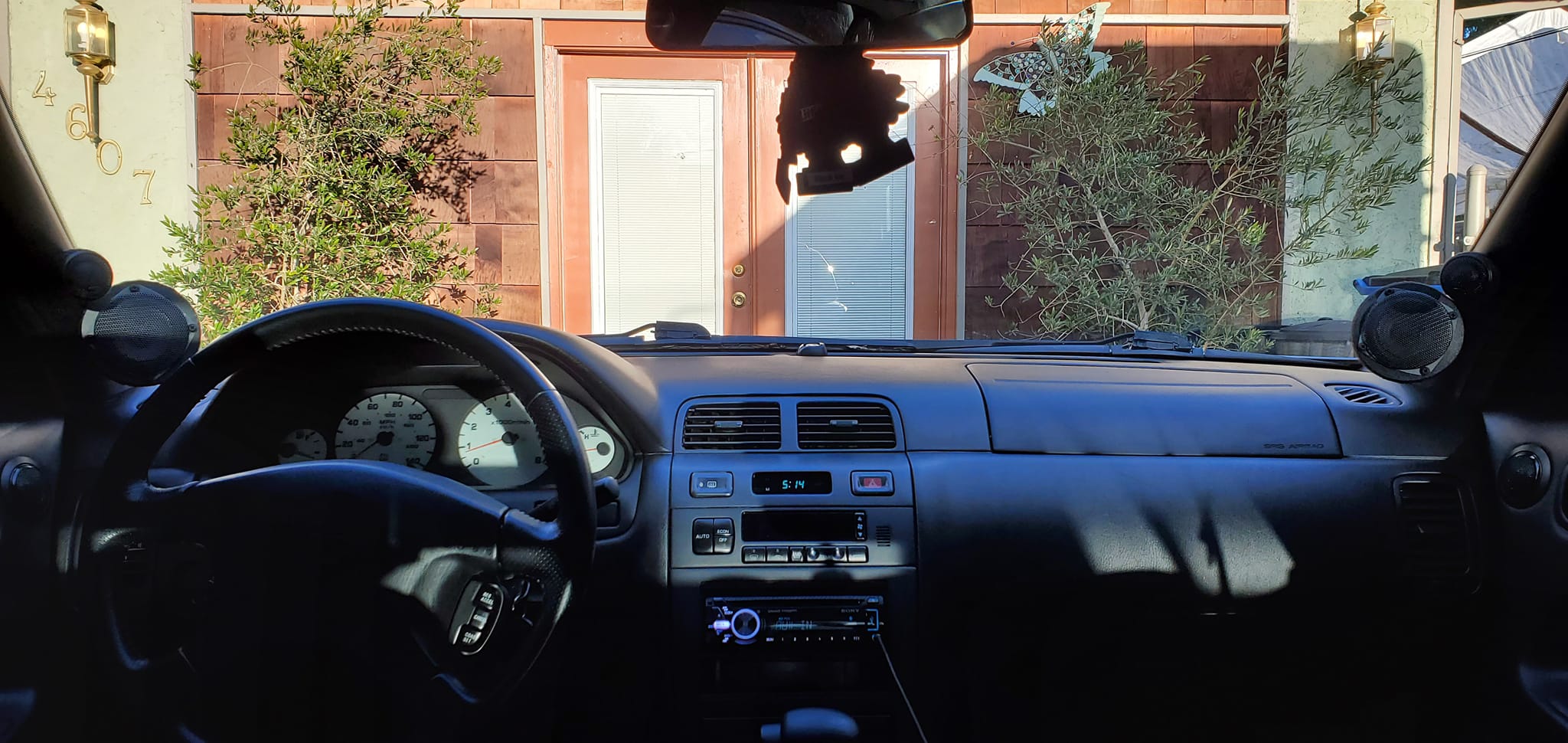
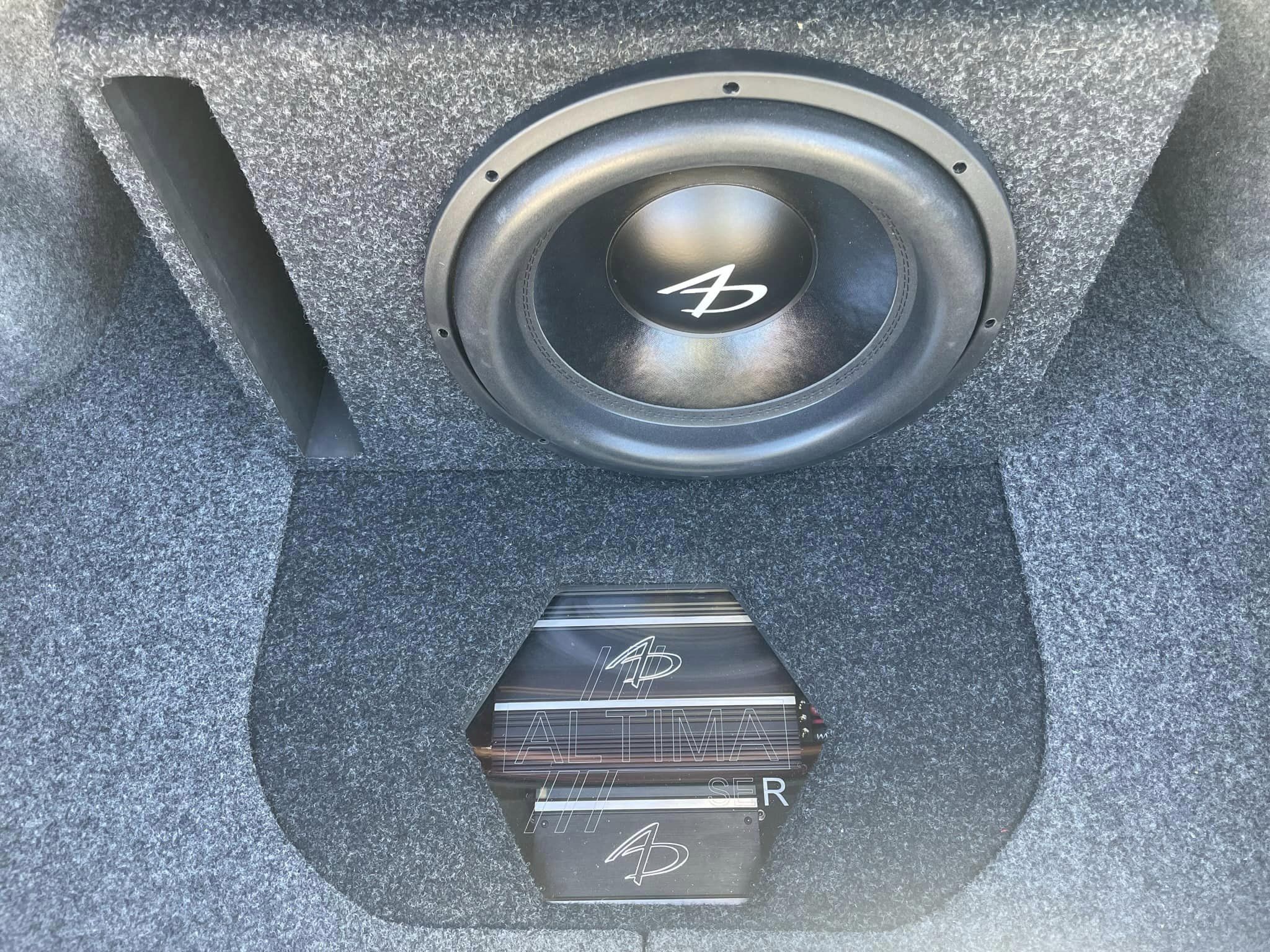
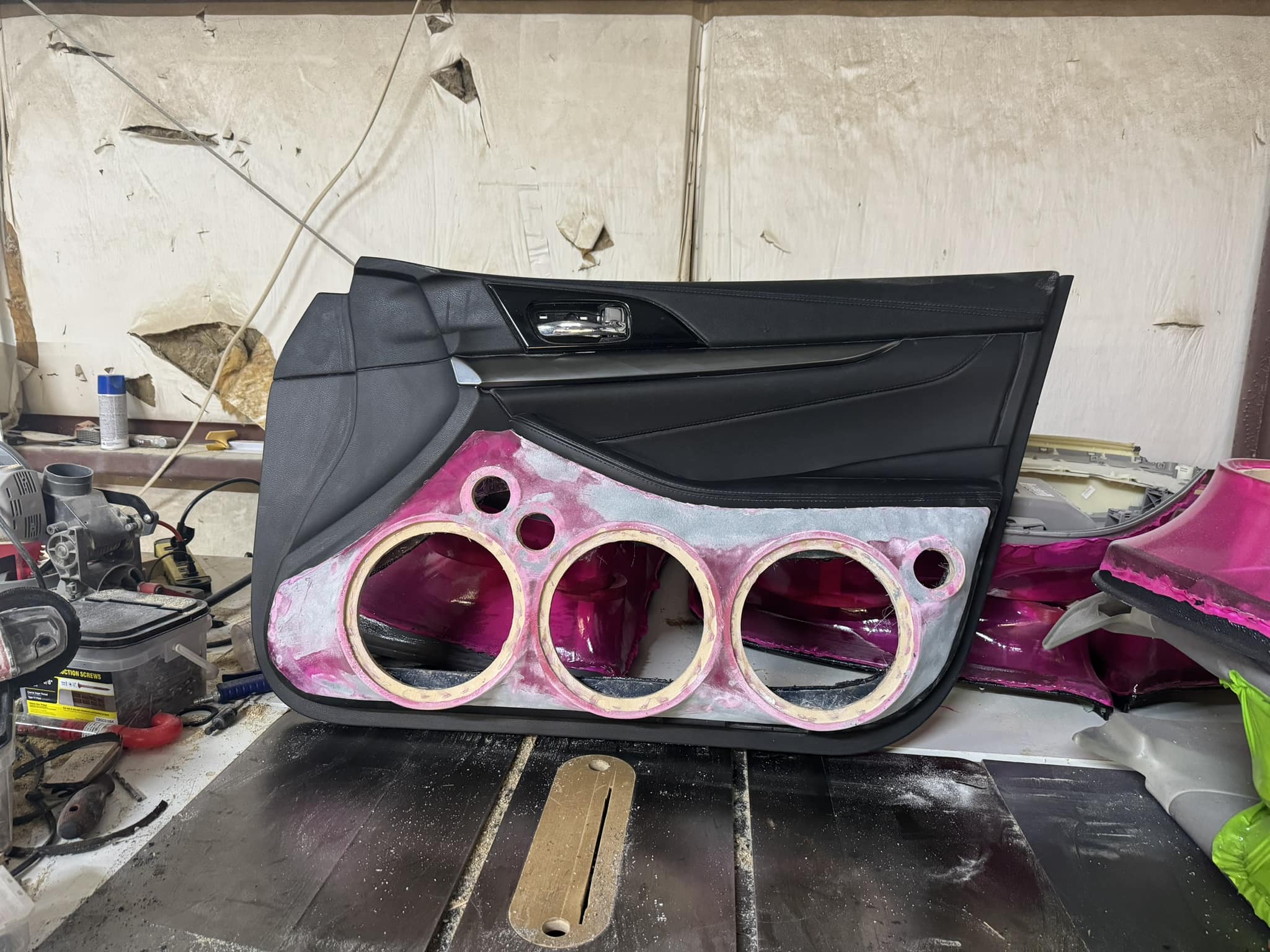
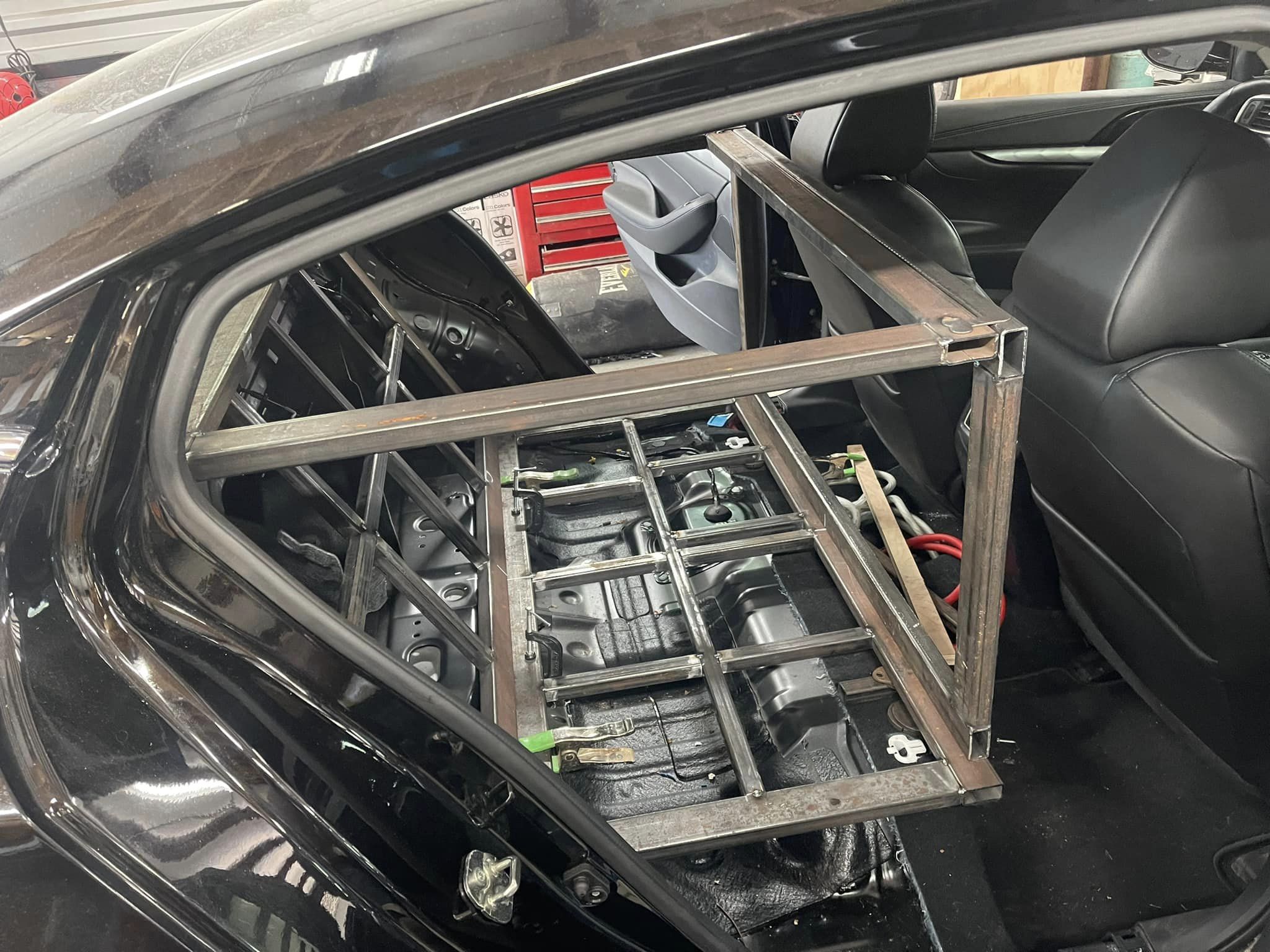
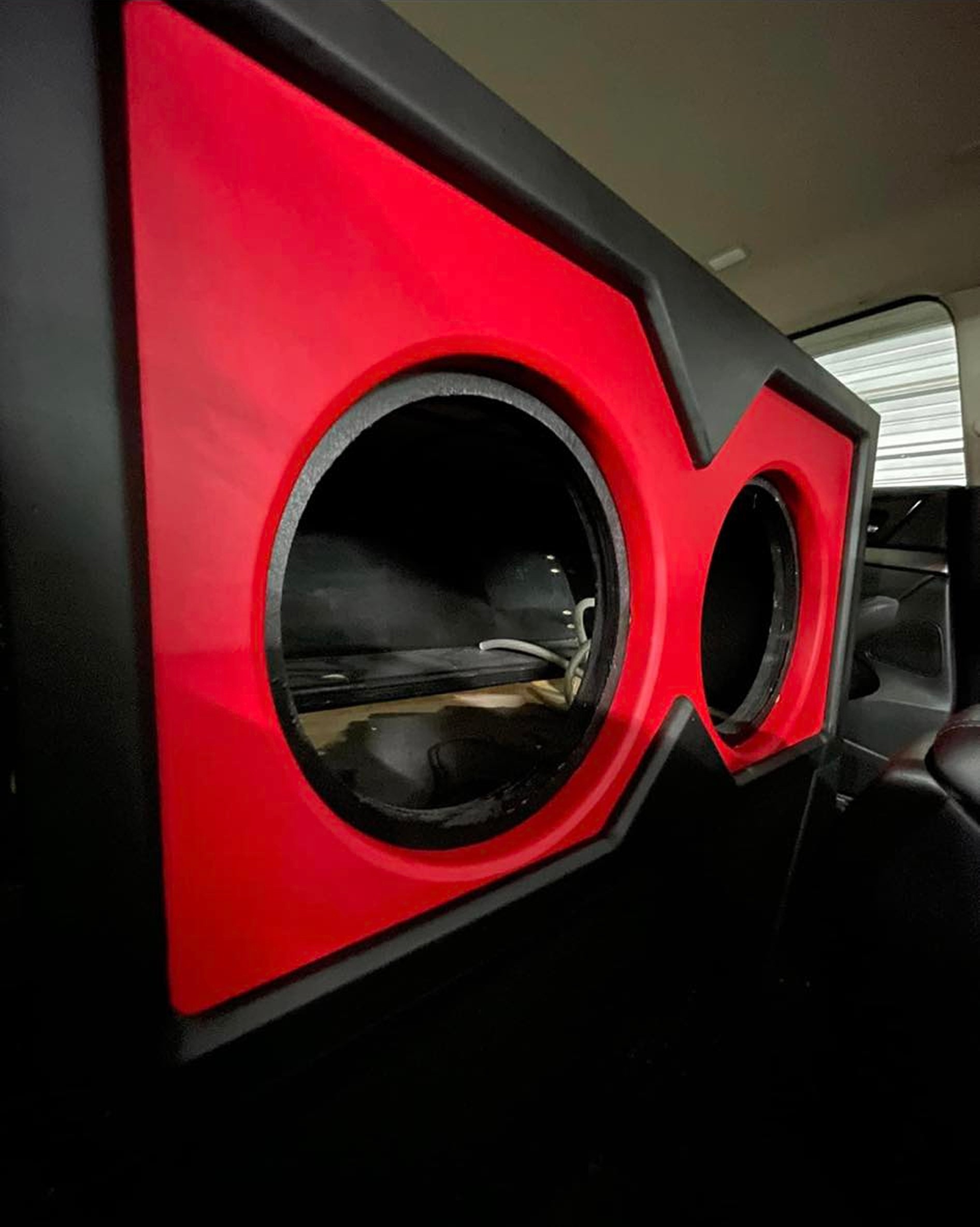
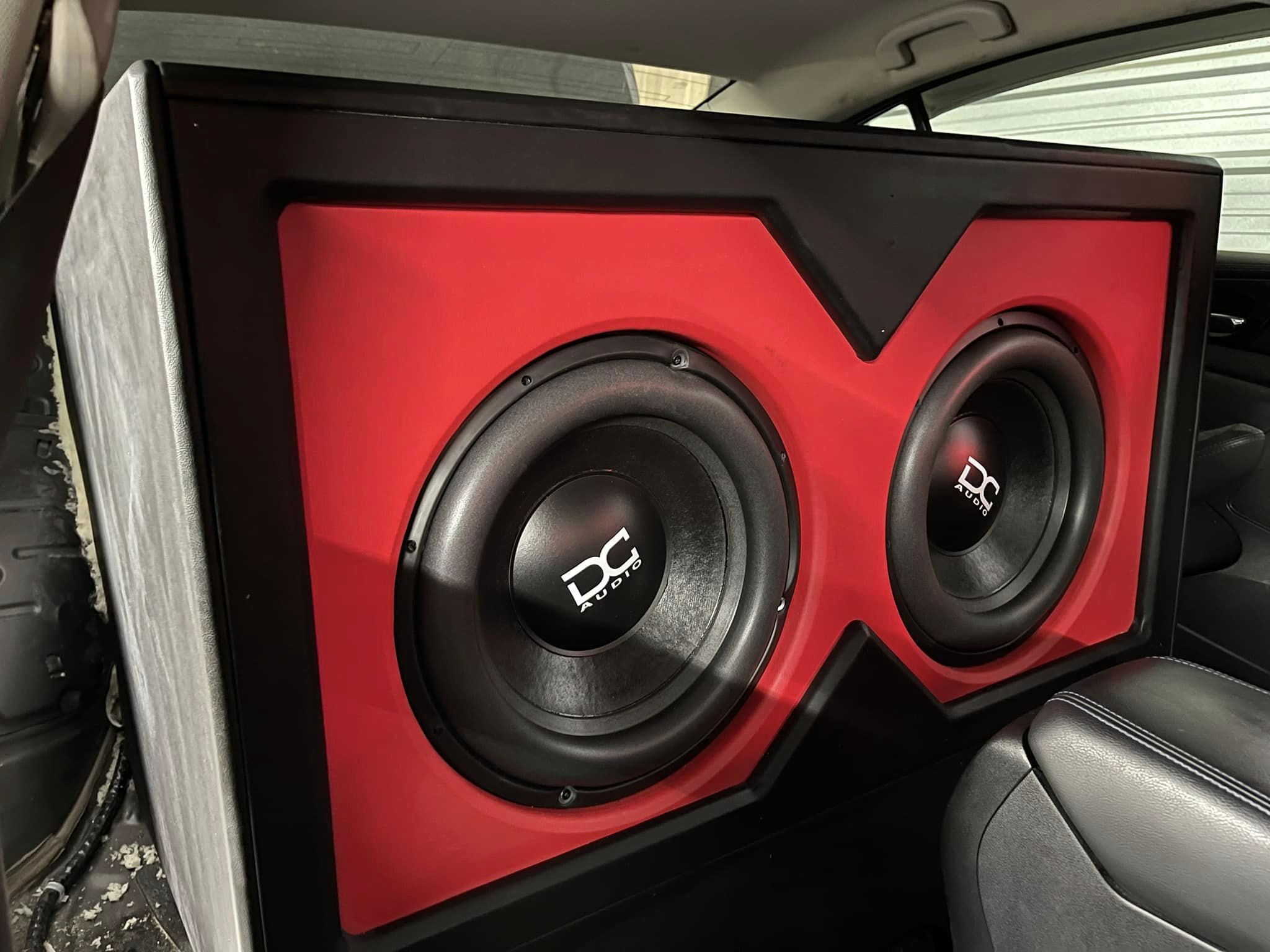
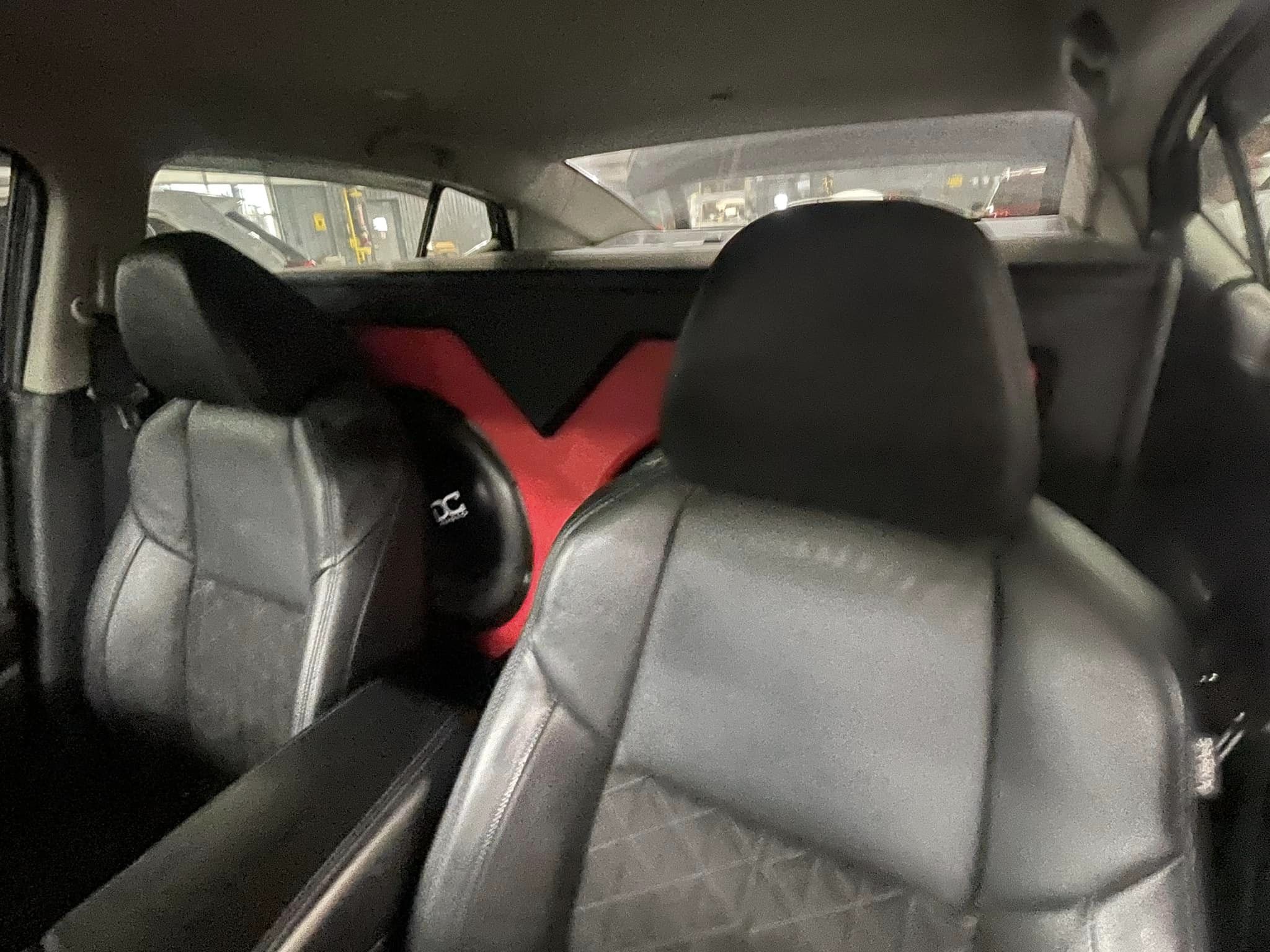
Almost the last irritant of my audio install on my ’99. Had a problem with the speaker cone smacking the Blows grille when crossed at anything under 80hz. Finally found a black non- Blows car at the jy so took the grills and modified a tweeter pod into it. Ended up being perfect. Crossed down to 50z at 24db and can see the cone come through the door at times.
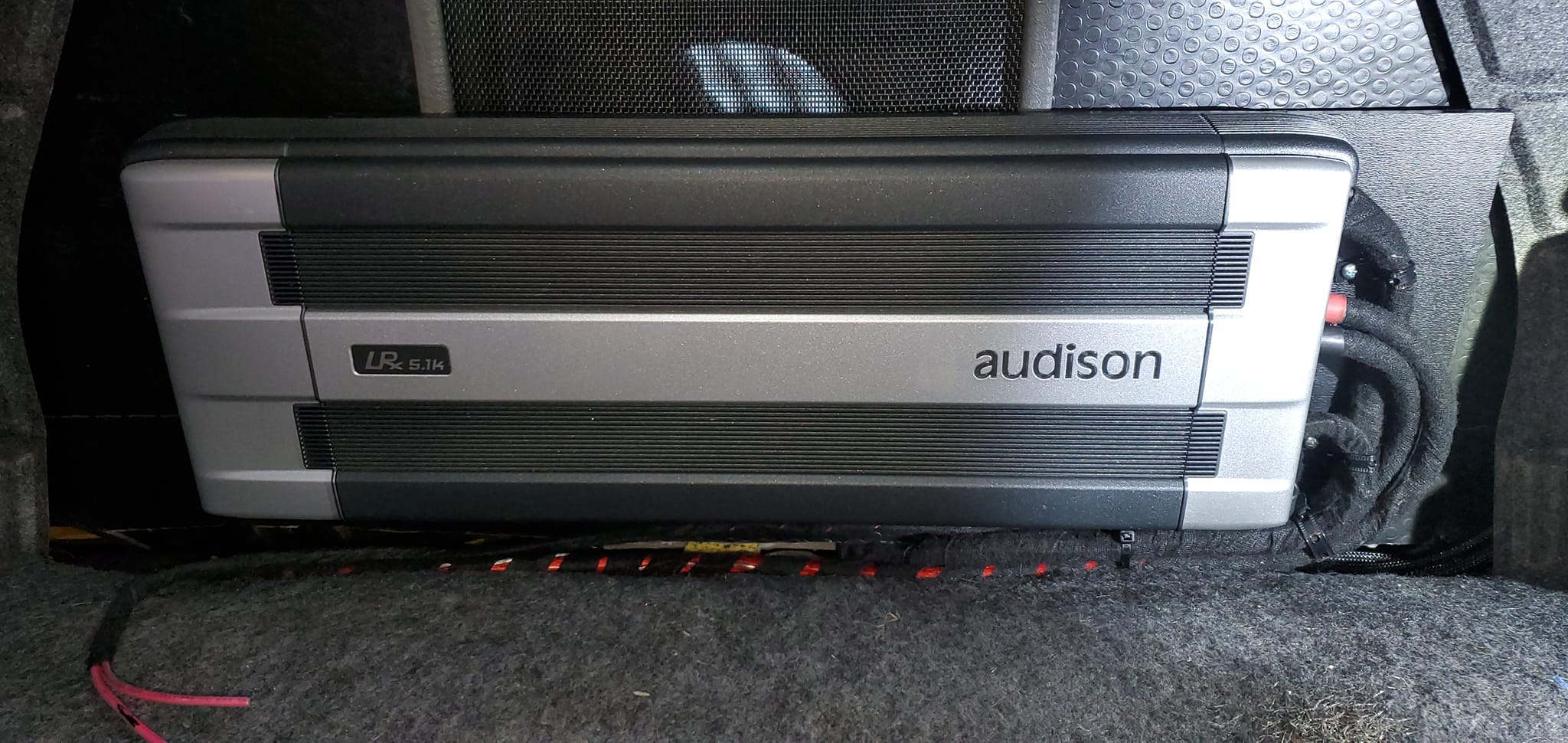
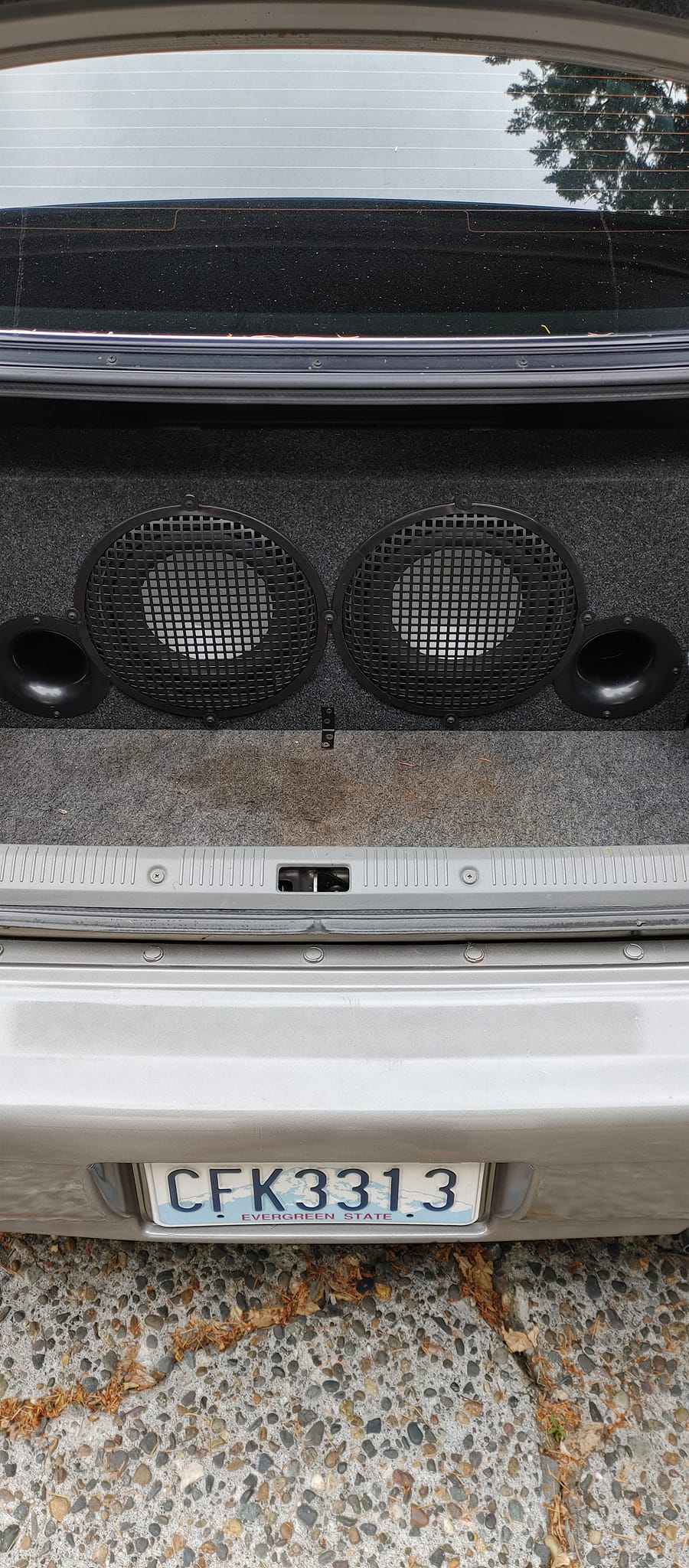
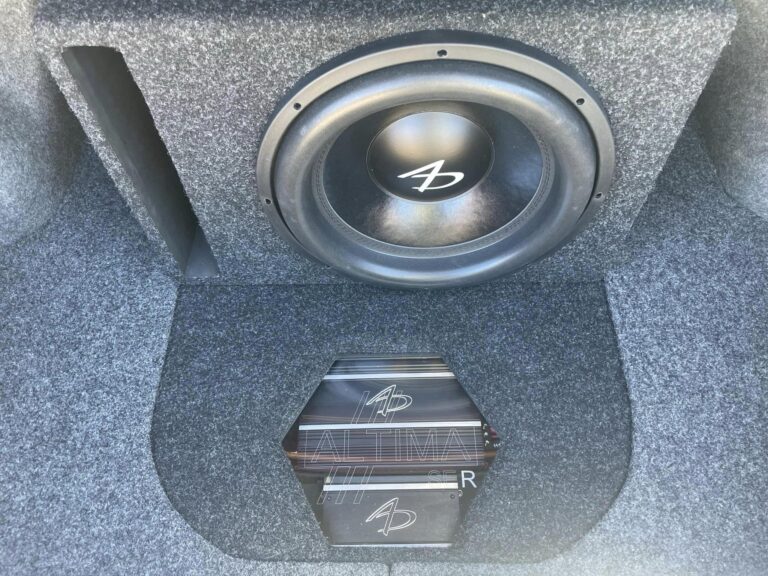
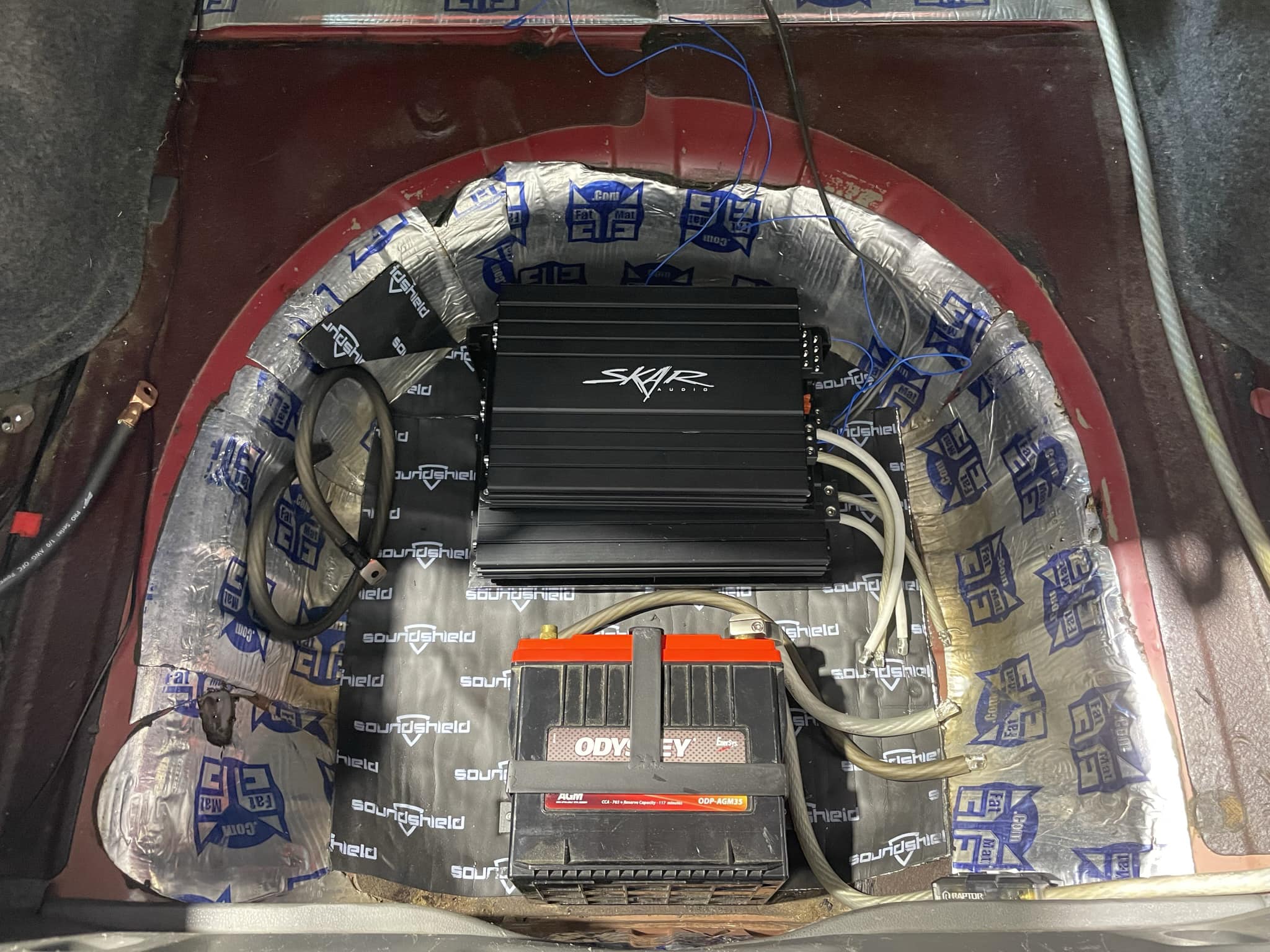
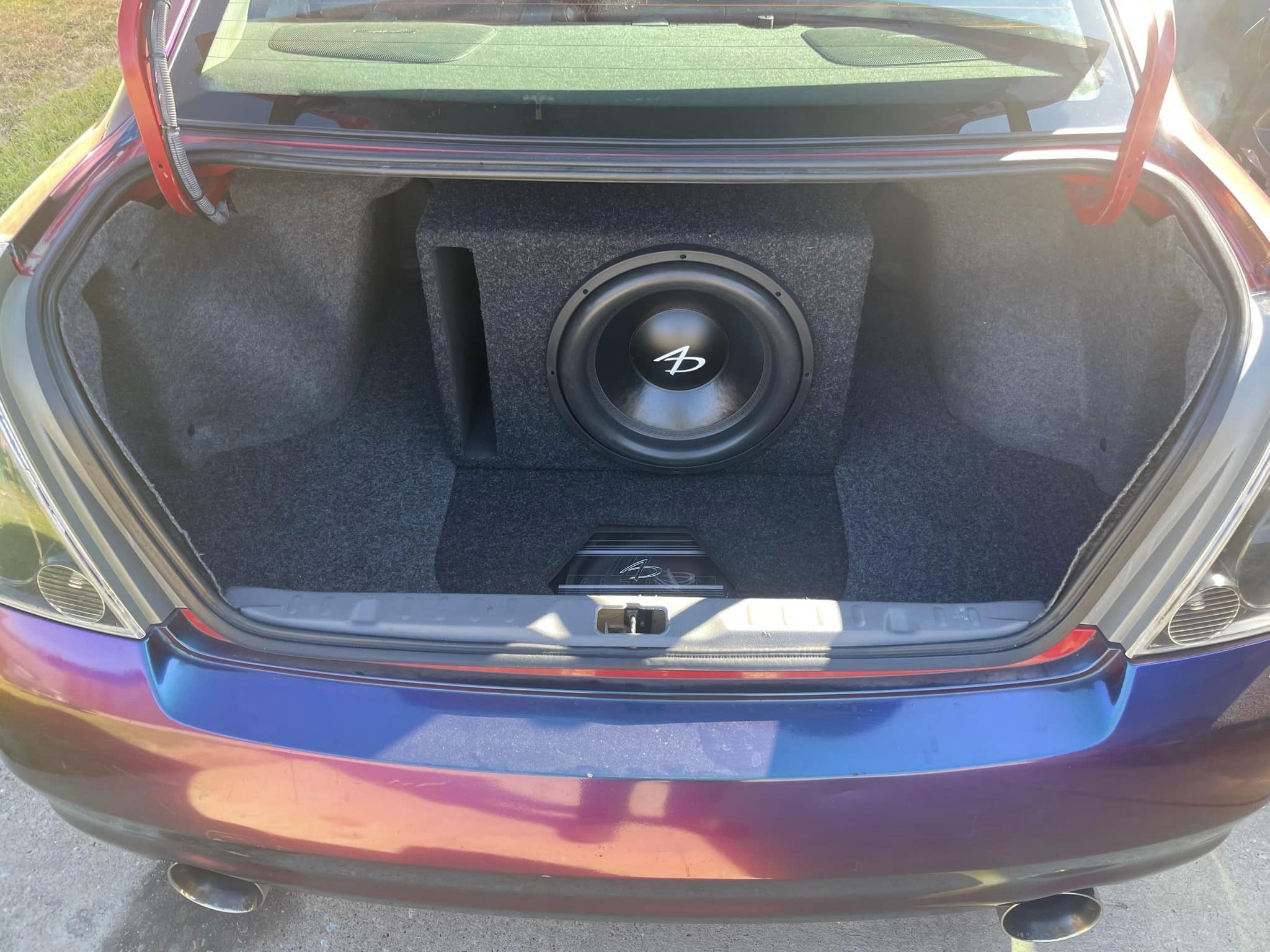
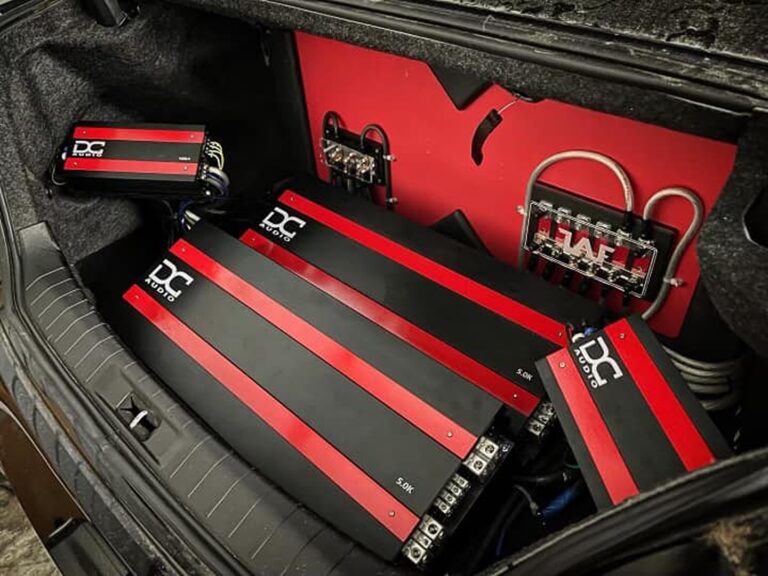
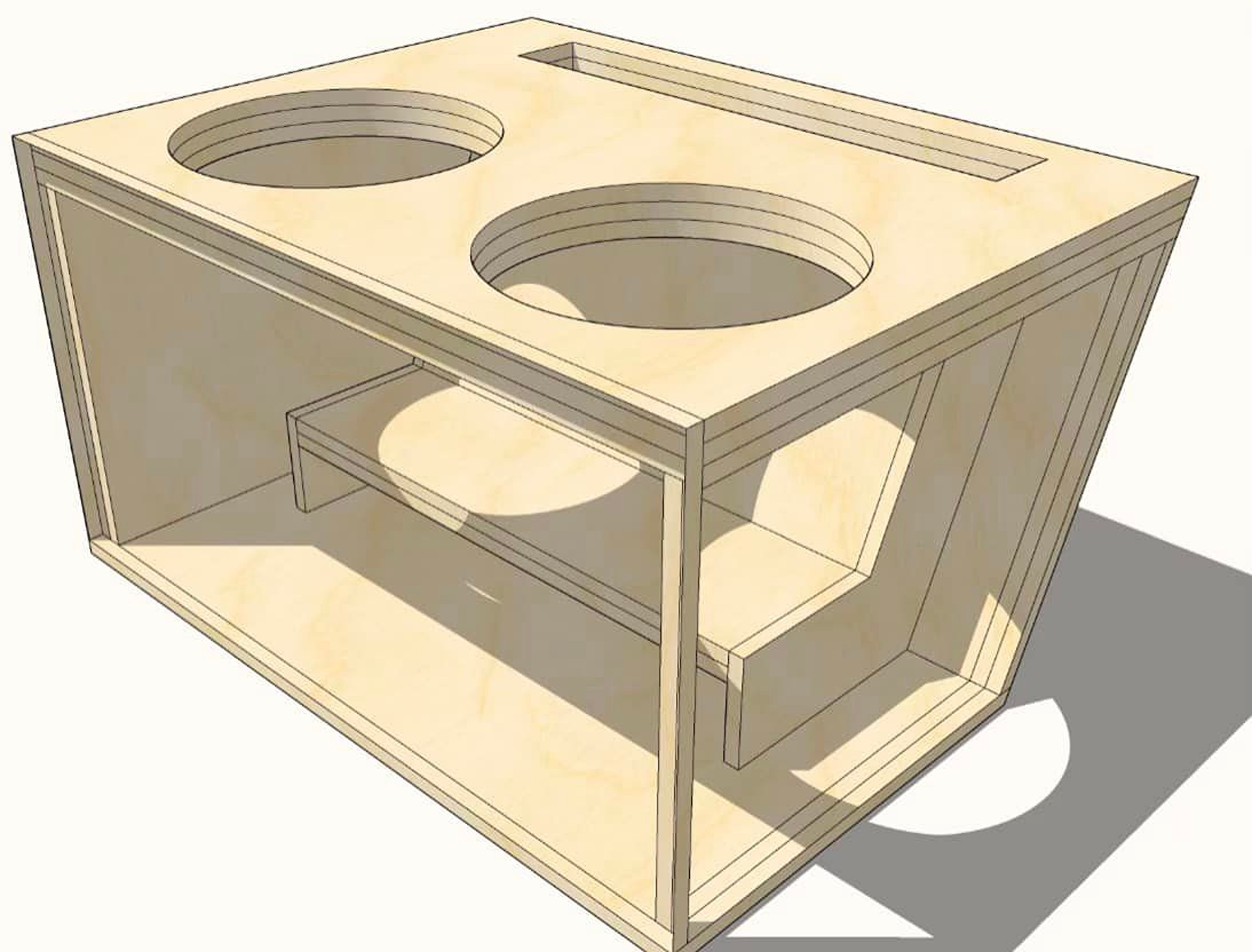
This car hasn’t been very friendly to my audio install… 3 way front Hertz Mille components, Hertz 6.5″ rear coax, 2 old school Kappa Perfext 10.1Ds in a tuned ported enclosure, driven off an Audison LRx 5.1k. JS high output alt, XS battery, 0Ga wiring through out, etc etc. Made a thru-port for the trunk (that was terrifying doing the arm rest and a PITA) but made a huge difference in loudness, response and punch. Now the weather is warmer I can sound deaden all the doors and such.
So far I’ve only done the complete trunk, rear deck, rear pillars, and A pillar trim pieces as I was constantly fighting the elements. For a car without a DSP yet it sounds very, very good.
I am building this thread in order to help all those with stock BOSE questions as far as replacement questions goes. If you know what to search for, your answers can be found quickly. But, for most this can be a tedious procedure. Below I will post some helpful hints, tips, and knowledge on how to deal with your premium BOSE system. This thread pertains to Infiniti’s 96-99 with a BOSE premium sound system. THIS THREAD IS MORE GEARED FOR 96-99 INFINITI I30’s, BUT YOU MAXIMA OWNERS CAN BENEFIT TOO AS WELL AS OTHER AUDIO ENTHUSIASTS!!!
The Q and A:
Q1.I have a stock Premium Bose Sound System in my car, what does this mean?
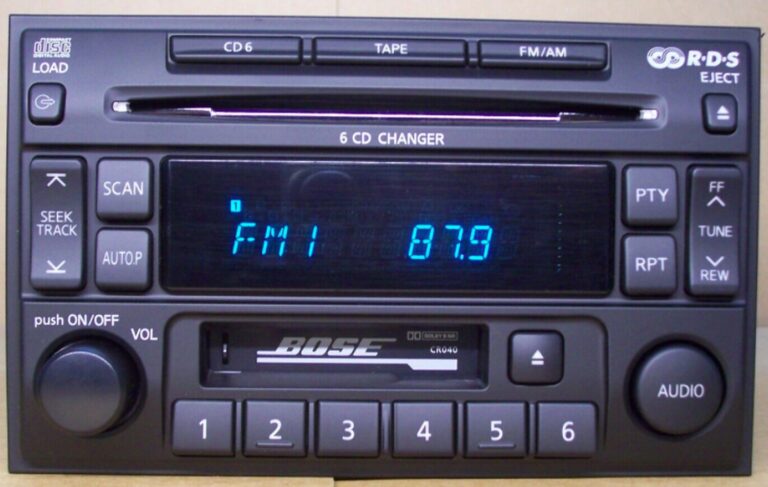
A1. You have a Clarion headunit (even though bose is plastered all over it) which integrates to individual BOSE amplifiers which feed power to each BOSE speaker.
(AKA 4 speakers, 4 amplifiers. Front speakers are components consisting of 6.5 inch woofers with 2 inch mounting depth and tweeters on the pillars. Rear Speakers are full range 6.5 inch speakers.)
Q2.My stock premium sound system headunit has died, what do I do.
A1. You have choices. Get it repaired, which can be costly and far from time efficient, or purchase a headunit of your choice. There are 2 integration harnesses that allow you to send a signal from your new headunit to the BOSE amps behind each speaker.
Method 1:
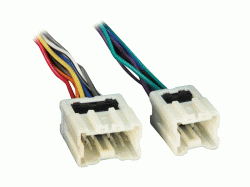
Amp Integration Harness Metra Part 70-7550 as shown here: Metra Part 70-7550
This harness is all well and good, but it is taking the raw power signal from your headunits internal amp and sending it to the BOSE amplifiers. This harness is geared for aftermarket headunits without 4 sepaker preamp out jacks. This method will work, BUT, you get alot of distortion because it’s a high level signal. TOO much signal produces distortion, too little signal will prevent the volume from reaching a decent level. As I said before, this will work, but you will get a crappier signal.
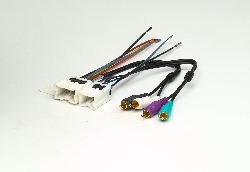
This harness is the best harness you can get. This harness utilizes the low level RCA preamp outputs of your new headunit to produce a clear signal to your BOSE amplifiers. With this harness you bypass your headunits internal amplifier and use only the preamp outs. This method supplies the proper amount of signal to eliminate distortion presented by direct amplifer hookup like with the Metra 70-7550.
Q3.Ok so now that I have chosen an aftermarket headunit and the wiring harness of my choice, what other items do I need?
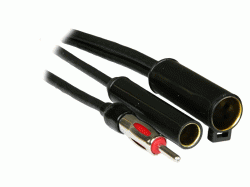
This adapter will allow your stock antenna wire to work with th aftermarket antenna wire found on the rear of your aftermarket headunit.
Q4.How will my aftermarket radio fit into my car. I have a 1 din radio, what do i do?
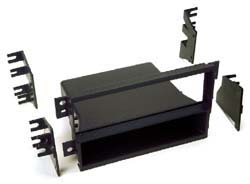
A4.You need to get a dash kit. There are several companies that sell dash kits to fit your stereo, but for the sake of keeping everything from the same company we will use METRA as our source for this dash kit.
For infiniti purposes, you will not use most of the pieces floating around that center section. YAY!
Dash Kit 2:
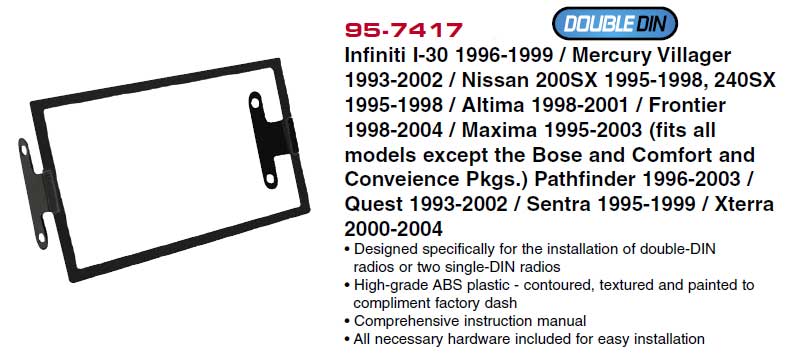
Now if you so decided to be a baller and purchase a 2 DIN aftermarket headunit you can purchase the 2 Din dash kit Metra part 95-7417 2 Din Multi Kit Metra Part 95-7417
Q5.MY BOSE amp died on the back of one of my speakers, can i use the power from my aftermarket headunit?
A5. NO, NO,NO. Bose runs their speakers at 1 ohm. Aftermarket headunits run their channels at 4 ohms unless otherwise stated. 99% of the time it will be 4 ohms. If you try to power the 1 ohm Bose speaker, you will burn out the amplifier in your new headunit. It is much more difficult to drive a 1 ohm load than a 4 ohm load. I know, its kind of contradictory to what you would believe but its true. The lower impedance actually creates more heat and stress on the headunit which is why it overheats. Some amps are designed to push low impedance loads and those can handle the heat. Headunits just aren’t designed like this. I suppose there could be a sporadic design here and there but i would place huge wagers on a deck being 4 ohm nominal over 1 or 2 ohms. Also note, impedance is dynamic and constantly changes but the nominal impedance needs careful attention.
Q6.Can i replace a BOSE speaker with a different brand speaker and connect it to the BOSE amp?
A6. NO and YES Once again, the speaker runs on 1 ohm, most, 99% of aftermarket speakers run on 4 ohms. You could run a 4 ohm speaker but you most likely have lower volumes since the amplifier would produce less power at 4 ohms than 1 ohm. Your challenge here would be to find a like quality speaker that has similar characteristics to the stock speaker. If you swap one, I would swap the other as well. In the end, you would do better to find a 2 ohm speaker like Infinity has and hope it has a good efficiency to help eek as much out of the wattage that is left to create a decent amplitude.
Q7.Is it hard to integrate the wiring harness?
A7. Not at all. When you integrate the wiring harness of your choice you are not splicing any part of the existing harness. The harness that is attached to your car remains the same. The integration harness you purchased will plug into your car’s harness. From here you have wires on the opposite end that need to be attached to the wiring harness that comes with the aftermarket headunit you chose. Both the headunit and and Metra cable come with directions specifying what color wires are for what. The Metra cable packaging has the wire designation on the back so do not throw the packaging away. Somewhere in your headunit manual will be the wire color designations for their harness.
Q7.Why are there so many damned colors?
A7. So many colors because of so many connections. Most aftermarket manufacturers follow the same wire color schemes to keep things more uniform. It is easier on everyone’es part when it’s this way. HOWEVER, this is not true in 100% of the cases. Always double check to make sure that the colors match so that when you hookup your accessories you don’t ruin anything.
Q8.WHOA OMG, WTF. I have an extra black wire emanating from my METRA harness 70-7551, who what and why is it there and what do i do with it?
A8. Ok here’s the deal. After a lot more research i am fixing this answer. The deal is, there are 2 ground wires, 1 per harness. Unfortunately, there will most likely be no place to connect these to on your new aftermarket headunit because these wires are grounds for the bare negative wire which travels along side your + and – signal cables to your amps at your speakers. This method is called shield wiring because this single bare negative wire removes electrical pulses from its environment and grounds them. This prevents interference on your signal. Basically, now that you know this you should ground these two wires to the chassis as close as possible to the HU. I haven’t done this yet because i just figured it out so i will fix the end of this and tell you all where i put my grounds for them.
Q9.My harness comes with crimp tubes, are these any good?
A9. The crimp tubes are fine. The metra harness’s don’t have crimp tubes to my knowledge but many times, in the case with my alpine headunit, the headunit harness has crimp tubes. You can use these tubes and things will work fine but it is always recommended that you twist the wires together and cover it with something to protect the bare wire. I always ditch the crimps and twist the wires together and then use heat-shrink tubing. You should solder the wires together as well and then cover with shrink tubing, but you don’t have to. Make sure the wires are firmly together. If you chose to forego the shrink-wrap, use electrical tape. Choice is up to you, i just find shrink-wrap tubing to be more of a finished look.
Q10.How is My BOSE Headunit grounded?
A10. The way your BOSE headunit grounded is via the metal case. In other words, your headunit is screwed into the cage which is screwed into the dash which is connected to the chassis which is a common ground to your battery.
Q11.Ok so now that you have explained these confuzzling ground wires, how the hell do i ground my new aftermarket headunit?
A11. Well, there are options. Chances are you new aftermarket headunit will come with a black ground lead on it. In the case of our cars, ground the wire to the chassis spot of your choosing. Your new aftermarket headunit may ground itself to the chassis via its metal casing but make sure that the black ground wire from your new headunit is grounded to the chassis.
Q12.Ok i have an annoying whining noise and/or other static/pop noises coming through my speakers what can I do?
A12. When you have a whine coming through your speakers that means that somewhere in your car is a ground loop. This is a rather common occurrence unfortunately and is caused when there are multiple grounds to a negative and electricity could travel either path causing noise in the system. A more in depth way to explain it is as such: your whole car is basically a ground plane for which negative electricity travels back to the battery. Different parts of the car have different ground resistances. This differential in resistances is the noise you hear when you have a ground loop. If speakers aren’t involved, these resistances drops aren’t necessarily a huge concern but even the smallest drops can cause noise in your audio system. You want to try and use the biggest pieces of metal in your car to ground on because they generally have the lowest resistances. Be weary though that using mounting bolts that are pre-existing might now be best. Also take note that some body panels are glued together and don’t necessarily conduct electricity that well. Typically, you may have to try a few locations and if need be, whip out your multi-meter. I had to do this with my challenger audio install.
Now the whining you hear is the alternator spinning and you will notice the noise is louder at higher RPM, so that means its proportional to how fast the alternator spins. My assumption is that the whine is caused by the alternators recharging and supplying of power back into the system. Just some more information, alternators have diodes on them so as to prevent electricity from flowing back in. Diodes limit electricity to one path, so electricity cant go back. Now in some cases the diode or diodes on the alternator get burned out or just break and this can cause the whine as well. Usually this is an absolute last thing to check is a more rare occurrence.
Now that you read this whole speal you are probably wondering what you can do to fix the issue. Well i have a solution that has worked for me and many others but isn’t a 100% sure. You can buy ground loop isolators which this method is for those using the RCA jacks on your aftermarket headunit. You need to purchase 2 isolators because each has a l and r channel and your have 4 channels to you need 2. These help to eliminate the noise in the circuit. This isn’t a cure but more of a band-aid for the greater problem. Isolators can work in several ways from breaking the signal path and replicating the signal via magnets or using filters to try and “clean” the signal. Jensen Transformers makes the magnetic isolator and it is spendy but it works and is really more of a cure but is still a bandaid. In these cars though, with multiple amps in different locations, it is very difficult to get them grounded on the same plane nicely. This is where “less is more” is aptly placed.
A13.Its very easy, the tough part is not breaking anything while doing it. For you to get at your Bose headunit you need to take the center console apart a little bit. The wood trim by the gear shifter is held down to the console with pain in the *** v-clips. The first time I took it up i did it with my fingers, i was able to fit my fingers in on the inside of it and pull up towards one of the corners. You can take a flathead screwdriver and use a cloth to help not damage the trim to pry it up. When you get it up, you are left with the cigarette light attached to it. Just pull the cord off the back of the light, it just pressure fits more or less. After that, the ashtray is there, there are two screws holding this in, one on the left and one on the right. To get it out, you need to open it and pull it out, the light for it is connected and u can throw it to the side of disc it. After that, you can get access to both of the bottom screws that hold the cage that holds the tray, HU, and AC controls. You need to remove the top vent and disc the wires from the harness, its kind of a ***** to leave it connected and sit the vents on your dash tbh. Getting the vents out cant be troubling, my method was to put my fingers into the vents at the bottom up to about my second knuckles and press down and pull out. The vents stay by being force fit in and held in with little pieces of plastic that let u push it back in but not pull it out easy. After the vents are remove, you now have access to the two top screws of the cage, remove those and you can now pull out th whole cage and you can get access to the wires and screws holding the HU in.
The low sound issue resulting from the preamp voltage: I didnt find any cheap method before i traded my car in, the best thing you can do is buy a preamp line driver. TRU Tech makes a good one, very expensive $300, this is what Nismos recommends. You can find cheaper line drivers like the ones memphis makes that are about 60-120. Fortunately in recent years, more line drivers have come onto the market at more affordable prices making them good options. Even still, when i choose a new aftermarket deck, i try to get one with high voltage pre-amp outs. My current Pioneer deck is a 3-way deck with 5V preamp outs. I wouldnt let this limit you though if you plan to do outboard active processing and what not.
It really comes down to cleanliness of sound and quality of signal. Your aftermarket HU will produce a great RCA signal compared to the raw signal at the trade off of amplitude (strength of the signal and the result of what you hear). I know there are converter packs you can buy which take the raw power signal or the HU and convert it to RCA, i don’t know if the signal strength is higher than that of the metra harness. These converters i think from what i remember were like 35-80 bux.
If you want to poke around for other car shiz, check out Installer.com. That is where i purchased my harness, they have everything you need to do a great intsallation. http://forums.maxima.org/audio-elect….Installer.com
◙◙◙◙◙◙◙◙◙◙◙◙◙◙◙◙◙◙◙◙◙◙◙◙◙◙◙◙◙◙◙◙◙◙◙◙◙◙
Edit: 2/24/08
Ok, after consulting with the mechanics manual for the car with a lot of trying to figure out the wiring schematic i have come to this. I have no idea what the popping noise yet, BUT I HAVE ALTERNATOR WHINE. yes quite annoying, but i have learend a couple good things.
Fixed Q8, it was all wrong, damn you metra almost perfect but it helps to consult with your mechanics guide in the electrical section. Also added some new info
I still have a popping noise, haven’t figured it out yet. I have some slight alternator whine. I am assuming that this was there originally for me but was inaudible due to the original type of harness used on my radio. Now that i am using RCA’s it is much clear, but the whine is now audible. I am assuming this has to do with my currently ****ed up grounding situation. So as soon as things are properly grounded we should be good i hope. As a side note, i never had alternator whine until i had my new headunit installed. So it has to be it.
EDIT: 3/30/08
I added question 12 on alternator whine elimination and getting rid of other possible noise coming through your speakers.
EDIT: 4/23/09
Added a little shpeal on how to get to the HU and more on the low volume issues.
EDIT: 10-30-2013
I am never on here but happy to the thread is alive. I did some updating and cleaned up grammar and added some new helpful info. I know a lot of the links are dead, i am not fixing them. The info existing should be near enough to help you find the same or like product to what is listed. My e-mail is at the top of the thread if you need my assistance. I just deleted like 15 unread PMs from the last 4 years that i never read because I never came on here. E-Mail me with questions or other general audio concerns and I will help in whatever way I can.
Wiring Harness Wire Guide:
This is as if you were looking at the harness connected to your car dead on with you holding the connectors with the top row missing 2 connection points in the middle. These numbers are verbatim from the mechanics book for a 1996 infiniti i30 with a bose premium sound system.
Smaller Harness:
16_______12
15_14_13_11
11 = Shield Wire Ground (ground wire runs with signal cables(+ and -) for rear BOSE amplifiers to shield their signal)
12 = Amp On Signal Wire (turns on all 4 BOSE amplifiers)
13 = Left Rear –
14 = Left Rear +
15 = Rear Right –
16 = Rear Right +
Larger Harness:
10_8 ___4_2
9_7_6_5_3_1
1 = Front Left –
2 = Front Left +
3 = Front Right –
4 = Front Right +
5 = Power Antenna
6 = Battery (this ensures you keep your presets when your car is turned off)
7 = Illumination Constant (wont dim when lights are on, most cases you would use this)
8 = Illumination Switch (will dim your radio when your lights are on)
9 = Shield Wire Ground (ground wire runs with signal cables(+ and -) for front BOSE amplifiers to shield their signal)
10 = ACC/Ignition (the red wire)
◙◙◙◙◙◙◙◙◙◙◙◙◙◙◙◙◙◙◙◙◙◙◙◙◙◙◙◙◙◙◙◙◙◙◙◙◙◙
DISCLAIMER:
I take no responsibility for you messing up your car or electronics. The info above was supplied as guidelines for you to make good decisions and to help aid you in your purchases and install. If you feel that you cannot or feel that you do not possess the knowledge and ability to make the right choices, go to a professional installer.
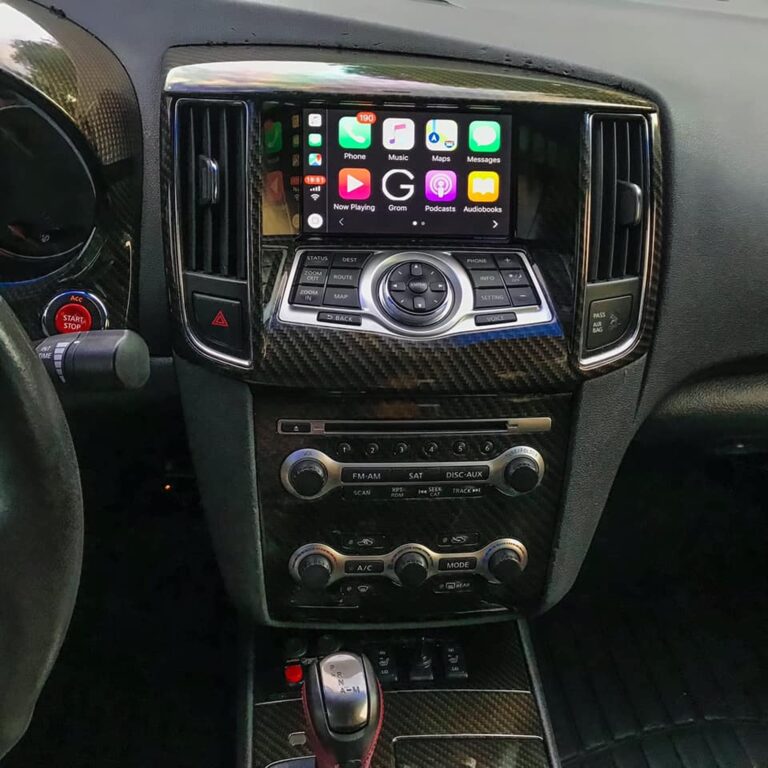
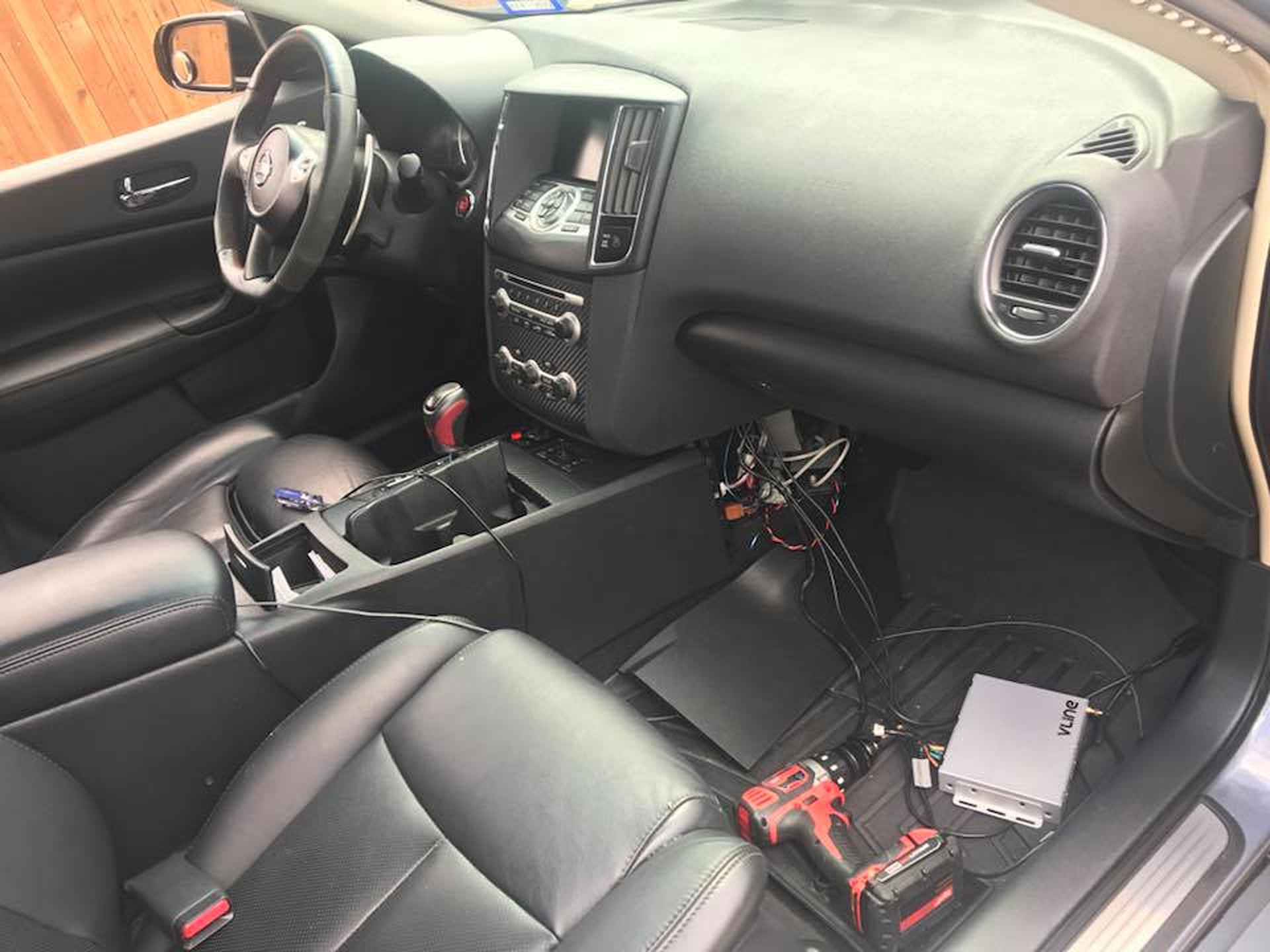
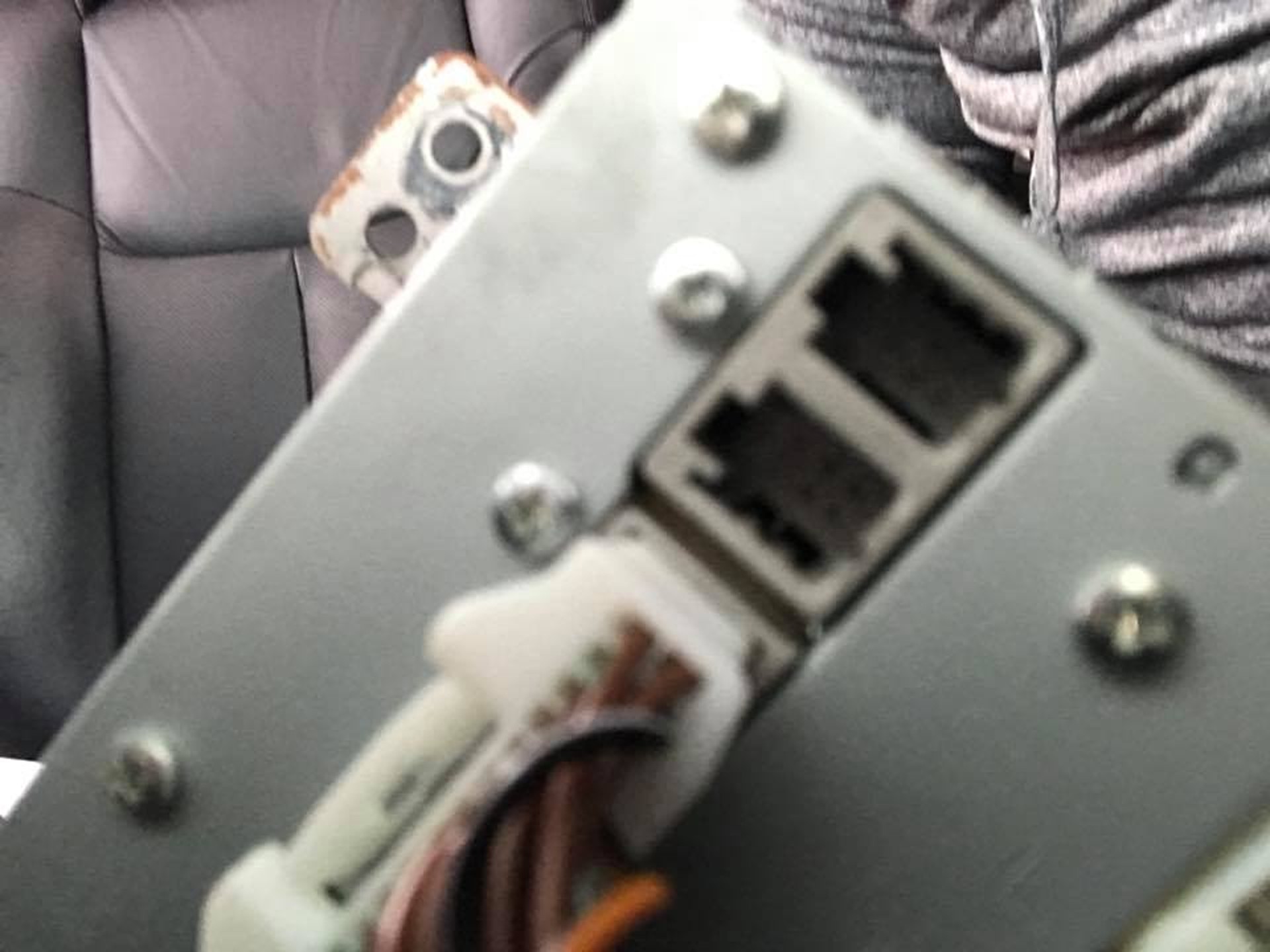
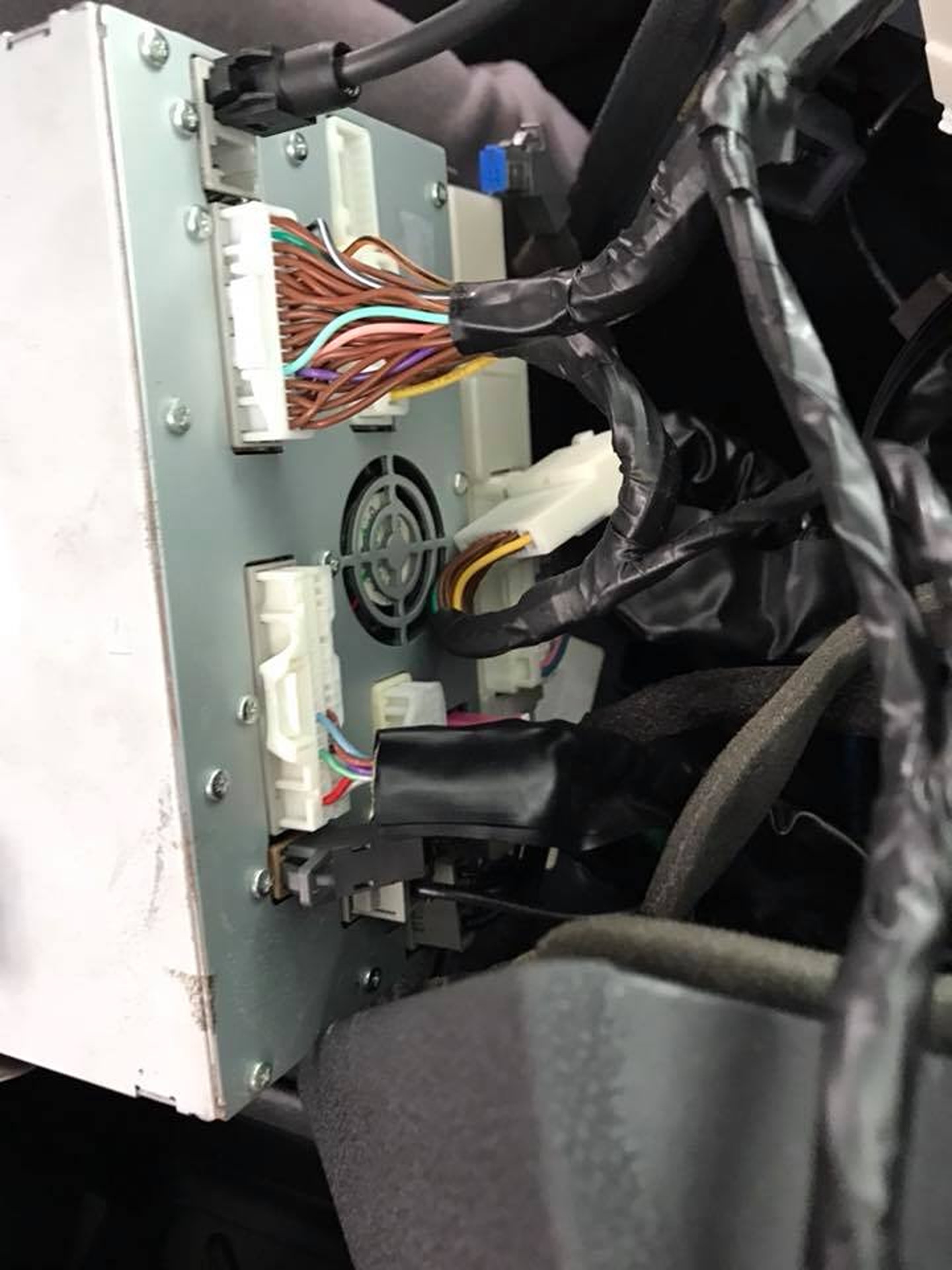
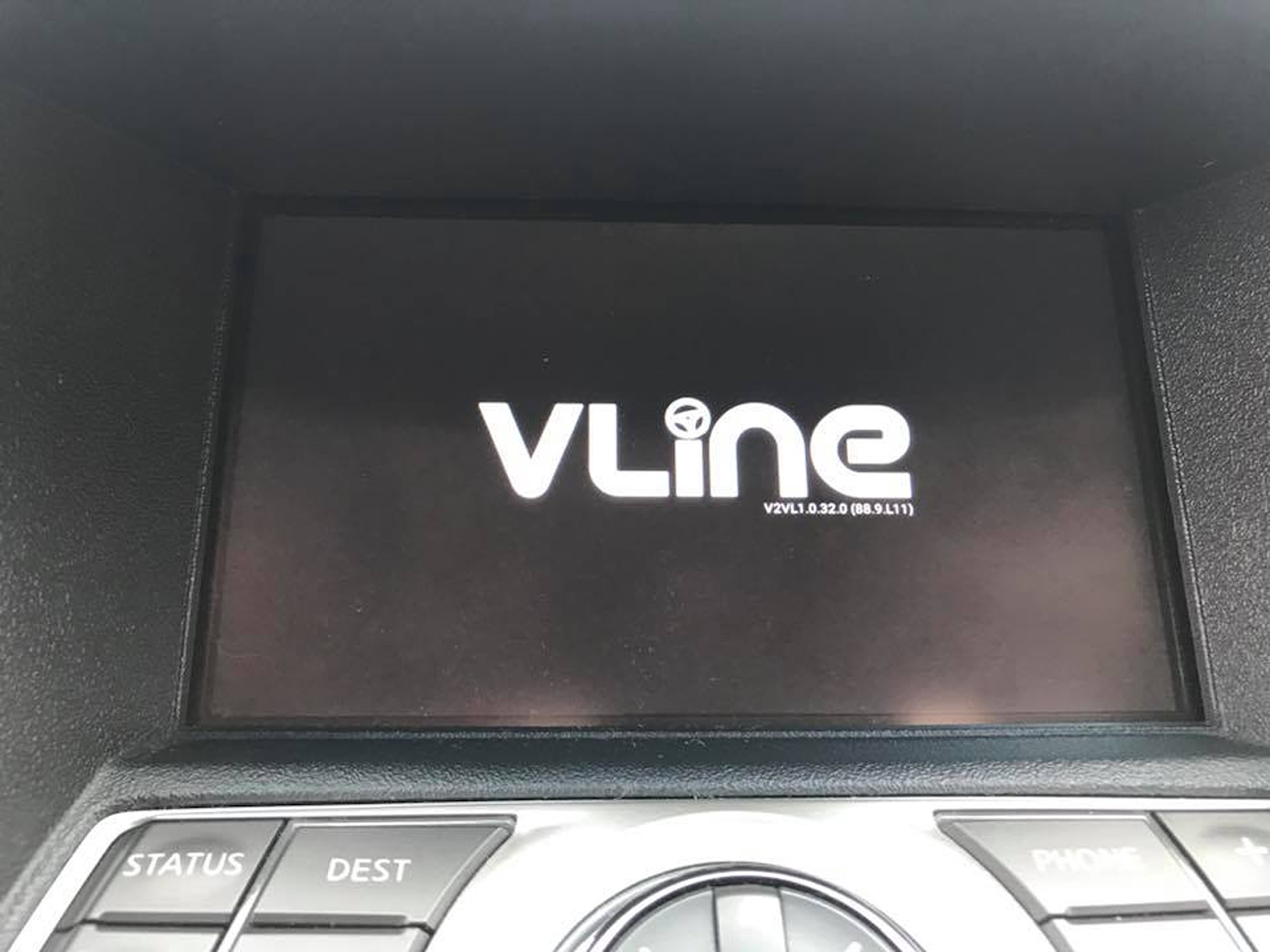
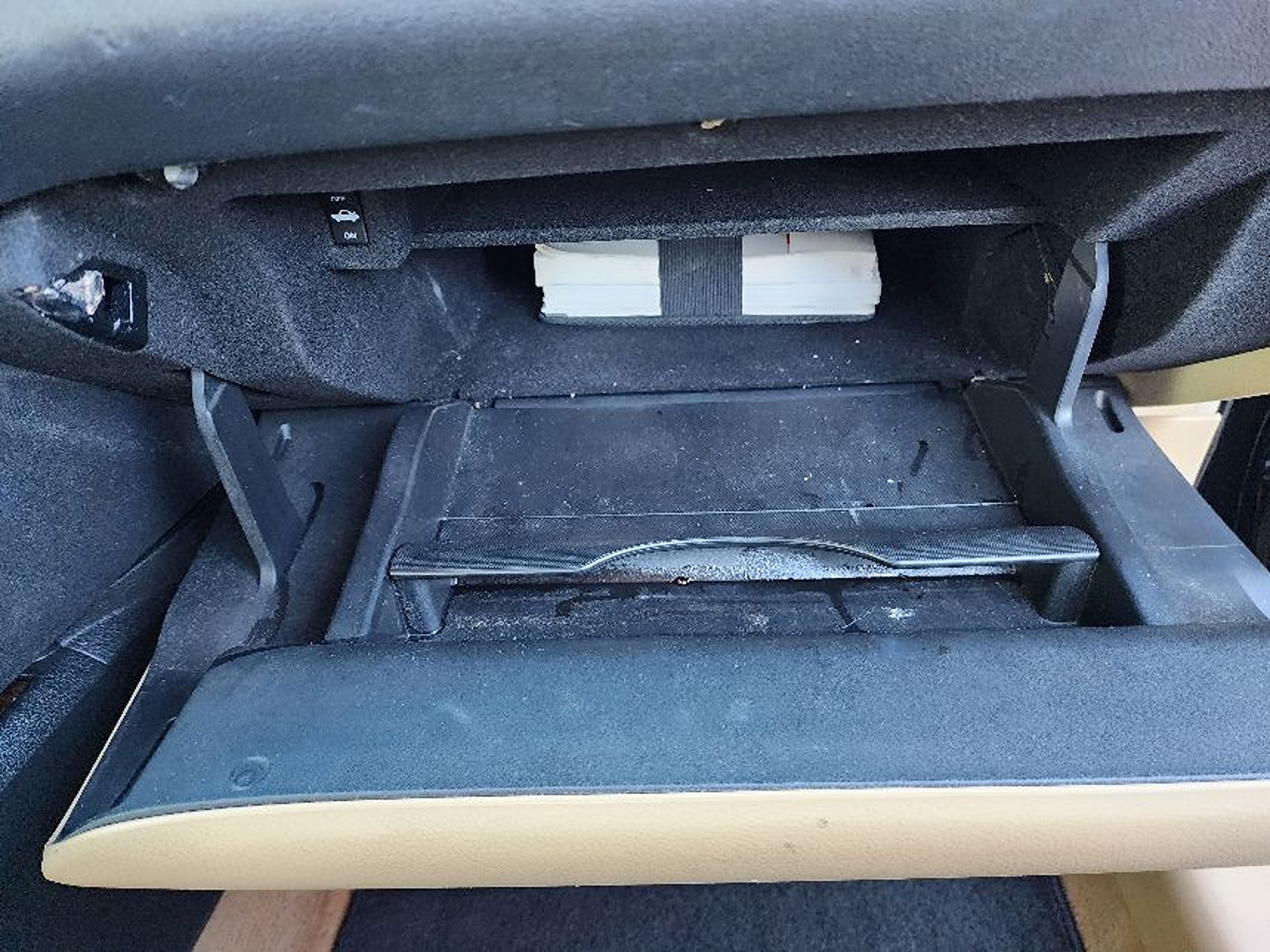
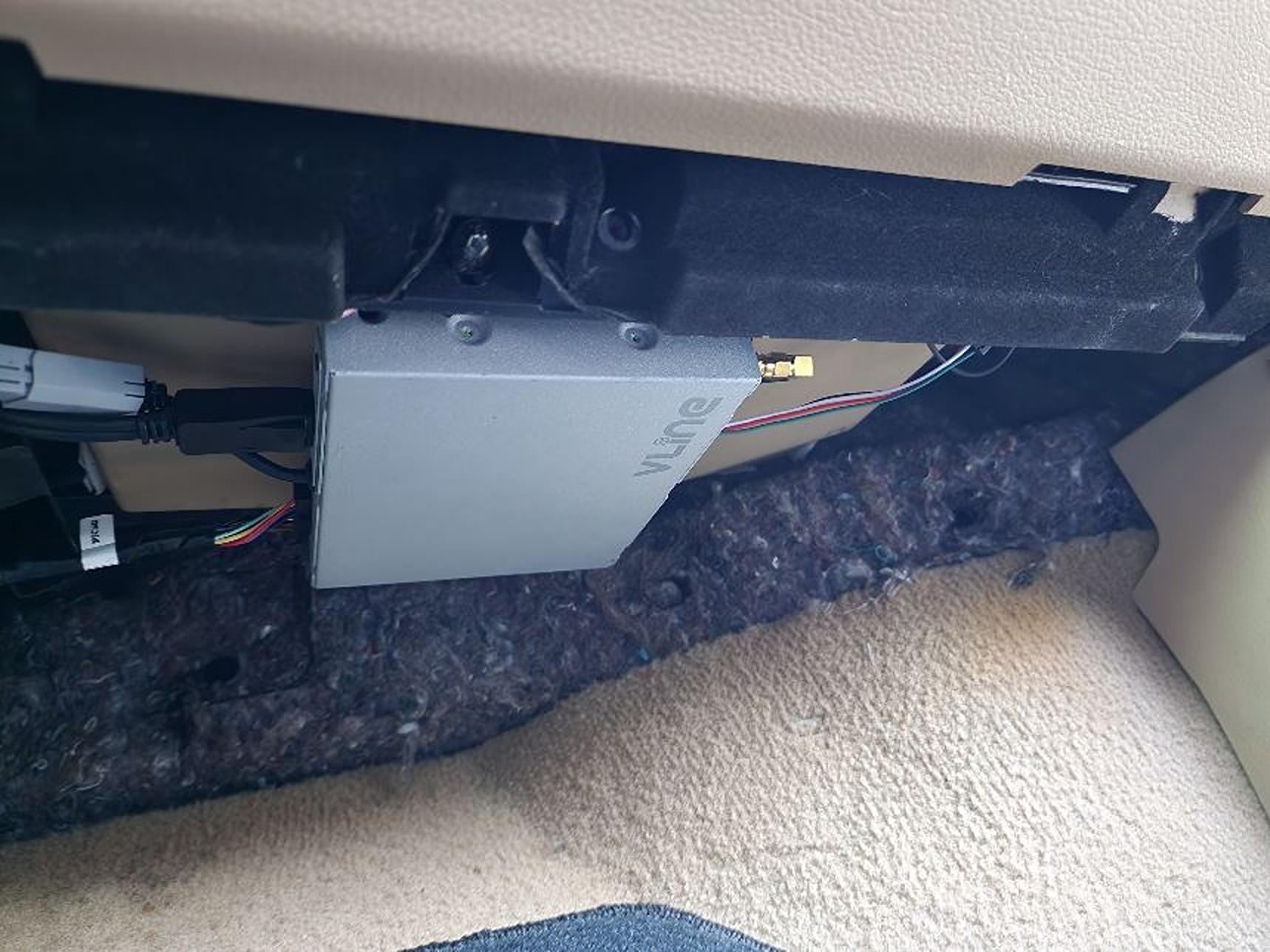
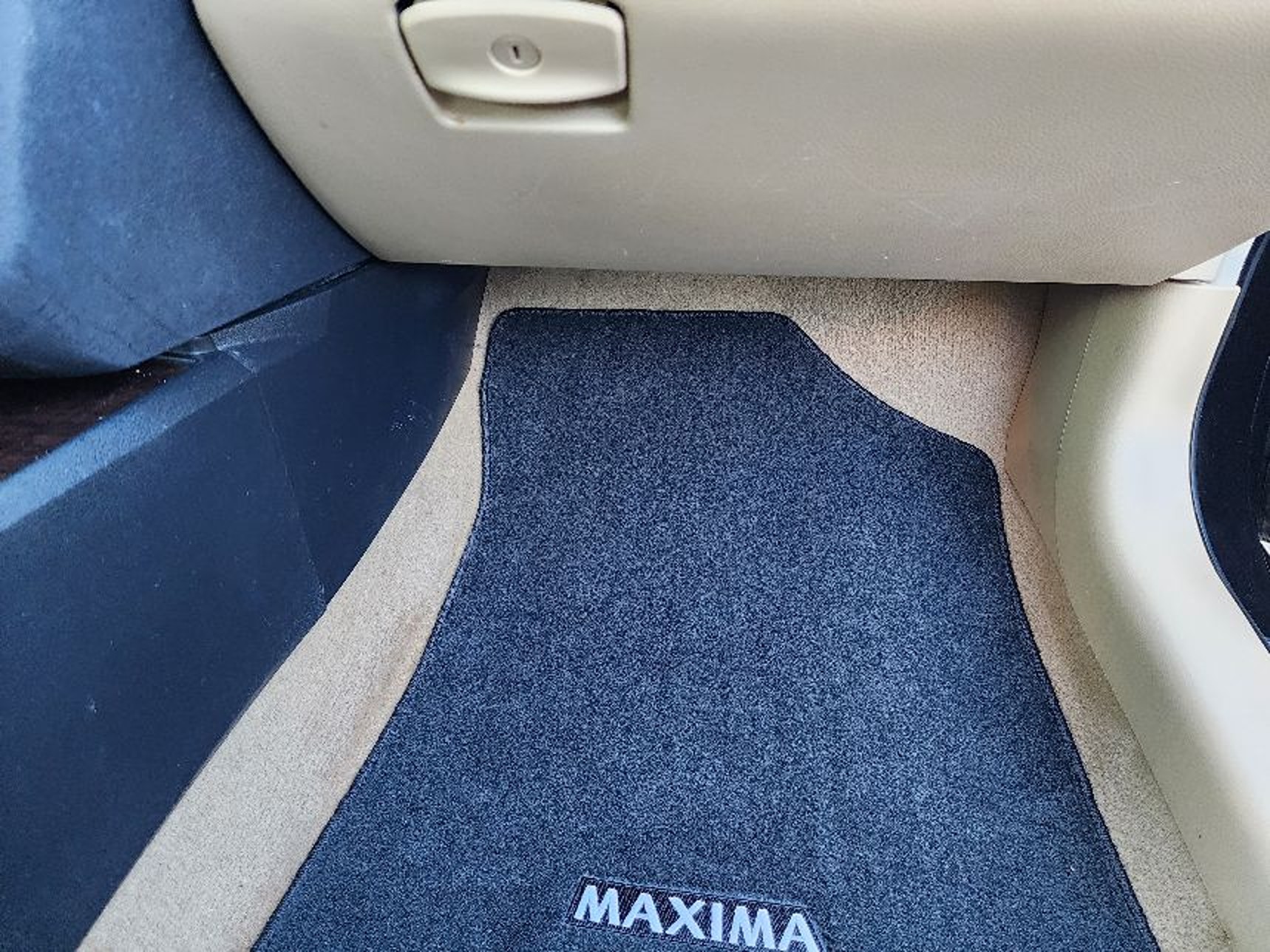
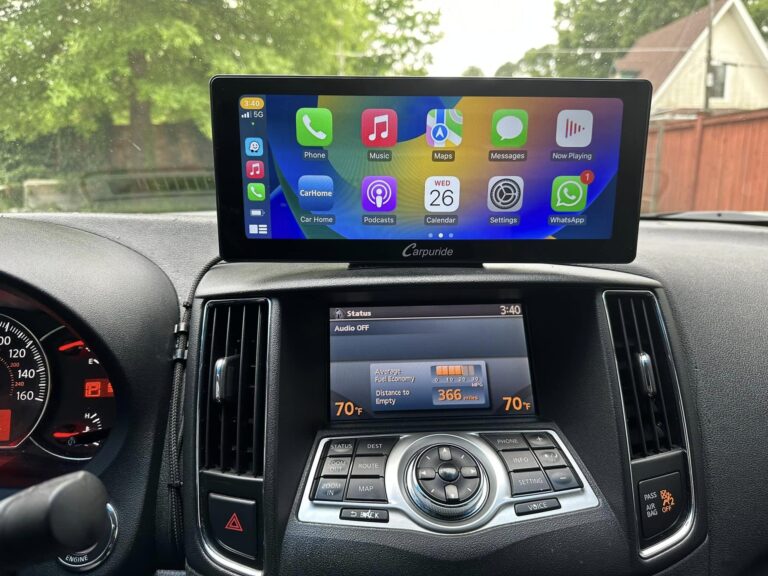
I just installed the Grom VLine VL2 Android Auto and Apple CarPlay add-on. I didn’t want to cut holes in my glove box for wires. I really disliked the idea of having all those wires or the VLine in my glove box, so I looked around and found the perfect place for it. There is just the right space at the bottom of the glove box enclosure for the wires and VLine to fit comfortably. I used Velcro to attach it there.
Down there, the VLine doesn’t move, so there’s no need for extra wire to allow for movement every time the glove box is opened, and I don’t have to worry about the VLine getting bounced around. I can’t tell anything has been done to my system. If I need to access the box to reset the system, as some have had to, I can just reach under there and unplug the cable, or I can pull the box down to get to the wiring or the SD card. I’ll post a couple of photos below to show how it looks—or doesn’t.
To integrate a factory steering wheel control from an A32 model into a Pioneer head unit, particularly in KDM SM5 vehicles, some modifications are necessary. This task was accomplished by employing a combination of soldering and the use of a signal converter module.
The specific module used for this conversion was the EX-PSCAJK, which performs a similar function to the ASCW-1. Essentially, any module capable of translating the factory steering wheel control signals to a format suitable for aftermarket head units would suffice. The unique aspect of the SM5’s factory steering wheel control is that it has a separate circuit for each button, unlike more contemporary cars which use varying resistance values for different signals. To address this, 470 ohm resistors were soldered to each button to create distinct resistance values. This step was crucial for generating variable signals. Finally, to streamline the setup, five wires were merged into a single connection, which was then attached to the module. This modification successfully enabled the use of the original steering controls with the new Pioneer head unit, combining the car’s original functionality with modern technology.
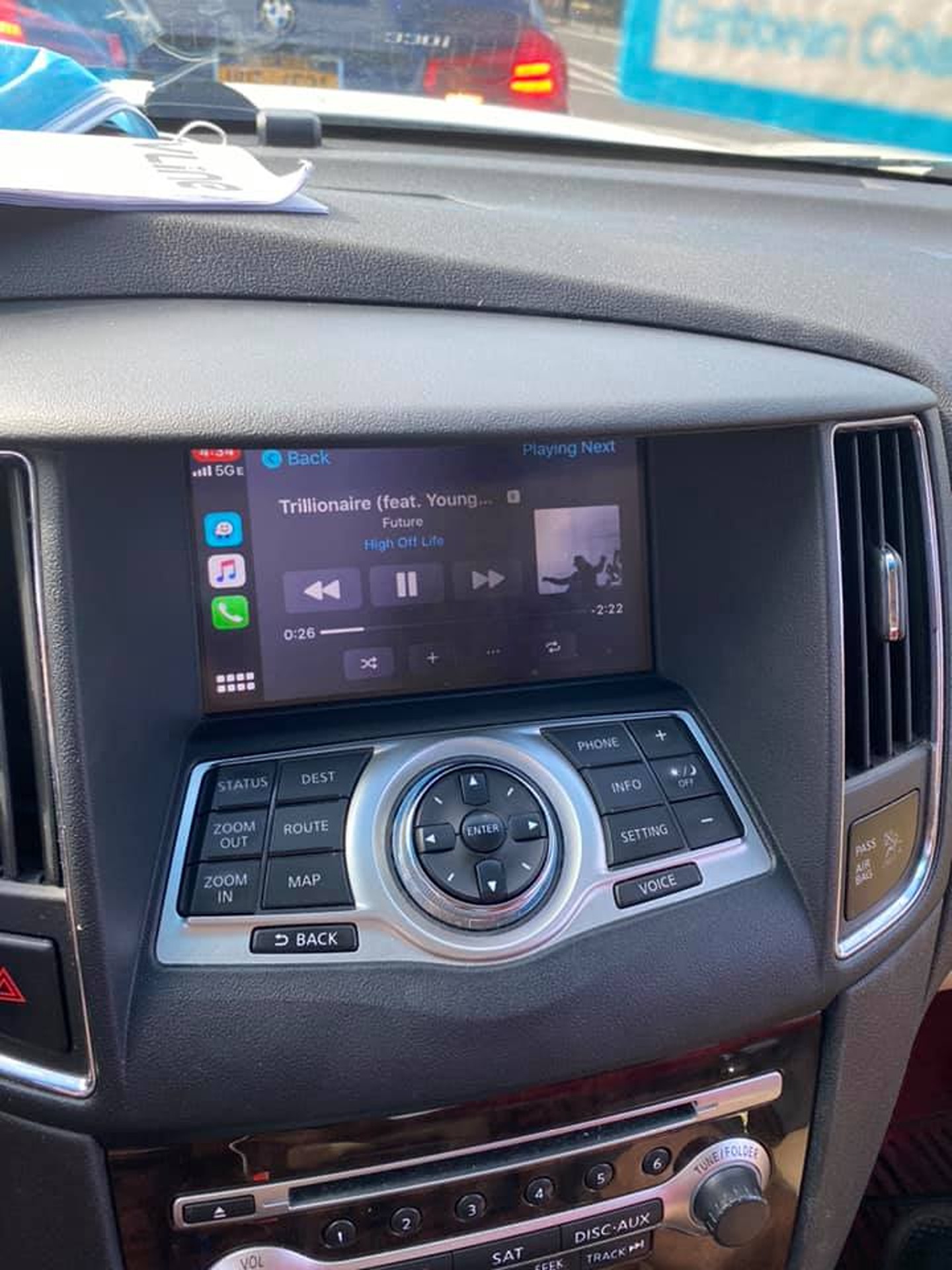
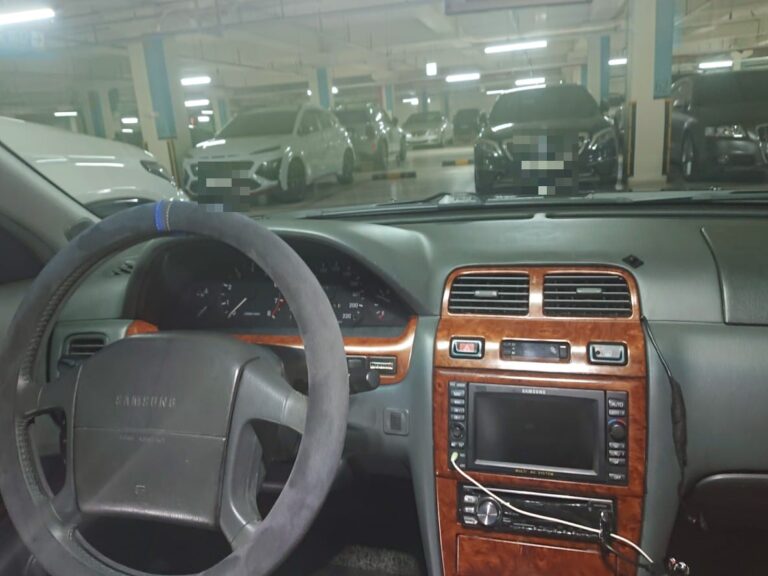
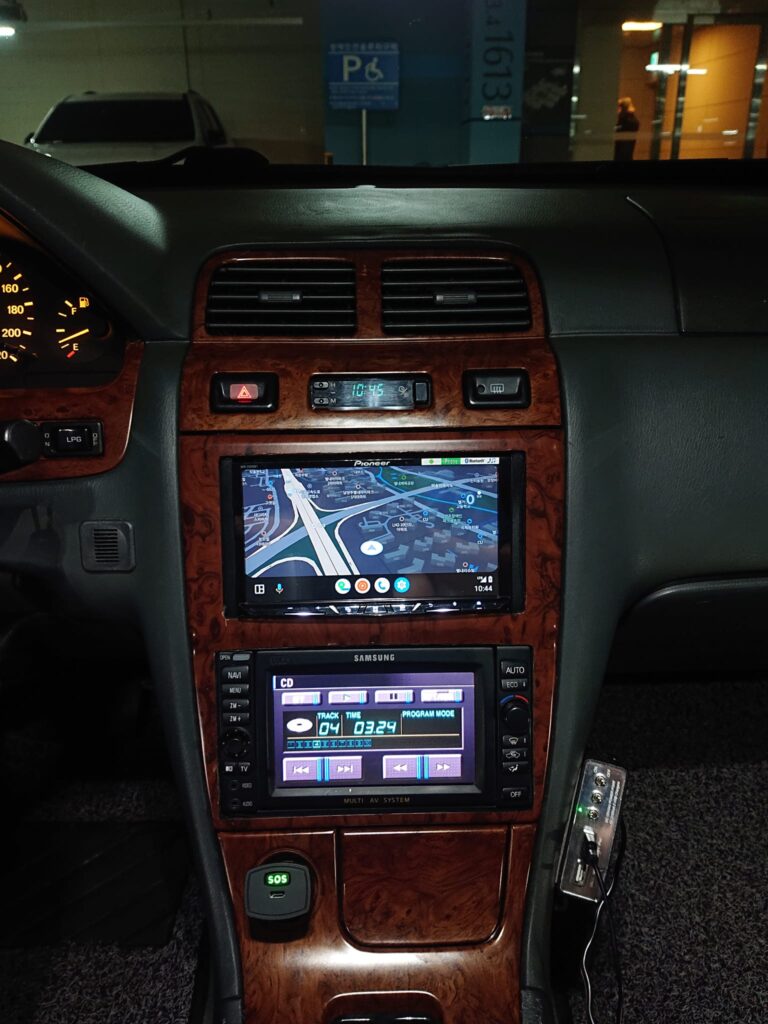
Finally a dual headunit-ish set up on factory nav system equipped 1998 SM525V (based on A32 platform)! Factory nav unit can play audio CDs and has auxiliary stereo input in front so I can use it as CDP and aux interface since it is connected to Pioneer AVH-Z5050BT via DIN 8pin to RCA adapter.
SM5’s nav system comes with single-din headunit from factory so the center trim piece is different from that of I30. I modified already-custom trim piece which other people made to flush-mount aftermarket GPS on manual climate control equipped car.