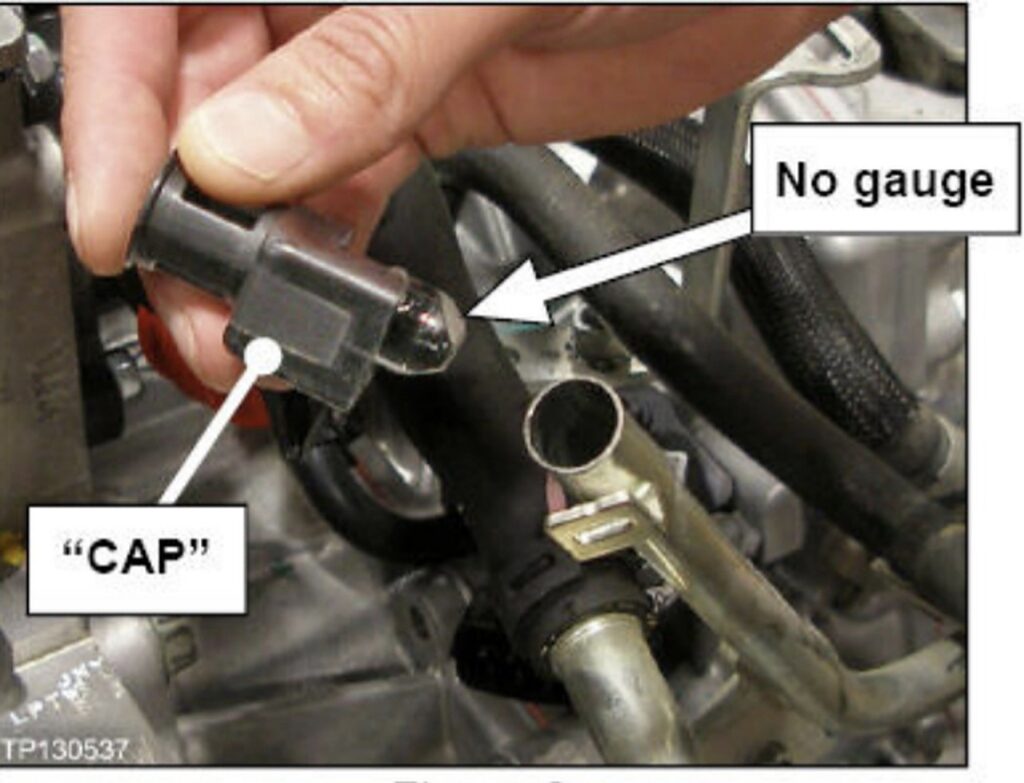
The 2016+ 8thgen Nissan Maxima does not come with a dipstick to fluid levels, unlike other generations. All new CVT transmissions from 2013-up are equipped with locking dipstick caps but no dipstick, with some Sentras and Versas being the exception to the rule. This was done to prevent the layman from screwing with fluid, etc.
Nissan service manual recommends changing CVT fluid when CVTF deterioration date is 210,000. The only way to check CVTF deterioration is through Consult-III+ scan tool. You can also do this with a CVT app on Android phones. The app is called CVTz50 and costs $5 bucks. You can read more about it here.
However, there is a way to check the fluid level. The service manual directs you to pump 2-3 quarts of NS3 into the overfill plug on the underside of the transmission. Not everyone has this fluid pump (ie. anyone that doesn’t work in a Nissan dealership.) The way around this is just to dump the fluid in through the dipstick tube with a funnel. It’s the quickest and easiest way around not having the fluid pump. The goal is to overfill the transmission by a quart or two. Next, you’ll have to hook up some kind of scan tool that can read transmission fluid temperature. The only way to monitor proper fluid level is by reading transmission fluid temp.
Hook up your scan tool, get the data monitor ready to view transmission fluid temp, and start the vehicle. Allow it to idle for ~10 seconds. While holding your foot on the brake, shift to reverse and hold it for ~5 seconds. Shift through all of the gears in this manner with your foot still on the brake to allow the fluid to work its way through the control valve assembly and all oil passages. This will ensure that the fluid in the pan is at the correct level. Shift back into park.
After you’ve done this, wait for the transmission to warm up to 95 degrees Fahrenheit. At this point, remove the 14mm overflow bolt on the bottom of the transmission. Fluid will begin to pour out, so be prepared. Monitor fluid temp while watching the CVT fluid flow from the overflow tube. Verify that the fluid slows to a fast “drip” before transmission temp reaches 113 degrees Fahrenheit. 95-113F is your temperature adjustment window. Once the fluid has slowed to a fast drip, install the overflow plug and you’re on your way!
In the event that the transmission was “too” overfilled and CVT fluid flow from overflow tube doesn’t slow before 113F, reinsert the overflow plug and allow the transmission to cool down. Lather, rinse, and repeat the above procedure.
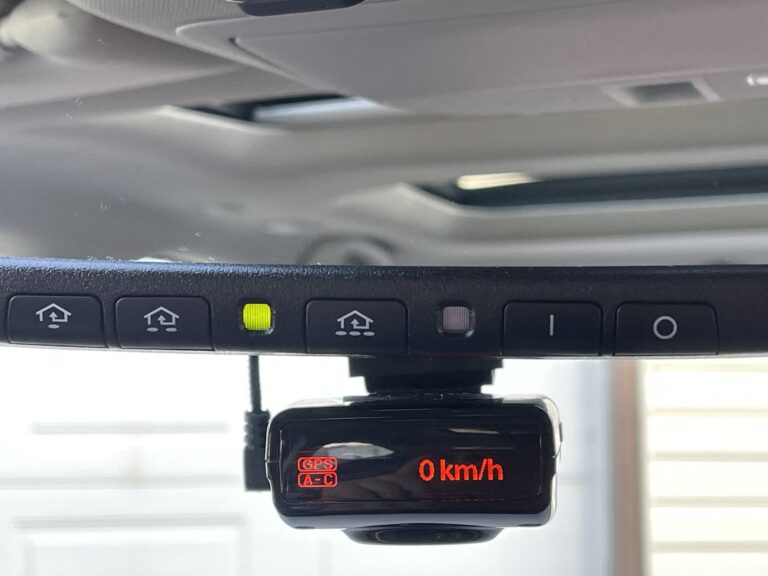
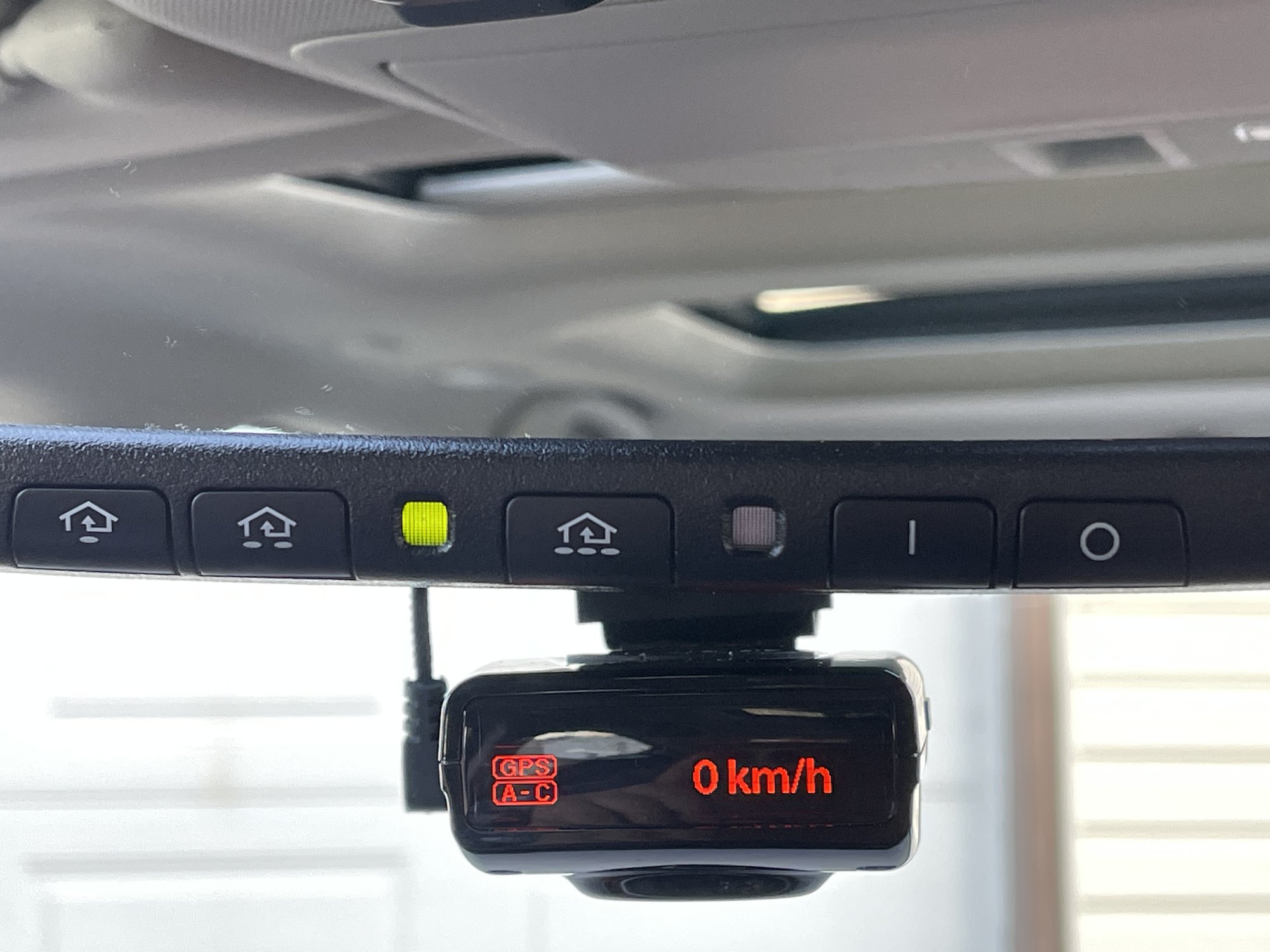
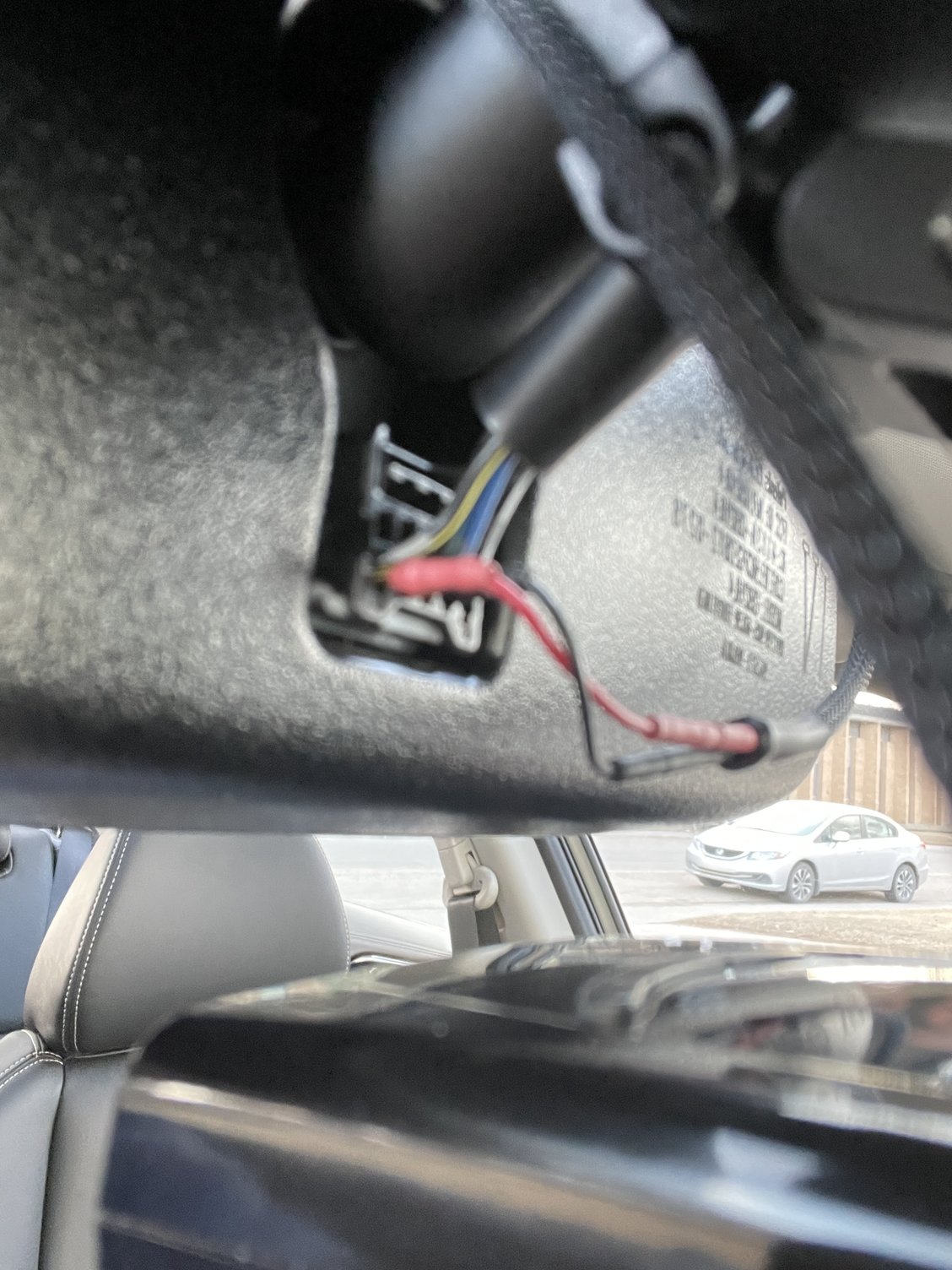
Just finished hardwiring Radenso pro-M with Blendmount and Mirrortap to my 2020 Maxima Platinum over the weekend. This is for rearview mirror with Auto Dimming and Homelink.
White/Black wire is + constant 12V (near driver side)and the “third” wire Black is – Ground.
Yellow/Black wire is + for ACC 12V. (passenger side)
Pricing is for March 2021
Mirrortap MTX-2015 US $59.52 (blendmount.com)
Radar detector used is Radenso Pro-M CAD$680.38(Bestbuy.ca)
Mount is BlendMount BRD-200R CAD$159.56 (Amazon.com)
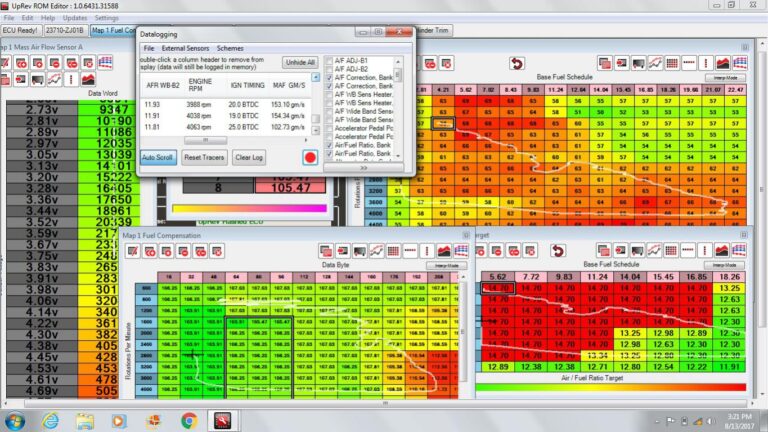
UpRev is still working on this ECU. Once it becomes available, the 8thgen 6-Speed Swap will become a reality as the proper tuning will be available (like the 7thgen Nissan Maxima).
About 6 months ago I received the death code P1778 (stepper motor) in my 2008 Altima. I searched far and wide, low and high, only to be told 2 things… you need a new transmission, or you need a new valve body. Since I didn’t have $2500 for a new trans, let alone $800 for the valve body I decided to look into this a little further. watched a YouTube video the only one I could find was a Nissan armada, but thought what the hell. I drained the fluid, dropped the pan, yanked out the valve body, and found that little bastard that gave me such trouble.
Now with part in hand I went to my local parts store, and told we don’t sell that part, its not even in our system… went to the dealership, told the same thing and was told I needed to buy a new transmission as they are not “serviceable” funny but I had the part in hand, how can it be not serviceable?
Lastly I took a gamble, I went to eBay, ordered a stepper motor. 20k miles later, still no code, no whine, and no lock up.
Part Number: 203452A Description: JF011E RE0F10E F1CJA Transmission CVT Stepper Motor For SENTRAN Nissan Dodge Refurbished Price: $30-$40
Here is how I saved thousands and bought a $35 part.
Drain fluid.
Drop pan (clean with brake cleaner)
Remove the 3 bolts holding filter. (clean with brake cleaner while your at it)
Remove the valve body about 11 bolts
Remove the stepper motor from the top of the valve body (the side you can’t see with the pan off) 2 bolts
Take a piece of dental floss about a foot long and hold the spring loaded arm back against the stepper motor and return the valve body back to the transmission.
After you have a few bolts in place remove the floss before you tighten all the way.
Reconnect trans filter and bolt back into place.
Rejoin the fluid pan to the transmission and replace with quality CVT fluid. Amsoil makes a great product.
I hope this helps and if you have questions please feel free to ask.
Video How-to (Many thanks to Budget Drift for this)
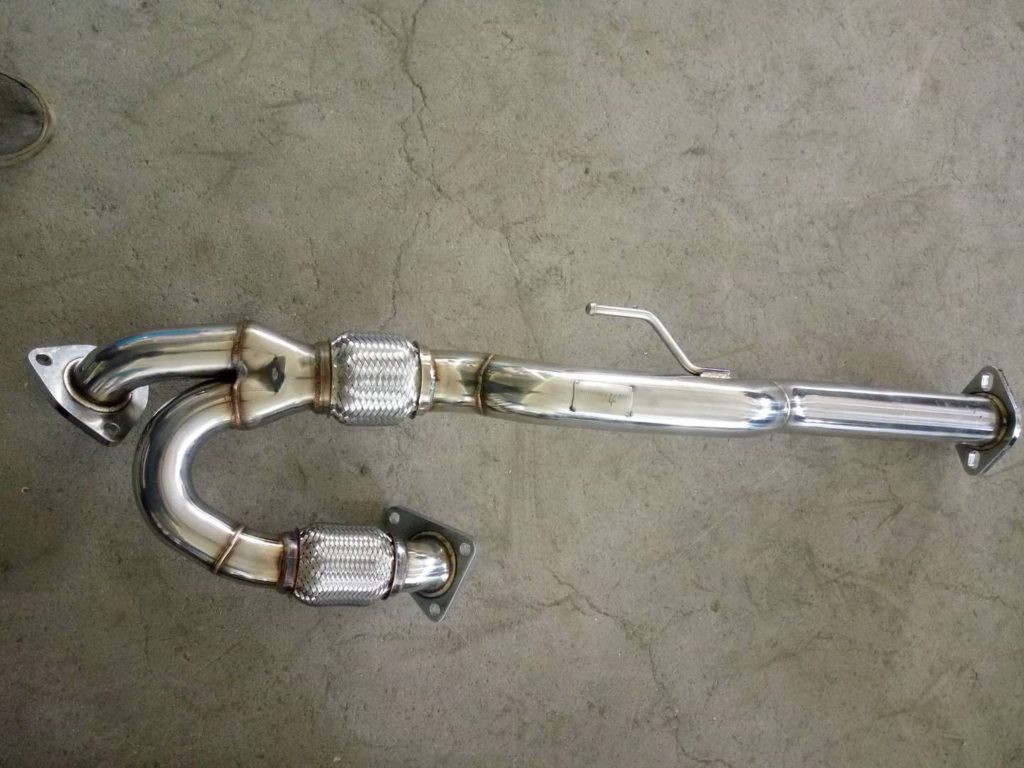
Price: $330.00 + Shipping (Add $10.00 for new set of Gaskets) Ordering Info: To order, you can email Adam at SilverSpyder117@Gmail.com
Notes: This will not void any warranty under the Magnuson Moss act. Yes, it deletes the 3rd unmetered cat. No it does not cause any check engine lights or codes. Direct bolt on about 45 min. Install. Yes this will fit 7th and 8th gens alike. This will not fit an Altima SE-R due to the rear header connection only.
About Product & Seller:
Jemini Power Performance was officially founded on 12/28/17 and named after my beautiful wife who God has blessed me with and who puts up with me dedicating my time to this community. This business and group were created for the 7th and 8th generation, Nissan Maxima. We are specializing in bringing back the well sought after performance y-pipe for the VQ35.
We took the Racingline y-pipe and revamped it to a whole new level. Racingline used bare materials such as mild steel, mild coated with aluminum, and 201 stainless steel to produce the initial y-pipe. We had it tested to see these results. Many people have seen the results of this down the road with rust and premature failure.
What we are now bringing to the Maxima community is far better. Top-quality 304 stainless steel construction throughout that will not rust, all custom made gaskets for 2 entry and 1 exit path, shortened .5 inches to meet OEM specifications and a 2 year warranty.
Everyone knows what these y-pipes do and are capable of. If you have questions please ask. From my own experience, I felt a difference immediately after install. Much smoother powerband from the CVT, no lag at all, and steady pickup. From 0 much more responsive and carries that power to well over 100+.
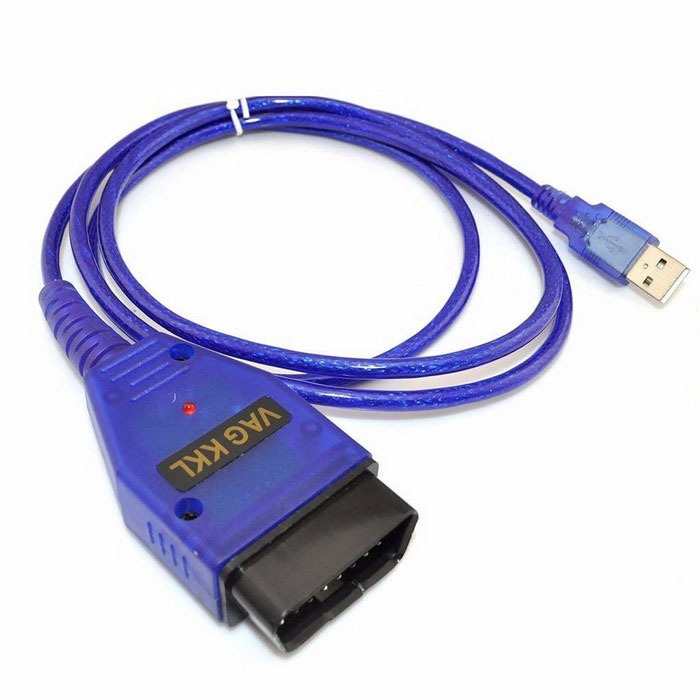
If you are DIY person and love working on your Nissan Maxima, then this tool is a MUST HAVE! When you go to the Nissan dealer, the person working on your car typically uses a tool called a Nissan Consult. The Nissan Consult that the dealer uses costs thousand of dollars and is only available to dealers. By using the Nissan DataScan software, a laptop and a generic VAG COM OBDII adapter you can achieve just about the same level of on-board diagnosis that $5,000 Nissan Consult provides.This software allows you to:
Check CEL codes
Check/Reset ABS and SRS-Airbag Faults
Check/Reset TCM Codes
Adjust timing
Perform Idle Air Relearn
Reset ECU learned settings
Data-log
Program keys
Check Emissions Readiness Monitors
Active Test temporary modify some of the engine parameters for testing purposes
And Much much more….
The software itself costs $55.00 and generic cable costs around $7.00-$8.00.
You can find the cables on eBay between $12.00-$20.00 shipped. It ranges based on location and shipping. Search for the following keywords on eBay and you will find it: “KKL 409.1 VAG-COM OBD2 USB Cable”
Below are all the functions it provides:
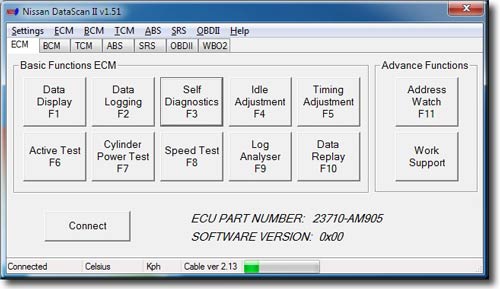
ECU Part Number
This is the main window of the NDSII software which shows the ECM Nissan Identification part number. Basic and Advance Functions can be selected by clicking on the buttons, using the shortcut keys (F1 – F11) or using the Menu bar. Most functions except Data Replay and Log Analyser are disabled until communication with the ECU is successfully established.
Progress bar at the bottom indicates communication between the ECU and PC. If the bar is not moving there is no data being received from the ECU.
Data Display Settings
This window is used to assign parameters to be displayed by the Data Display function. Only parameters that are supported by the currently connected ECU are available for selection. Gauges are counted from left to right, top to bottom. Multiple gauges can monitor the same parameter.
Data Logging ECM
Selected parameters can be logged to a file. This function can also be accessed from the Data Display window. The data log file can be analysed using the Data Replay or Log Analyser functions.
Self Diagnostics ECM
Self Diagnostics function allows users to read and reset engine ECU error codes.
Idle Adjustment
Idle Adjustment function allows users to adjust the base idle RPM. The setting is saved to the ECU and it does not reset with engine restart.
Timing Adjustment
Timing Adjustment function allows users to adjust the base ignition timing. The setting is saved to the ECU and it does not reset with engine restart.
Active Test ECM
Active Test allows users to temporary modify some of the engine parameters for testing purposes. They return to their original values when a function is stopped, PC disconnected or engine restarted.
Note: It is possible to damage the engine if the A/F Base % functions is used to excessively modify fuel delivery. Likewise the engine may overheat if the Engine Temperature is set to low for a long period of time. Do not use those functions if you are not sure how they will effect your engine.
Work Support
Work Support functions allow users to perform some of the advance service procedures. Those procedures may need to be performed after replacement parts are installed.
Clear Self Learn – clears the A/F Base SL map learned by the ECU.
Idle Air Volume Learn – is an operation to learn the fully closed position of the throttle valve.
Program Immobiliser Key – allows to register the Nissan transponder keys with the Immobiliser Note: The immobiliser security PIN CODE needs to be known. Initially all registered keys will be erased and all keys will need to be reregistered.
Cylinder Power Test
Cylinder Power Test function can be used to identify cylinder that is under performing. This function allows shutting down individual cylinders. If all of the cylinders are producing the same amount of power the engine RPMs will drop exactly the same amount on each cylinder that is cancelled.
Log Analyser is used to review log files previously generated by with Data Logging function. Graphs are drawn by selecting boxes next to parameter value. Graph colours match the parameter value colours.
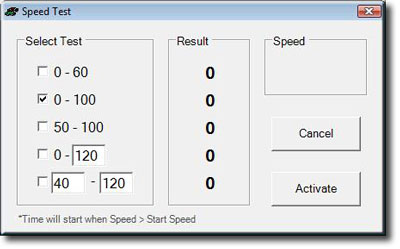
Speed Test
Speed Test is a unique function for measuring car’s acceleration performance. Predefined or user specific tests can be used. Due to the low resolution of Nissan speed sensors, measurements should only be used as a guide and not a true reflection of car’s performance.
Note: This function should not be used while driving on public roads.
Address Watch
Address Watch function is used for monitor specific ECU memory addresses. By monitoring a memory address extra information can be retrieved that is not normally available using Consult II protocol. A knock sensor reading can be obtain using this method if knock sensor memory address is known.
Wideband O2 sensor
Nissan DataScan II also supports wideband Air/Fuel ratio meters from Innovate Motorsports. A second serial port is used to connect to the controller and collect data.
The data from the wideband meter can be displayed or logged in conjunction with other engine parameters using the Data Logging function.
ECU Part Number BCM
The BCM tab shows the BCM Nissan Identification part number. Basic Functions can be selected by clicking on the buttons or using the Menu bar. All functions are disabled until communication with the ECU is successfully established.
Progress bar at the bottom indicates data being send between the ECU and PC. If the bar is not moving there is no data being received from the ECU.
Note: Some vehicles may use K line for diagnostics of engine ECU (ECM) but still use DDL1 line for diagnostics of other control modules. This software does not support diagnostics over the DDL1 line. Some of those models are: X-trail, Maxima, Patrol.
Self Diagnostics BCM
Self Diagnostics function allows users to read and reset BCM error codes.
Active Test BCM
Active Test allows users to temporally activate some of the functions of the BCM. This is usually used to manually test the functionality of the systems controlled by the BCM.
Note: Functions not supported by the BCM are disabled (grayed out).
ECU Part Number TCM
The TCM tab shows the TCM Nissan Identification part number. Basic Functions can be selected by clicking on the buttons or using the Menu bar. Most functions except Data Replay and Log Analyser are disabled until communication with the ECU is successfully established.
Progress bar at the bottom indicates data being send between the ECU and PC. If the bar is not moving there is no data being received from the ECU.
Note: Some vehicles may use K line for diagnostics of engine ECU (ECM) but still use DDL1 line for diagnostics of other control modules. This software does not support diagnostics over the DDL1 line. Some of those models are: X-trail, Maxima, Patrol.
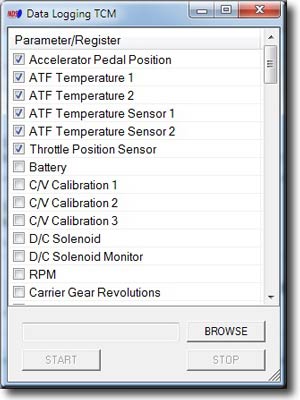
Data Logging TCM
Selected parameters can be logged to a file. This function can also be accessed from the Data Display window so the data can be logged while it is displayed. The data log file can be analysed using the Data Replay or Data Analyser functions.
Self Diagnostics TCM
Self Diagnostics function allows users to read and reset TCM error codes.
ECU Part Number ABS
The ABS tab shows the ABS Nissan Identification part number. Basic Functions can be selected by clicking on the buttons or using the Menu bar. Most functions except Data Replay and Log Analyser are disabled until communication with the ECU is successfully established.
Progress bar at the bottom indicates data being send between the ECU and PC. If the bar is not moving there is no data being received from the ECU.
Note: Some vehicles may use K line for diagnostics of engine ECU (ECM) but still use DDL1 line for diagnostics of other control modules. This software does not support diagnostics over the DDL1 line. Some of those models are: X-trail, Maxima, Patrol.
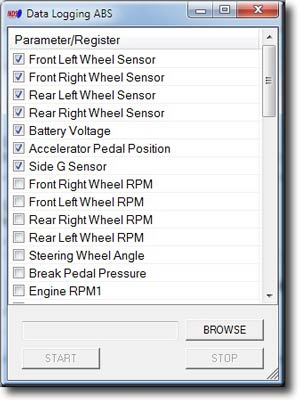
Data Logging ABS
Selected parameters can be logged to a file. This function can also be accessed from the Data Display window so the data can be logged while it is displayed. The data log file can be analysed using the Data Replay or Data Analyser functions.
Self Diagnostics ABS
Self Diagnostics function allows users to read and reset ABS error codes.
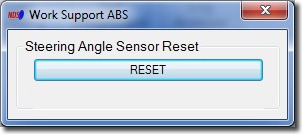
Work Support ABS
Work Support functions allow users to perform advance service procedures. Those procedures may need to be performed after replacing parts.
Steering Angle Sensor Reset – After removing/installing or replacing VDC/TCS/ABS control unit, steering angle sensor, steering components, suspension components, and tires, or after adjusting wheel alignment, make sure to adjust neutral position of steering angle sensor before running vehicle.
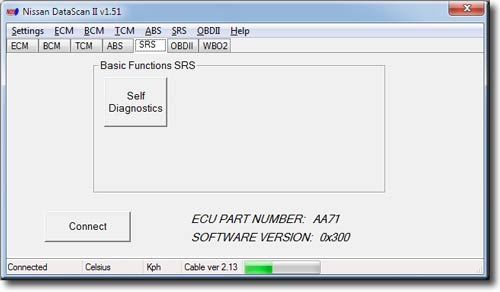
ECU Part Number SRS
The SRS tab shows the SRS Nissan Identification part number. Basic Functions can be selected by clicking on the buttons or using the Menu bar. All functions are disabled until communication with the ECU is successfully established.
Progress bar at the bottom indicates data being send between the ECU and PC. If the bar is not moving there is no data being received from the ECU.
Note: Some vehicles may use K line for diagnostics of engine ECU (ECM) but still use DDL1 line for diagnostics of other control modules. This software does not support diagnostics over the DDL1 line. Some of those models are: X-trail, Maxima, Patrol.
Self Diagnostics SRS
Self Diagnostics function allows users to read and reset SRS error codes.
Note: Recorded faults are historical and can not be cleared.
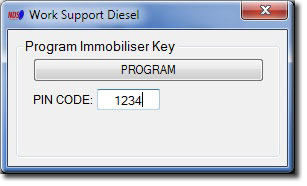
Work Support
Work Support functions allow users to perform the advance service procedures. Those procedures may need to be performed after replacement parts are installed.
Program Immobiliser Key – allows to register the Nissan transponder keys with the Immobiliser Note: The immobiliser security PIN CODE needs to be known. Initially all registered keys will be erased and all keys will need to be reregistered.
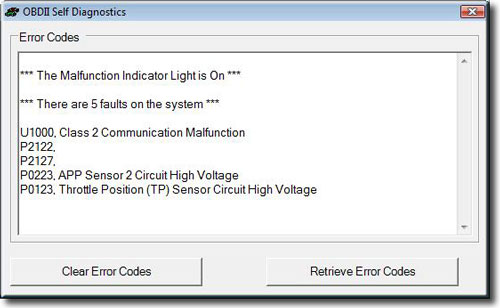
OBDII Self Diagnostics
OBDII Self Diagnostics function allows users to read and reset ECU error codes.
OBDII Monitor Status
OBDII Monitor Status shows the current status of various monitoring systems used by the car’s engine management system.
OBDII Log Analyser
Log Analyser is used to review log files previously generated by with Data Logging function. Graphs are drawn by selecting boxes next to parameter value. Graph colours match the parameter value colours.
OBDII Fuel System Satus
OBDII Fuel System Status can be used to check if the car’s fuel system is running in Closed Loop mode.
Fuel systems do not normally refer to injector banks. They are intended to represent completely different fuel systems that can independently enter and exit closed loop fuel. Banks of injectors on a V-engine are generally not independent and share the same closed-loop enablement criteria.
OBDII Data Logging
Selected OBDII parameters can be logged to a file. The data log file can then be analysed using the Log Analyser function.
Due to the slow nature of OBDII protocol it’s recommended to log only the required parameters.
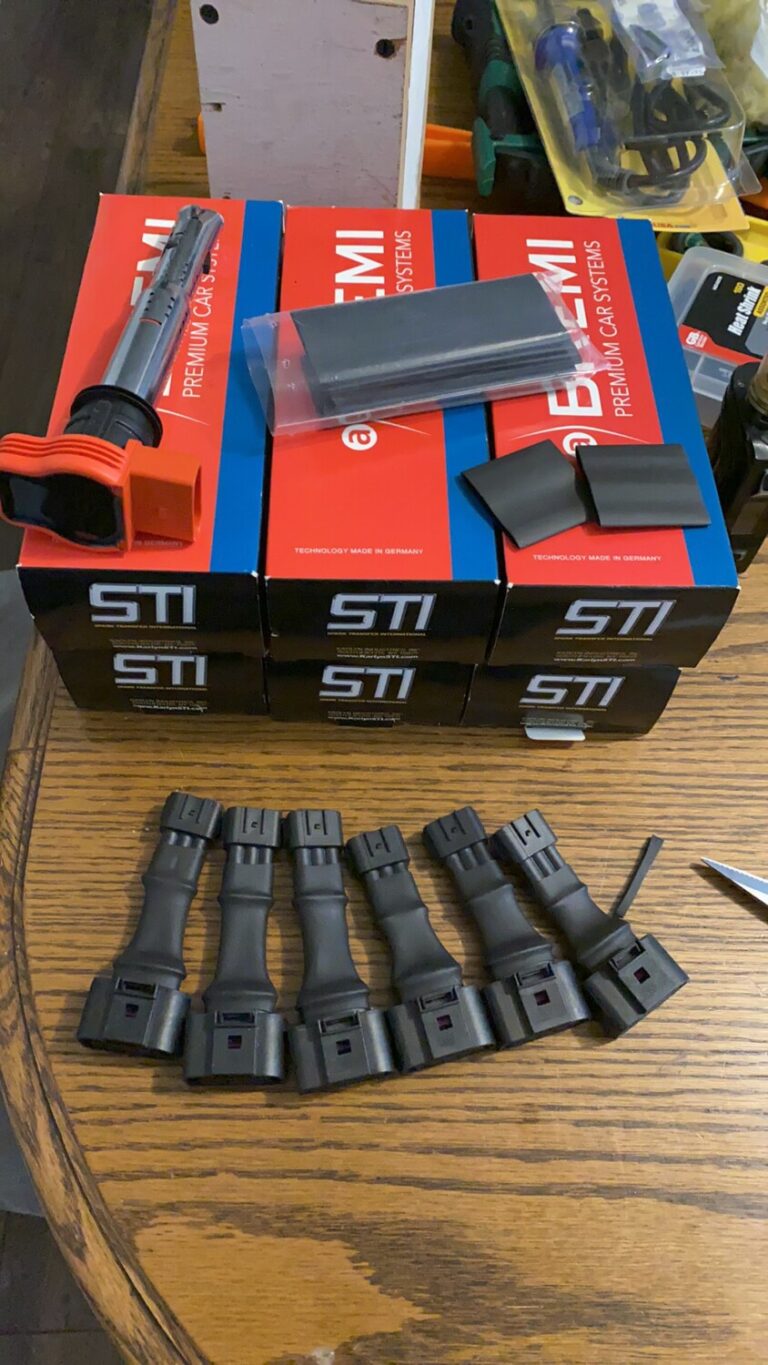
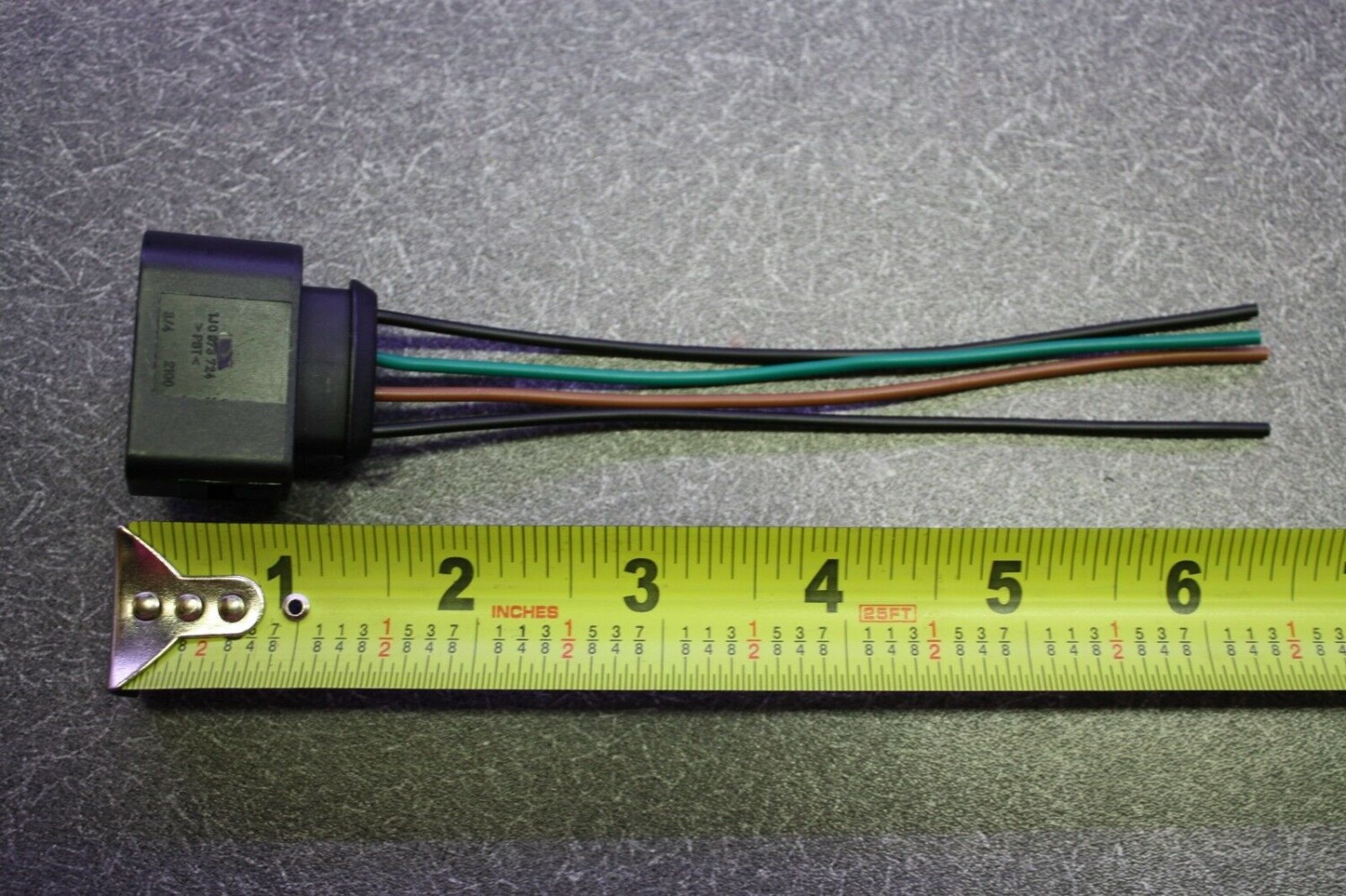
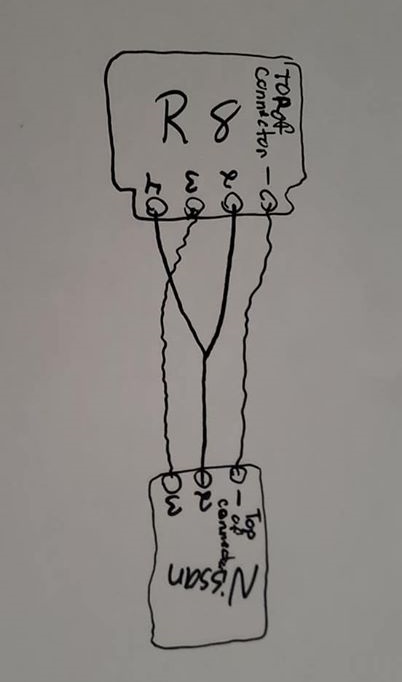
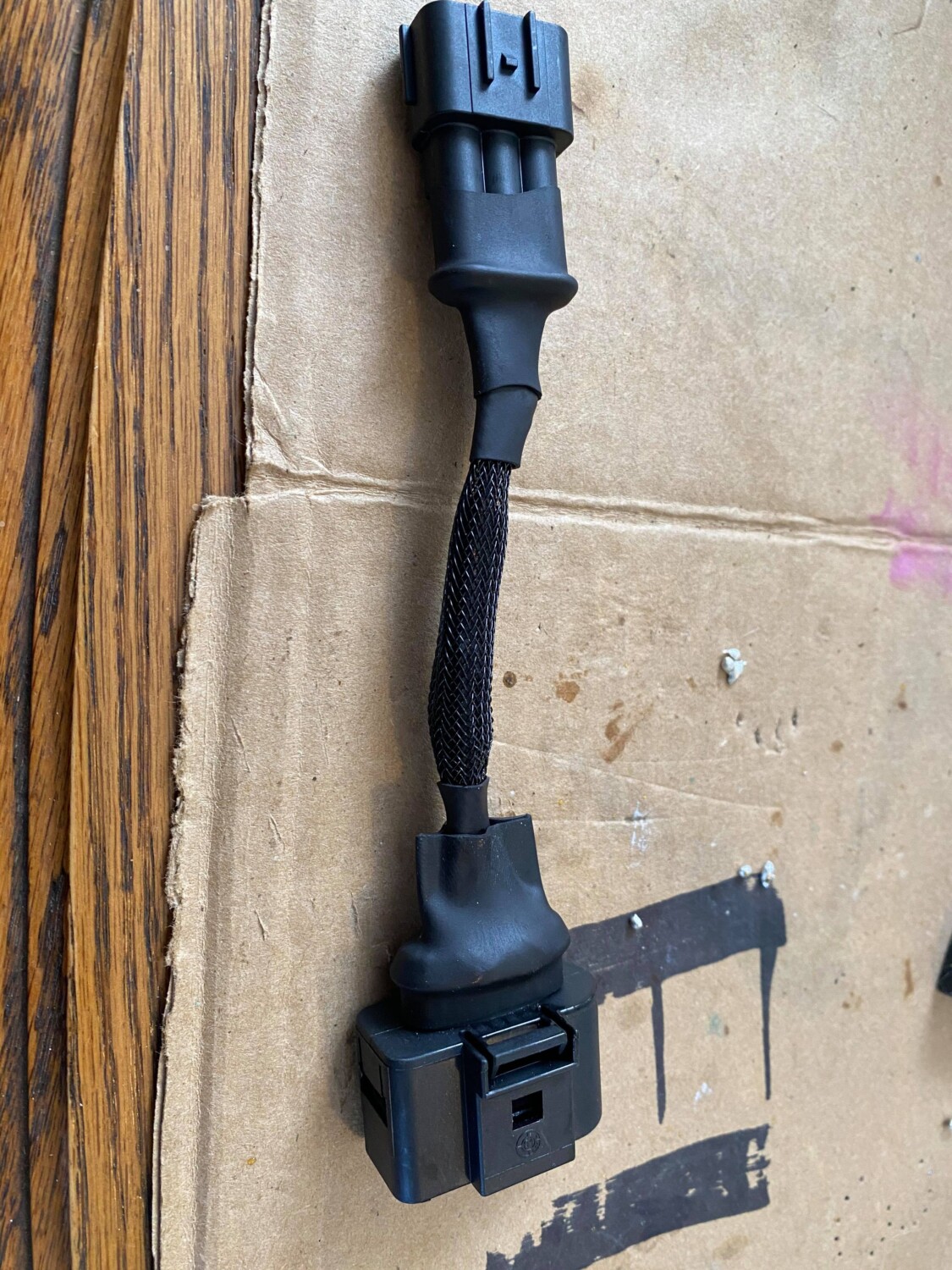
This write-up will help you make your own Audi R8 Coil Pack connectors. This version is very nice and clean. You can also hit up Nathan Davis on Facebook if you would like for him to make you a set.
Important Note: On the VQ35DE (2002-2008), you will need to use NWP Spacers for the Coil Packs to sit properly. The Gen2 VQ35DE (2009+) do not require spacers. You will also need the adapters to plug them in or make your own by splicing directly.
Part Description: 6x Male Connector 3-way for Mazda Ignition Coil UF540
Price: $44.99
Additional Items:
1” by 4” Heat Shrink
Terminal Crimpers
Heat Gun
Wire Strippers
Wiring Diagram
Connector Soldering
Final Product
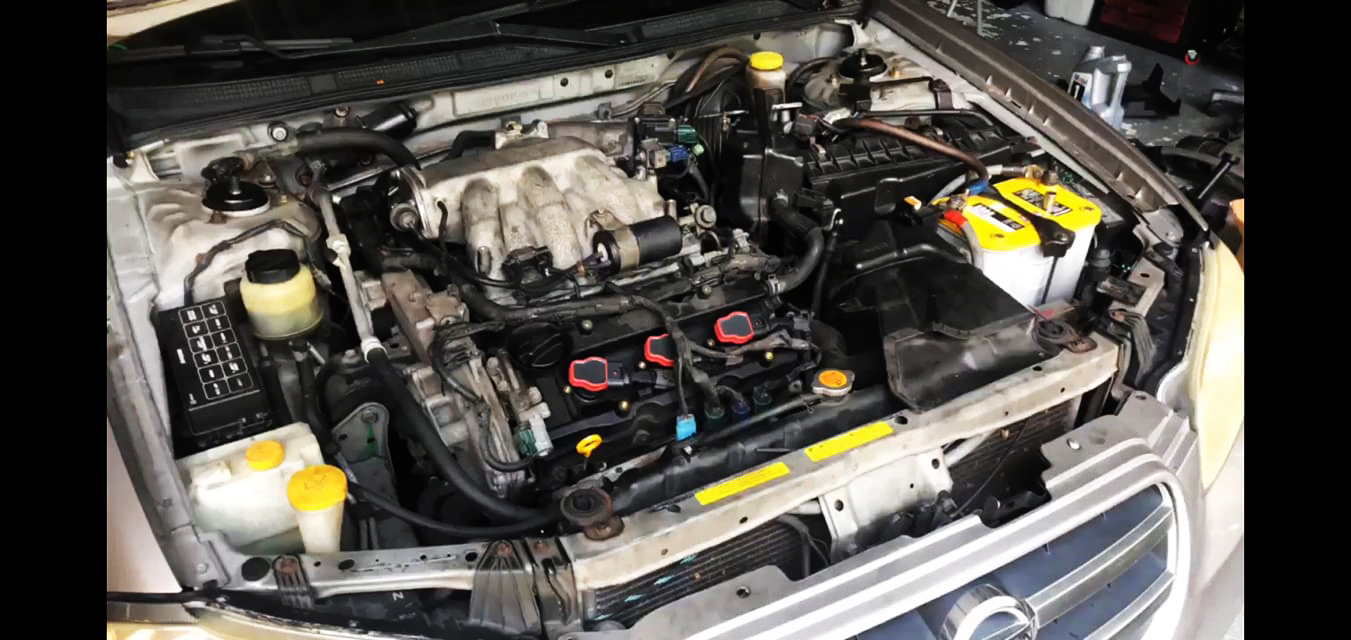
Installation Photos
Audi R8 Coil Pack Advantages:
50,000 volts compared to Nissans/Infiniti 30,000 volts.
Some measure it with Kv so Nissans coils put out 21Kv while VW coils put out 30Kv
Quicker Heat dissipation. (Because of its metal body construction it can quickly dissipate heat. Nissan OEM body is made out of rubber that isolates heat instead of disperses it.)
More complete burn of the fuel mixture compared to OEM Nissan which equals to better MPG.
Idle Stability Improved
NO CEL (Check Engine Lights)
BEST PART ABOUT THEM IS THEY ARE CHEAPER $$$ than Nissan OEM yet they are much better.
Looks 10000% Cooler than OEM Coilpacks
Now the coil packs price varies due to different name brands. They range from $132-$216 for a V6 engine. Below is the link of the coil packs below so you can see the prices and brands. Doesn’t matter which brand you use. They all make the same exact power.
NASHVILLE, Tenn. – A new Maxima 40th Anniversary Edition joins the 2021 Nissan Maxima lineup when it goes on sale this fall. The limited production package builds on the fully equipped Maxima Platinum grade and includes:
Unique two-tone Ruby Slate Gray Pearl exterior color with black roof
Exclusive 19-inch gloss black aluminum-alloy wheels
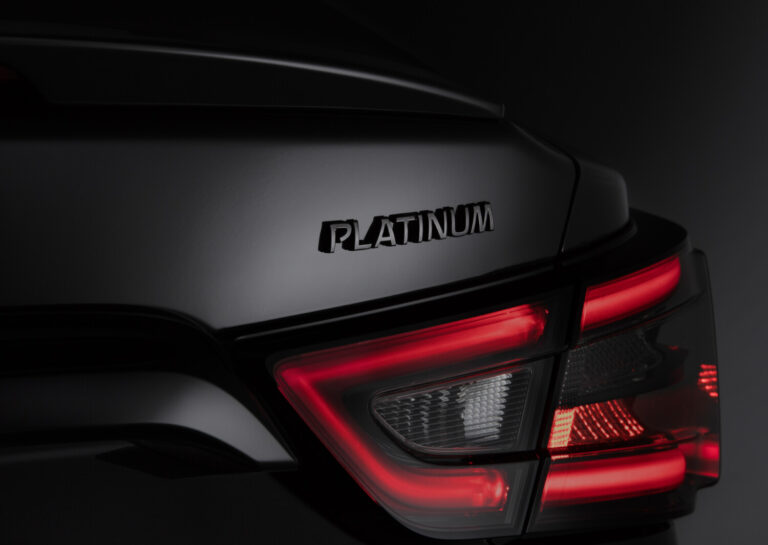
Black exterior finishers and trim badges, including 40th Anniversary badge
Black exhaust finishers
Red semi-aniline leather-appointed seating with 40th Anniversary embossing
Red contrast interior stitching
Satin Dark Chrome interior faceted finishers
White speedometer and tachometer faces reminiscent of past Maxima models
Heated rear seats
Maxima is the longest continuous running Nissan nameplate in the U.S., linking back to 1981, the year Maxima was first sold here.
As the flagship of Nissan’s vibrant sedan lineup, which includes the trio of recently redesigned Altima, Sentra and Versa models, Maxima continues to garner prestigious industry awards. In June, Maxima was named the top vehicle in the Large Car segment of J.D. Power Initial Quality Study for the third consecutive year. In July, Maxima led J.D. Power’s APEAL Study Large Car category, again for the third year in a row and 30 points ahead of the segment average. It has also achieved a Top Safety Pick rating from the Insurance Institute for Highway Safety for five straight years1.
In addition to the 40th Anniversary Edition, the 2021 Maxima will be offered in SV, SR and Platinum grade levels – each equipped with a 300-horsepower 3.5-liter DOHC 24-valve V6 engine and Xtronic transmission.
The Original “4-Door Sports Car”
Today, Maxima is known for its premium level of luxury with performance and sportiness. For generations, before the arrival of diamond quilted Ascot leather-appointed seats, Satin Birdseye Maple wood finishers and 11-speaker Bose® Premium Audio system, it was simply known as the “4-Door Sports Car.”
Now in its eighth-generation, Maxima’s storied history as an authentic sports sedan goes back even farther to the Datsun Bluebird 810 of the late 1970s. The 1981 Datsun 810 – often described as a larger interpretation of the legendary Datsun 510 – was the first to carry the Maxima nameplate.
Dropping the 810 name, the true first generation Maxima featured the engine of the 240Z and a 5-speed manual transmission at a time when industry standard was a 4-speed box or less. Next came the second-generation 1985 – 1988 Maxima, which was the first to offer a V6 engine and front-wheel drive. It was the last to be available with a station wagon body.
The third-generation Maxima emerged in 1989 as the true 4DSC. Considered the best affordable sedan in the world by many, it was powered by a 160-horsepower 3.0-liter V6 and went head-to-head against European sports sedans in road test comparisons by leading automotive publications.
Not willing to rest on its laurels, the Nissan engineering team came back in 1995 with a larger body design and featuring a new engine, new rear suspension and 30 extra horsepower (190-hp). It was chosen as Motor Trend’s Import Car of the Year and was included on Car and Driver’s 10 Best list.
Three more generations followed quickly. The fifth-generation Maxima, introduced in 2000, received the legendary VQ35 V6 and a boost to 255-horsepower (from model year 2002). In 2004, the sixth-generation Maxima upped the luxury factor substantially. The seventh-generation added new aggressive styling to go along with the now-290-horsepower 3.5-liter V6.
In 2016, the current-generation Maxima debuted sporting the V-Motion front end and floating roof design. A minor facelift followed in 2019 with enhancements to its safety, security and connectivity technology.
Over four decades, Maxima has remained faithful to its heritage as a true performance sedan and brand flagship – as well as to its large owner base, which is among the most loyal among all Nissan models. With the addition of the special 40th Anniversary Edition, Maxima adds to its long history once again.
More information on the full 2021 Maxima lineup, including pricing and specifications, will be announced closer to its fall 2020 on-sale date.
Introducing The Nissan Maxima 7GM/8GM Shockwave Tuned Helmholtz Exhaust System. This exhaust works on both 7thgens (2009-2015) and 8thgens (2016 to Present).
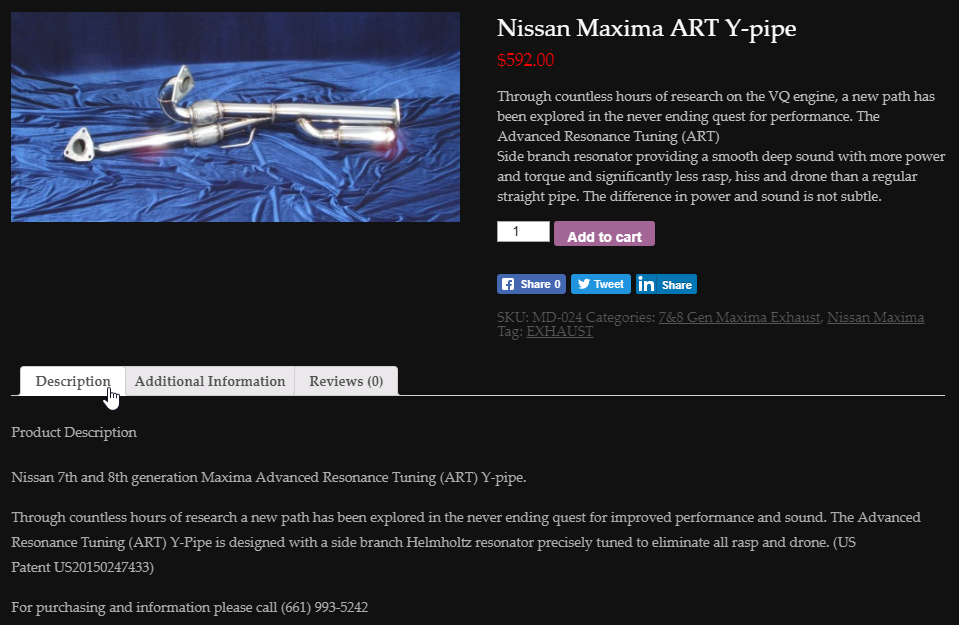
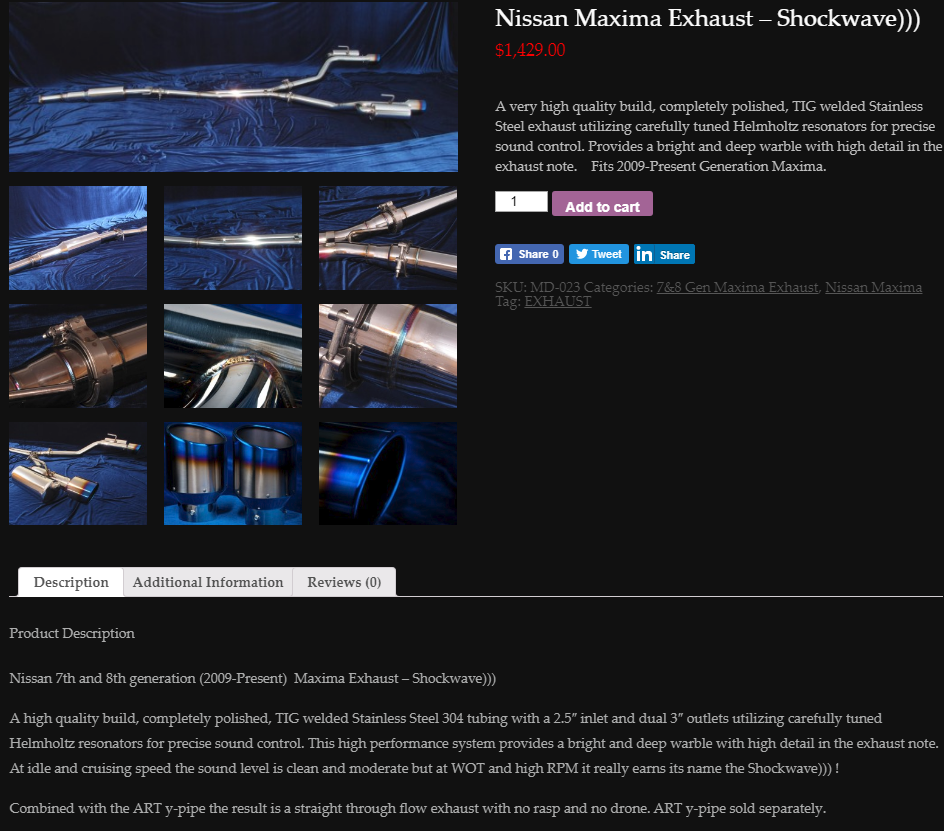
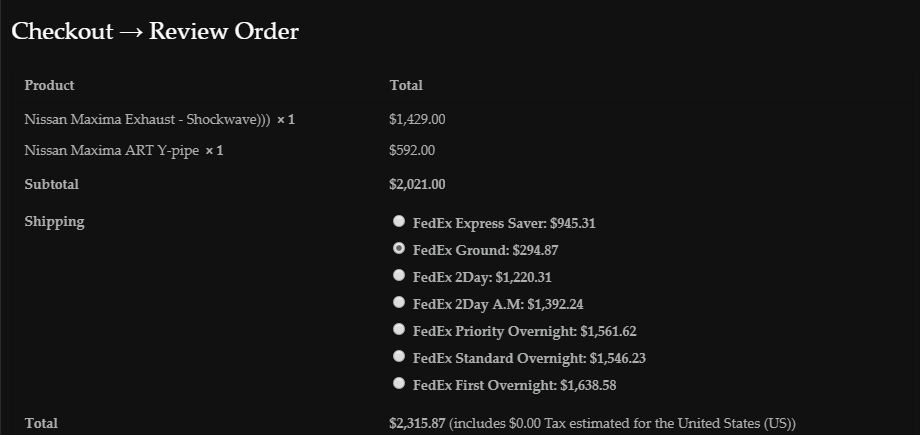
Full Exhaust Price: $1,429.00 ART Y-Pipe Price: $592.00
A high quality build, completely polished, TIG welded Stainless Steel 304 tubing with a 2.5″ inlet and dual 3″ outlets utilizing carefully tuned Helmholtz resonators for precise sound control. This high performance system provides a bright and deep warble with high detail in the exhaust note. At idle and cruising speed the sound level is clean and moderate but when you step on it and bring it up to high RPM it really earns its name the Shockwave.
The uniquely shaped midpipe muffler allows for gradual wave expansion into the sound dampening fiberglass for greatly reduced drone and rasp. The midpipe muffler uses 3 stages of high, mid and low frequency sound attenuation. The first stage of the is 3.5″ diameter and it works like a small glass packed resonator. A small resonator is effective at reducing the high frequency content of rasp while a large muffler is better at lower frequencies. The 3.5″ section then expands to a 5″ diameter glass packed resonator where the sound then expands to a thicker layer of fiberglass for midrange sound attenuation. The back end of the midpipe muffler is leads into an axially aligned protruding annular orifice that gives the equivalent of a 8″ diameter. The total sound reduction is performed in three stages of high, mid and low frequencies for broad band sound reduction. Smooth deep sound with pure straight through flow. The flow is then divided into a dual 3″ axle-back section that uses 2 large Helmholtz side-branch resonators for sound control. Combined with the ART y-pipe the result is straight through flow with deep sound, no drone and no rasp.



























 Installation Photos



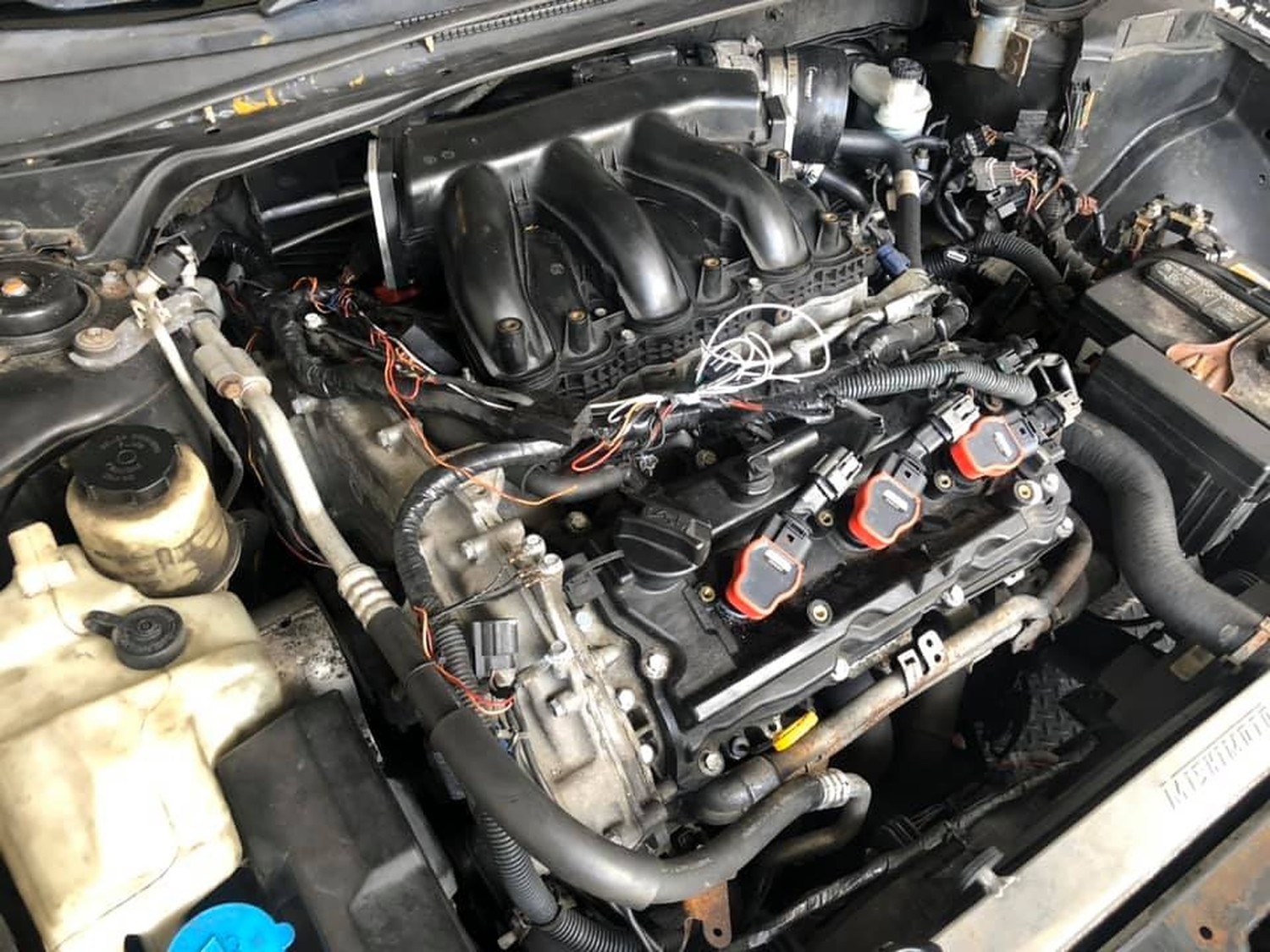



 Sound Clips:


