You really need an OBD II code reader/eraser to tackle this problem. I got mine a few years ago from Autozone for like $120, and I can’t even tell you how valuable it has been.
THIS IS HOW I PASSED MY SMOG CHECK – vs. a never-ending code 1320!
You will need:
OBD tool
Printout of System Readiness Drive Pattern for your model (yes it is silly)
Access to a freeway that is not too busy (you will be traveling slower than normal traffic and trying to hold maintained speeds)
You should also try and do this starting with a little less than 1/2 tank of fuel.
** I’ve found that the best freeway system to do this will have 6-8 continuous miles of flat or upwards sloping hills, followed by a downslope. In or around Los Angeles, you can get on the 5 south at Magic Mountain and by the time you reach the top of the hill, it’s the perfect time to downshift and coast.**
Abbreviated Systems reset procedure. (At least for my car!)
Get your car close to your freeway on-ramp. (make sure it is warmed-up)
Reset CEL
Start car and let idle for 1.5 minutes – leave A/C off for now
Get on the freeway, get up to 4th gear and try and hold the RPMs just over 3000 (3100 should be fine) you should be traveling around 60-63 MPH. HOLD THIS STEADY FOR 3 MINUTES>
Shift into 5th, steady speed around 56 MPH, turn A/C on, set cruise control, HOLD FOR 3 MINUTES.
At this point, you should be getting close to the top of the hill, wait until you crest the top, then…
Downshift into 4th, take your foot off the gas and just let it go for 5-6 seconds, then drop out of gear and let it coast for 1 minute without braking for as long as possible.
At this point, 4 of my 5 systems that need to come back online had reset. (I’ve successfully done this on 3 separate occasions.) If you leave your OBD tool hooked up while driving you can check the status by looking at the I/M Indicators. The 5 that we’re looking for are O2 Heater, EGR, Catalyst, O2 Sensor, and EVAP.
Get off the freeway and go to the first smog check place you can find. (probably helpful if you plan that out beforehand)
In California, my understanding is that you can take the smog test with a maximum of 2 system readiness indicators not ready, but no more than that.
So the plan here is to get at least 3 of your 5 SR indicators back online, then get the smog check before the CEL comes back on. You don’t have much of a window to do this, and I would recommend limiting turning off and restarting the car as much as possible. I’ve even let it idle in the front of the Smog place while I went and checked in.
Out of the 3 times, I have done this the CEL has always come back within 10 miles of leaving the Smog Check, 2 years ago, it came on as I was pulling out of the lot. Luckily, I had just passed my test. But I have always had a small window to get it done before the light comes back. It’s actually pretty nerve-wracking sitting in the smog check place praying the damn light doesn’t go on during the test. But if you pass, it’s completely worth it. I feel like framing my last pass certificate.
So I’ve had my “new” 5th gen Maxima (actually same as an i30 here in new Zealand) since last Thursday and based on the information on this forum I’ve attempted the ECM protective measures that many of you discovered with considerable time and effort (pain?), for which I am very grateful.
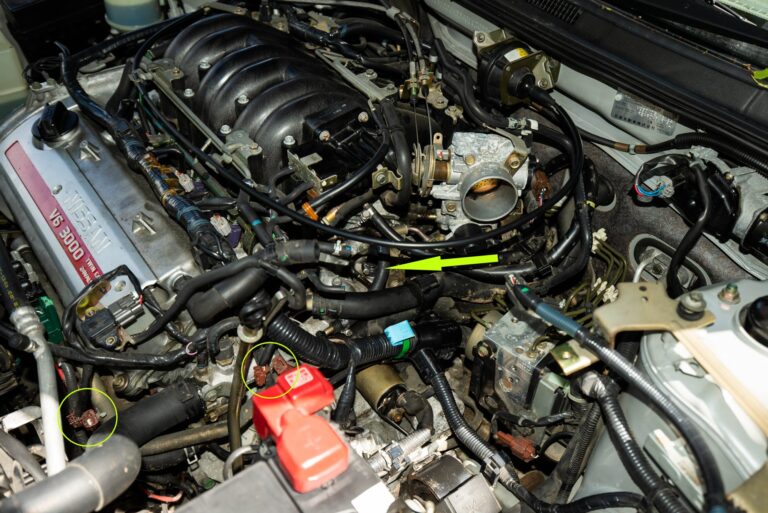
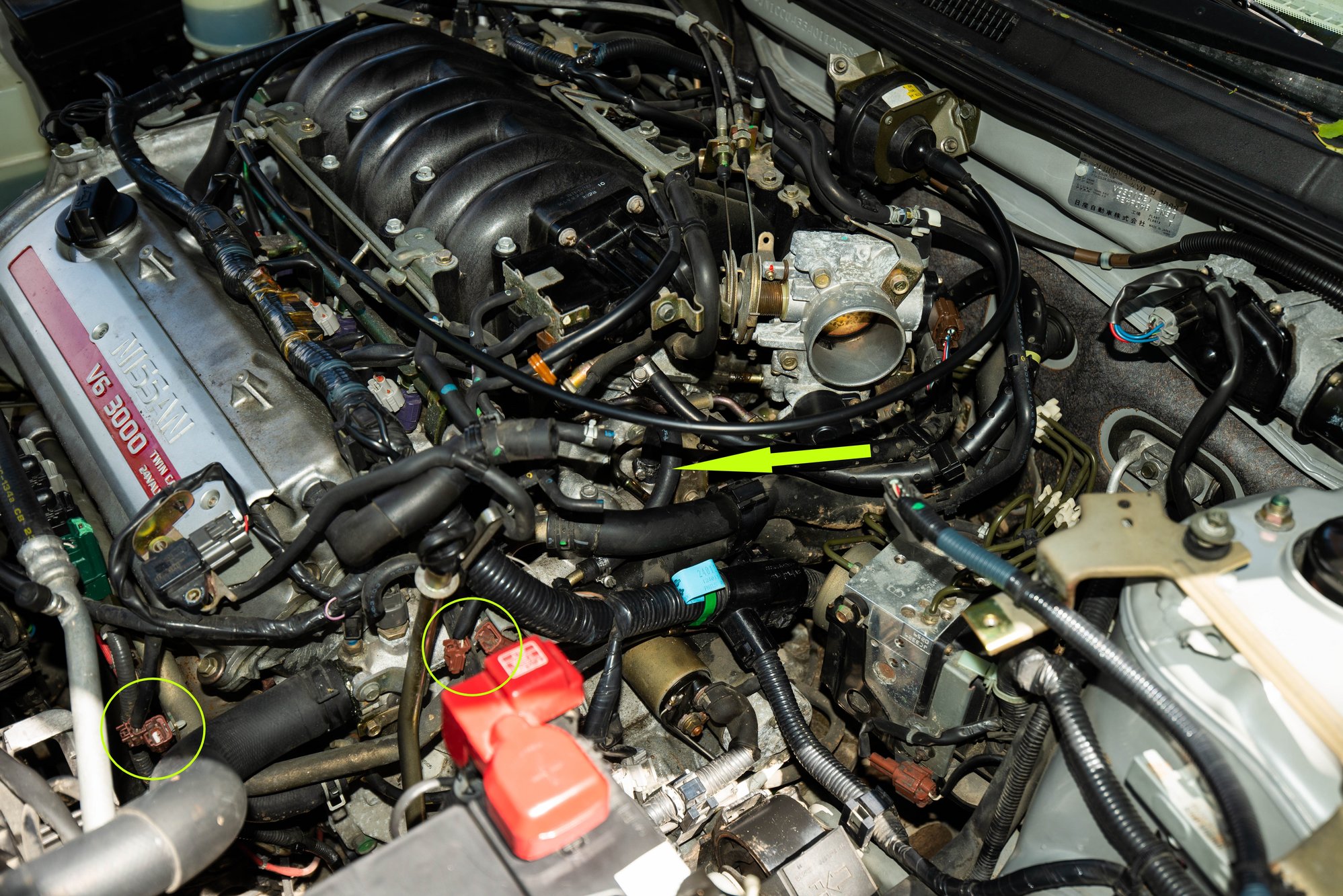
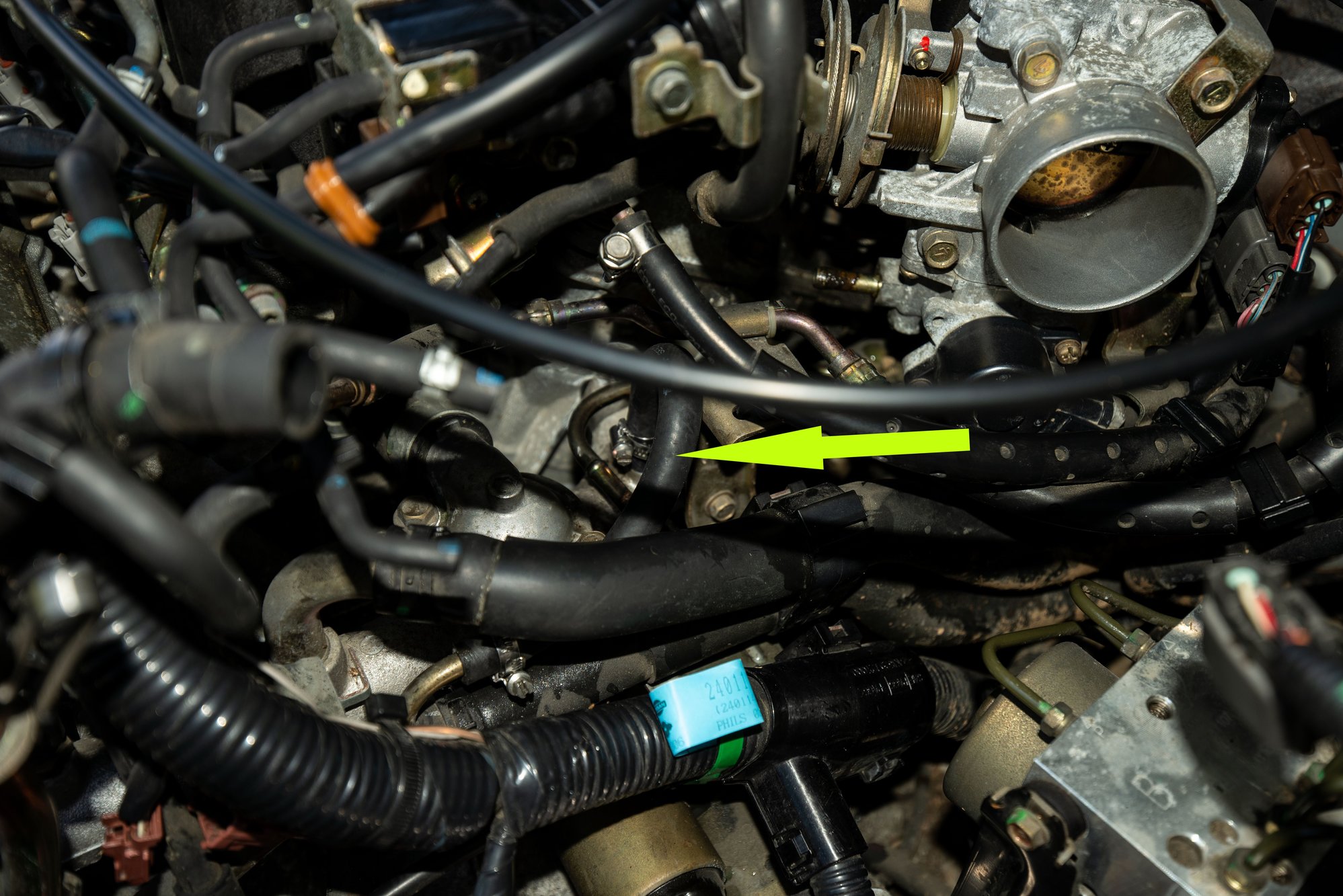
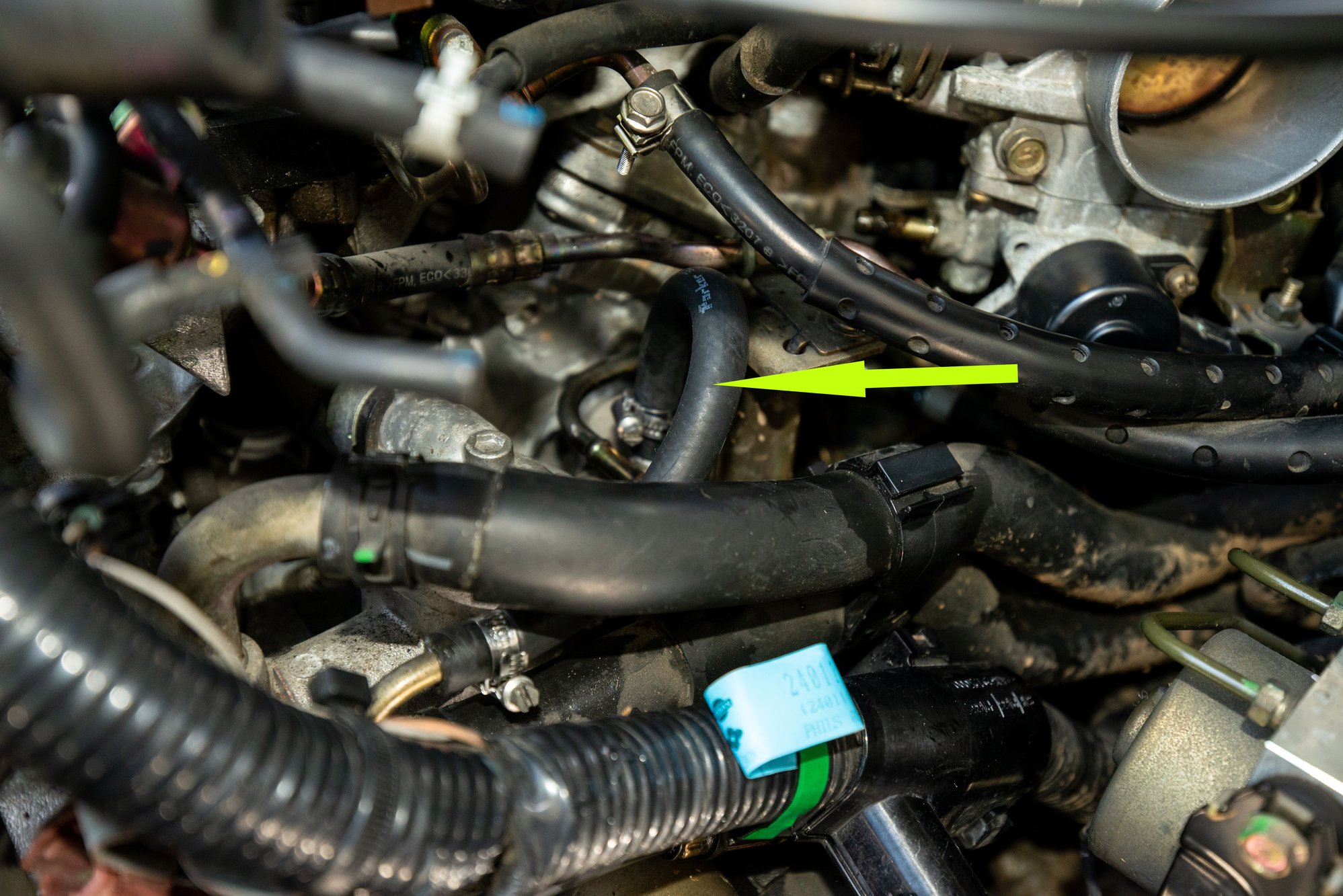
I am not sure if I have done it correctly, but the car seems to be running fine with no leaks. I couldn’t reuse any of the old hoses (or couldn’t figure out how to do it) so I just got a new section of coolant tube and cut it to length and just connected it to where the lines lead back to from the IACV , though I am a little concerned about whether the bend is too tight, being a piece of straight tube and all. I damaged the old hoses anyway, I hate those clips that are used to secure them and it took me quite a while and a few expletives to get them off, in the end I just cut the line directly under the IACV it was damned near impossible to get pliers on the clips in that section.
I disconnected the electronic engine mounts (I think I got the right ones) and taped over the connectors so no friendly mechanic can do me a “favor” later on, then replaced the 15A fuse with a 7.5A in “ENG CONT1”, so hopefully I’ve reduced my exposure to the cooked ECM issue. I will get an IACV replacement at some point, but they are horrifically expensive, an Australian company is selling them in NZ (OEM) for a cool $500.00.
I also replaced the drive belt which was pretty stuffed and noisy, then attempted the power steering pump belt which was not a success, I think I might have stripped the adjuster screw trying to get it off, I realized too late that there is a pivot bolt that must be released first and no amount of trying could get my hand and a spanner in there, so I just tightened the adjuster as best I could and locked it down again, hopefully it holds! that one might be for the mechanic.
After I put it all back together the car runs very quiet (I didn’t realize how noisy a worn belt can be) and at lower idle than before, I think that is because the airbox was not firmly secured/tightened to the throttle body and there may have been an air leak, so that is a bonus.
The car has done 161,000km (100,000 miles) and is exceptionally tidy for it’s age, so I think I’ll plan on keeping it for a while, but I’ll be sad to see my 4th gen go, I’ll have to find a good home for her.
Some pics of what I did below, sing out if I’ve done something wrong, there are many more knowledgeable people here than myself and I’d rather be called an idiot and learn something than kill my car with kindness.
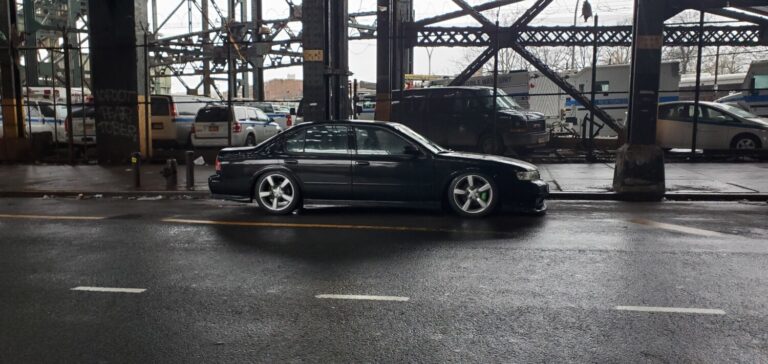
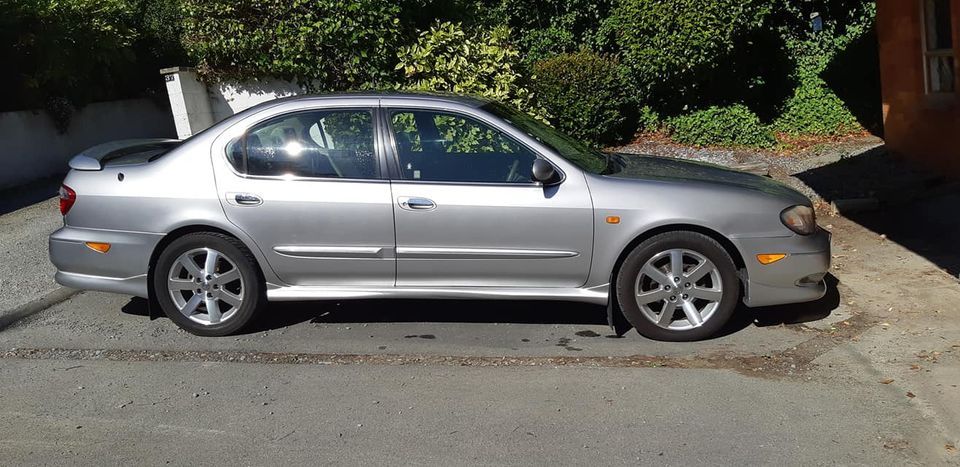
Photos of coolant bypass (and circled engine mounts connectors) and a pic of the car that the previous owner sent me, I could post some more pics if anyone is interested in what the NZ version of these cars is like.
When the steering wheel is turned quite a bit (like in a parking lot) you hear a crunk-crunk-crunk.
The upper strut bearing grease dries out which makes the bearing stiffer and more difficult to turn. When this happens, as you turn the steering wheel the bearing does not move, but the front spring “winds up” until there is enough force to overcome the stiff bearing. Then you hear the crunk as the spring unwinds. The whole process repeats over as you turn the steering wheel.
Solution:
Remove the upper strut bearing, and REPLACE them ($25 each) with new ones. Repacking the grease is tricky, if you don’t pick the correct grease, you will have the problem return in 8-12 months. (I did)
Remove the 2 large nuts and bolts that join the strut, to the steering knuckle.
Not shown: Remove three nuts from the top of the strut. Remove the clip that holds the hydraulic brake line, and free brake line from strut. Remove the 10mm bolt that hold the ABS sensor cable to
the strut.
Attach the spring compressor. Tighten the spring compressor finger tight.
Place the strut in a vice. (carefully, don’t clamp down too much) Tighten the spring compressor until the spring is just a little loose. Remove the single strut nut. This is very easy if you have air tools, but if you do not, then you will need to hold the shaft, and remove the nut.
Be very careful here, springs can KILL and have killed. Always stand beside the spring with the ends pointing to your left and right. If it does break free, it will only put a hole in your wall, and not you.
Remove the dark orange noise insulator, remove the black rubber insulator
Remove the lower part of the black rubber insulator.
The clean spot you see in the center is the place where the strut bearing sits. (Notice all the sand in the upper spring perch. Two out of three drainage holes were blocked with road sand from 5 years of Canadian winters. Make sure to clean out any debris, to allow proper water drainage.
Believe it or not, this dark colored tiny PLASTIC piece is the strut bearing.
The upper strut bearing
The inside of the upper strut bearing.
UPDATE:
Do not try to re-grease the bearings. I did, and it lasted 10 months, and the same noise came back. Spend the $40, and it is fixed for the life of the car.
Above: This is a close up of the dark coloured bearing end cups, and the white ring.
To assemble, just reverse the steps. Make sure you tighten all nuts and bolts to the factory specification which are found in the Nissan Service Manual. Since your entire front suspension has been removed, you must get your alignment done, if you want your tires to last.
Summary:
With the new strut bearings, it turns smoothly, and the crunk-crunk-crunk sound is gone because the spring on the strut will not be “winding up”.
Total cost was $40 for the new upper strut bearings. My alignment was a little more at $80, but now my front camber, and toe are in spec.
When I would tell my friends that I had replaced my brake pads and brake shoes they were shocked. They would ask me “Why would you do that?”, “Do you know what you are doing?”. Some would tell me “I would never do that, what if you did something wrong? You should not touch with your brakes. Leave them for a mechanic” However, as you will soon see, changing your front brake pads are really quite simple. I will show a step by step pictorial, from when I changed my front brake pads and rotors on my 95 Maxima.
Raise the front wheels, support with jack stands, and remove the front wheel. Always work safe, and use proper jack stands that are in excellent working order. You life may depend on it.
Here is a close up of the caliper and rotor.
If you look in the “inspection window” of the caliper you can see how thick your pads are. Here you can only see the inner (shown on left side of photo), as the outer pad is hidden in the shadow.
This is a close up of the upper part of the caliper. Here you can clearly see the inner (left) pad, rotor, and the outer (right) pad. Notice the outer pad is quite thin, compared to the inner pad? More on this later.
Remove the 14mm bolt from the top of the caliper.
Remove the 14mm bolt from the bottom of the caliper.
Remove the caliper. It should slide off, with little force. Using a some wire, hang up the caliper from the spring perch, checking that the caliper is not hanging by the rubber brake hose. Right:
Here is the view of the caliper piston and piston seal.
The brake pads, shims, and upper and lower are shown here.
Remove the brake pads by sliding them out, with the shims. Then remove the thin metal clips that are on the top and bottom of the caliper. They are there to enable the brake pads to easily slide on them, and they also have clips that holds the pad, so they don’t rattle over bumps. The shims, and the clips are part of a “brake hardware kit” Nissan recommends that they are replaced when the pads are replaced, but I replace mine only when the the shims show moderate corrosion. (We use A LOT of salt in Canada during the winter)
With the brake pads, and upper/lower clips removed. NOTE: You can see the caliper resting on the rotor. This is an example of what not to do. If the caliper slips and falls, the brake hose will stop it from falling, but the hose will be strained, and it may leak. To prevent this, hang it up with some small wire from the front spring. Right:
Remove the two 17mm bolts that hold the “torque member” (hey, that is what Nissan calls it) Remove the torque member.
The rotor should slide right off the hub. If not use a 2×4 to tap it, until it is unstuck from the hub. Right:
With the rotor removed, you can see the hub. NOTE: the silver stuff on the hub is anti-seize compound. This should prevent the rotor from rusting to the hub.
Summary
At this point the brake pads, torque member, and rotor have been removed. It is now time to clean up the brake hardware, remove the old grease and re-grease the caliper locating pins. Click Front Brake Reconditioning, to continue.
So far, we have removed the front brake pads, shims, caliper, torque member, and rotor. It is now time to clean up the brake components, clips, shims, and re-grease the caliper sliding pins.
Scrape any loose rust of the area shown above. You want to make sure that clips fit all the way to the bottom. If not, your brake pads may get “hung up” on the clips, and this could lead to your brake pads dragging just a little bit, causing them to wear unevenly.
This is the brush that I like to use. It has stainless steel bristles and it removes any rust very fast. I purchased it at Princess Auto, for about $6.
To remove the pin that the caliper slides on as the brake pads wear, you can gently pull them out. If these stick in any way, the caliper will not be able to slide to (brakes on) are away (brakes off) from the from the rotor. This can lead to the brake pad dragging, and this causes the pad to wear very rapidly. In one case I saw a car with the rotor glowing red!
On the top of the picture is the upper pin (as located on the torque member), the other pin is the lower pin. You can see that the grease here is in fair condition.
Use the small wire brush to clean around the torque member where the brake pad clips, and rubber caliper pin boots are. Clean out all the old grease from where the caliper pin slides in the torque member. Right:
I turn the caliper pin boots inside out to remove all of the old grease. The grease shown here is not in very good shape.
Before (right) and after (left) pictures of the clips during cleaning.
A close up of the freshly cleaned pad clip.
Place a small amount of grease (high temperature synthetic) on the pin, and in the hole. Push in the pin all the way to expel excess grease. When you pull the pin out, if it is a little stuck, then you have too much grease. Pull out the pin, and wipe off some grease and try again. If you have too much grease, air can not get in behind the pin as you try to pull it out and it is a little “hydro locked” You want these pins to slide very easy.
Place a little grease (again, high temperature synthetic) in the boot, place the boot over the pin, and put the pin in the torque member. Push the pin in all the way, and lift the boot so that any trapped air, or excessive grease can escape. Check again to make sure the pins slide easy.
Brake pad shim, with a little corrosion.
Close up of the corrosion. The next time I will purchase the brake hardware kit, and replace the shims. I don’t want anything that can compress slightly under hard braking between my caliper, and my brake pads. (like corrosion)
Summary
At this point the brake pads, torque member, and rotor have been removed. The caliper sliding pins have been re-greased, the torque member clip attachment area has been scraped and cleaned, as well as the brake hardware (shims & clips) have been cleaned. The caliper pins, rubber boots, and the torque member items have all been assembled. Click on Front Brake Assembly to continue.
Front Brakes – Assembly Update So far, we have removed the front brake pads, shims, caliper, torque member, and rotor. We have also cleaned up the brake components, clips, shims, and re-grease the caliper sliding pins.
Now it is time to assemble.
You MUST remove the protective coating that are on the new rotors. It is like a thin coating of thick grease. I like to use isopropanol alcohol as it cuts the grease quickly, and dries without any residue. Keep turning the rag until it wipes clean. Do not use gasoline as a cleaner, it is just too flammable.
Place the cleaned rotor on the hub. I put a little dab anti-seize on the outside edge of the hub. This is to ensure that I won’t have any problems getting the rotor off down the road. Notice the caliper is resting on the rotor’s dust shield. It really should be hanging up to ensure the brake hose does not get tugged, and develop a leak. Do as I say, not as I do 😉
I like to use a little anti-seize compound to make disassembly easier down the road. These are the 17mm bolts that hold the torque member.
Bolt on the torque member, attach the pad clips. Note: The single wheel lug is to hold the rotor flat against the hub.
Slide in the brake pads. Make sure your hands are free of grease and oil.
Put on the pad shims
Open the cap to your master cylinder to let the air out, as we push back the caliper piston. You should not remove it, just untwist it. Brake fluid likes to absorb moisture, and this can cause corrosion and a lower boiling point of the brake fluid. Right:
Carefully and very slowly push the piston back. Notice that the C-clamp is strait. If the clamp is crooked, you may cock the piston in the caliper. It does not take a lot of pressure to push it back. If you need a lot of force to push it back, your piston may be cocked sideways, or partly seized.
The piston is fully pushed in.
You can see how much the brake fluid level rises for just one side. Never let anyone at a “Rapid Lube” type place “top up” your brake fluid. It will just overflow the master cylinder when the next brake job is done.
Slide on the caliper, and tighten the bolts
Make sure the caliper pins are positioned as shown. The pins have a flat spot, and the casting of the caliper has a “bump”. Make the pin is sitting flat, and not on the raised part of the caliper.
Remove the wheel lug, and bolt on the tires. Time for a test drive.
Here is why I had to do my brakes. The outboard pad on the driver’s side was worn down to the “noise maker” I think this was due to too much grease (and not enough air) in the caliper pins, which would hold the pad against the rotor just a little. Over time it wore the pad down. All other pads wore the same. My fault, but you get to learn from my mistakes.
Here is what happens to your rotor when you use them a lot. You are looking at thermal stress cracks on my old rotors. This is caused by the rapid increase in temperature under hard braking. Over time the disk can fracture. I was not going to wait for that, so I spent $65 per rotor at Canadian Tire. (Nissan rotors are $90)
After 255,000 KM I decided to replace my alternator. It was not because it was not working, it was because of a bad bearing and the awful low RPM knocking noise it made that had become louder and louder in the past 18 months.
I was 100% certain it was the alternator. I did this simple test:
Get a long flat blade screw driver eight to ten inches long
Hold the metal part on the end of the alternator (CAUTION: do not jam anything in the alternator!)
Place your ear on the handle of the screw driver
Listen
I heard a very loud knocking sound. Then I placed the screw driver on the compressor for the air conditioning, the idler pulley and they were almost silent.
I called the local Nissan dealer to get a price on a rebuilt alternator. It was $440. (or $387 with a 15% discount) Then I remember an article I read in the Toronto Star about a local place that rebuilds alternators and starters. I called Start Auto Electric and was quoted $260. In both cases they want the old alternator back, so they can rebuild it. Fine with me, I won’t need it.
The rebuilt alternator from Start Auto.
Disconnect the battery. (and clean up the battery connections!)
Loosen the belt pensioner about 810 revolutions (shown by yellow arrow)
Remove the lower right plastic cover from under the car.
Loosen the nut on the idler pulley. (shown by yellow arrow) Push up on pulley, and snug the idler nut. This will give you some slack in the belt to make it easier to remove. Right:
Remove the drive belt by pulling it off the idler pulley.
Remove the air intake snorkel. (if you still have it)
Disconnect one electrical plug for each fan. (yellow and green arrows) You will also have to remove 2 clips from the fan shroud that hold the wiring harness going to the fan on the left.
Remove the two fan shroud screws. (shown by the yellow arrows)
Remove the hose clip, and disconnect the overflow tube from the radiator filler neck, and the fan shrould.
Lift out the fan shroud. Be very careful, the radiator fins are very easily damaged.
The fan shroud. Notice that each fan has a different number of fan blades.
Disconnect the 2 wire plug. On my car the release clip was stuck. I used a small screwdriver to disengage the clip, so the plug can be easily removed. Right:
Loosen the top alternator bolt, but do not remove. We don’t want the alternator to fall. Not shown: Remove the lower alternator bolt and nut. It is located directly opposite to the smaller bolt on the top of the alternator.
Remove four bolts that hold the air conditioning compressor.
Remove the top alternator bolt. It will now rest on the compressor which is sitting in a bracket.
Gently push the compressor toward the back of the engine. This will give you just enough space to remove the alternator as shown. This is very tricky, and it may take quite a while to get the compressor in just the right position so that you have enough space to get the alternator out. Right:
The yellow arrows show the two mounting points for the alternator.
After much “trial and error” the new alternator is in position. Tighten the lower bolt and nut. Tighten the upper bolt. Connect the large cable, and tighten the nut. Push in the 2 wire plug.
Tighten the 4 bolts on the air conditioning compressor.
Install the drive belt, making sure it is properly seated in the middle of all pulleys.
Install the fan shroud, the end caps, connect the two plugs for the fans and connect the overflow tube.
Tension checking points Right:
Tighten the drive belt tensioner (yellow arrow) until the belt deflects 4.2 – 4.6 mm (used belt) or 3.8 – 4.1 mm (new belt) at the “Tension checking points” while pushing in with 22 pounds of force. (I know this seems like a difficult way, but this is from the Nissan factory manual. I think most people guess. I tighten the belts until they just stop squeaking)
With the drive belt at the correct tension, tighten the nut on the idler pulley.
Install the air intake snorkel, and the lower right plastic cover.
Summary
This is not a hard job, but it can be very time consuming. You will need some patience, some good luck, and a little skill to change the alternator on a Maxima.
I have found that I need to clean my throttle body about every 30,000 KM. If I don’t my idle will sometimes fall to below 500 RPM, and the motor catches itself and revs up to 1,000 RPM to then fall back to about 750 RPM. If it is very dirty it stalls. I also noticed my 1st gear launches become very jerky.
You may also notice a loss in lower RPM torque. If the throttle body is very dirty, the idle speed control valve (ISC) can not allow additional air to bypass the butterfly plate in the throttle body. The is the reason for the jumpy idle noted above, as well as a loss in low RPM (1,000 to 3,000 RPM) torque. The ISC has a strong influence on the air/fuel mixture up until about 3,500 RPM.
When you clean the throttle body and butterfly plate, you allow the ISC to do its job. This is not very hard to do, with the cost being about $8 for a tin of “Combustion Chamber Cleaner”
Ihave a Stillen Cone filter from my NX-2000. I was able to drill and tap 3 more holes to reuse it. It fits perfect. Anyways, disconnect the ACT (air charge temperature) sensor shown by white arrow.
Remove the air filter, and disconnect the MAF (mass air flow) sensor.
Remove the clamp as indicated by the white arrow. As shown in the picture, slide it up hose so you don’t forget about it or loose it. Right:
Remove the small black rubber hose as shown by the white arrow. The yellow arrow points the to disconnected rubber hose.
Remove the clamp as indicated by the white arrow, and slide it to where the yellow arrow is for safe keeping. Right:
Loosen the worm gear clamp on the throttle body.
Remove the bolt as shown by the white arrow. Right:
It may take a little work, but now you can remove the oil separator / MAF as one unit.
Now you can see that we have very good access to the throttle body. Right:
Here is a view inside the MAF. The smaller circle in the middle hold the “hot wire” to determine actual air flow.
We have removed the air filter, MAF, and the oil separator. (the big black box) We now have easy access to the throttle body and butterfly plate. Time to clean!
The gray arrow shows the build up of dirt and oil. (No, it is not a shadow) Right:
Here is what I use. It is available at Canadian Tire.
With the throttle wide open, spray the cleaner in, and wipe with a clean white rag. Make sure to remove any dirt and oil from the EDGE of the butterfly plate. The white rag allows you to see how much dirt and oil you have removed, and when the throttle body wipes clean, and the rag stays white, you are done. Right:
I like to use an old tooth brush to clean the throttle body. I hold the throttle wide open, spray in the cleaner, and scrub the throttle body with my tooth brush. (as seen resting on the throttle body) You won’t believe the dirt and oil in there!
Here is the clean throttle body and butterfly plate. Right:
This is the dirt and oil removed. This rag was new.
From here, just follow the opposite if disassembly. Make sure not to over tighten anything. A common belief is that it is better to have it a little too tight, than too loose. From what I have seen, when bolts (especially small 10 mm bolts) are over tightened they strech and are very difficult to remove the next time. My rule of thumb is snug plus 1/4 turn for the small bolts.
Summary
When the car is put back together again, you should notice your idle being more stable, and maybe improved low RPM torque. I know I did, but my throttle body was quite dirty.
About one year ago (2000), I was driving back from work, and I saw a single streamer of smoke coming up from my steering column. I immediately tried all the switches on the steering column, thinking that I will find out which switch has gone bad, and maybe I will make it stop.
Well, everything worked just fine, and the smoke did stop. A month later the same thing happened, a single streamer of smoke.
After the first time I parked my car in the garage thinking “I hope that I don’t set my garage on fire if she lights up.” It never happened again.
In August 2000, when I signaled to turn left, after the turn was completed the signal would cancel, but the turn signal relay would click about twice the usual speed, “click-click-click-click-click” Luckily for me the turn signal light did not flash, it was just the relay.
I removed the relay, and opened it up. It is not your typical relay. It is a relay with printed circuit board on the side. I noticed that the circuit board was cracked, and it looked like a few traces may not be in full contact. I added a little bit of solder, thinking that it was now fixed. I was wrong.
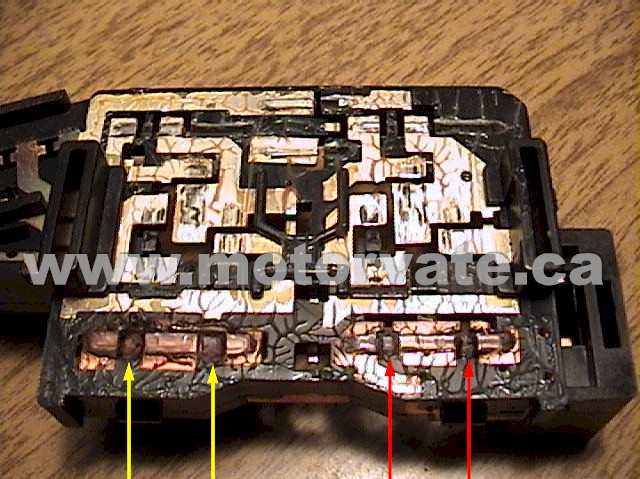
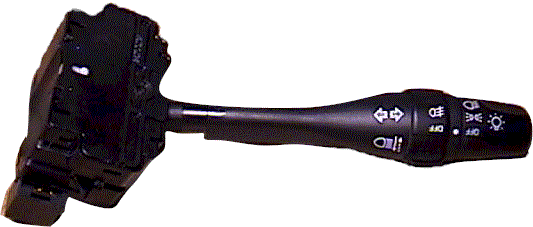
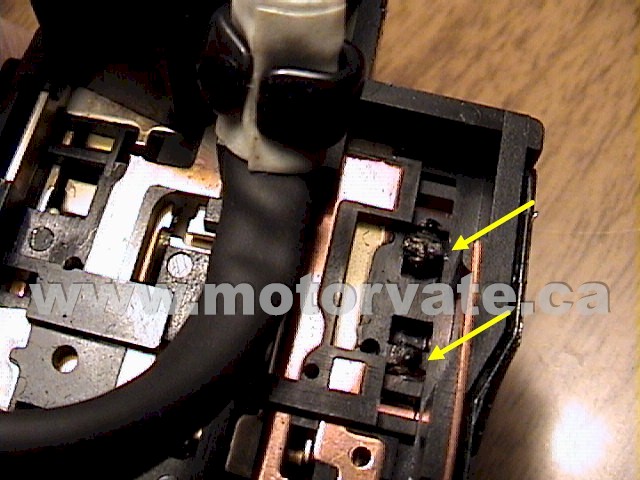
Now it is March 2001, and I noticed that my turn signal was not “smooth” like I remembered it. It was very notchy. I removed it from the steering column, and saw this:
The YELLOW ARROWS point to some melted plastic. The RED ARROWS point to what the contacts should look like. The yellow arrows in the right picture above, show little plastic “parking” islands are melted. This made the contacts sit lower, and they were only touching a little, causing a little current to flow through the relay. The relay senses current, via the built in IC, and makes the relay pulse, but because the current is very small, it flashes faster. (just like when you have a burned out turn signal bulb, the flasher goes faster)
Anyways, this is where the smoke came from. YEA! I found it. My car is not going to burn down!
I tried to “file & fix” the contacts, but it did not work.
I called up North End Nissan, and 1 day and $71 later I had my turn signal back to where it was, nice and smooth, with no harsh clicks.
Problem solved in 10 minutes, but it took over a year to figure it out.
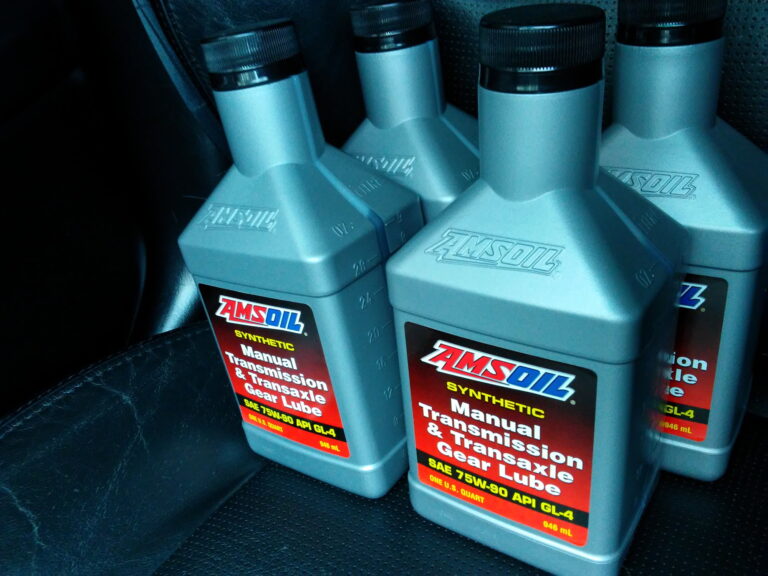
For the average automobile, there are two types of API Service for gear oil:
GL-4
GL-5
The “API Service” has nothing to do with viscosity. Viscosity is basically the “thickness” of the oil at winter (75W) temperatures, or summer (80) temperatures. Some typical examples as 75W80, and 80W90. Consult your owner’s manual for what is best for your vehicle, in your climate, with your driving conditions. An “API Service” is a specification that defines flash point, viscosity, color, pour point, the amount of extreme pressure additives and others.
Generally GL4 is for transmissions from European and Japanese auto manufactures. GL5 is usually for transmissions and differentials from North American auto manufactures.
As with most specifications, the newer the better. So GL-5 is better than GL-4. GL5 has about twice the extreme pressure (EP) additives of GL-4. Due to these additives the transmission must be designed for GL-5.
If you buy GL-5 gear oil, and put it in your GL-4 transmission you are not doing your transmission a favor. In some cases the GL-5 gear oil can be “too slippery” and the synchronizers in the transmission will slightly “crunch”, as they are not rotating at the same speed. GL-5 also has twice the extreme pressure additives of GL-4, and these additives can corrode certain “yellow” metal synchronizers. Think about that!
With this in mind, if you have any transmission work done, insist on GL-4, if your owner’s manual calls for it. My 95 Maxima calls for GL-4, and I had a bearing failure (not related to GL-4 / GL-5, but an excessive preload) When I asked them what kind of oil did they put in the transmission, they said “Esso 75W-90.” I then asked to see the container that it was in, and right on the front it said GL-5. I asked them, “Is it OK to use GL-5 in a car that is designed for GL-4?”, and their answer “Yes, it is one better” They also said that the gear oil they use is approved by Nissan. I called Nissan HO, and asked them if GL-5 can be used, and the tech on the line told me, “GL-4 should be used.” Hmmm.
After paying $1200 to rebuild my transmission, I now had buy GL-4 gear oil and change it myself. Not a big deal, but to my surprise no one, and I mean no one sells GL-4. I tried eight local auto stores, and they all sell GL-5. No GL-4! To make a long story short I found some GL-4 in Rochester, NY and replaced the GL-5. The shifting improvement was immediate. With the GL-5 when I would shift I could feel the syncronizers hitting just before the car went into gear. With the GL-4 it was like just shifting a gear, with the usual amount of “snick” (aka notchiness)
The following is a technical note from Pennzoil, P-21-B which talks about GL-4 & GL-5
(The below text is found on page 2)
GL-5 GEAR OILS ARE NOT INTERCHANGEABLE WITH GL-4 GEAR OILS.
The extreme pressure (EP) additives in most gear oils contain sulfur-phosphorus compounds that can be corrosive to certain “yellow” metal components such as copper and brass synchronizers.
Always follow your owner’s manual for the correct lubrication recommendation.
Simple rule: RTFM (read the friggin manual) and follow it.
The manufacture knows what is best, the dealer may not.
In the maintenance section of the owner’s manual it does not mention changing the power steering fluid. However, for many years I have always changed it every year. With the constant thermal cycling, and the stress of being pressurized to 1,266 psi, it must slowly break down. The following procedure cost less than $4.00, and takes 15 minutes.
Use a turkey baster to collect the old power steering fluid.
Transfer it to a container to be recycled. This process will need to be repeated a few times. You can remove most of power steering fluid from reservoir this way. A baffle at the bottom prevents us from removing it all.
If you want to empty the power steering reservoir, disconnect the hose with the arrow. The entire contents will empty out, but it is difficult to catch it in a container due to the A/C line. Reconnect the hose, and tighten the hose clamp.
Fill the reservoir to the COLD MAX line using Dexron II or Dexron III, depending on the year of the car.
Put the cap back on and you are done.
This simple procedure will change about half the power steering fluid, (More if you remove the hose at the bottom of the reservoir) and should ensure a long life for your power steering pump, and steering rack.
Sooner or later you will have to replace the clutch on your Maxima. Since I was removing my transmission to replace a bearing, I decided to change my clutch. It had 145,000* Km on it and it still worked well, but since I had the transmission out, I could not resist.
*The clutch was changed at 50,000 Km under warranty, for a noise.
First you must remove the transmission. Then you will see your clutch as above. (make sure to support the engine, as it only has only one engine mount holding it).
The old clutch has been removed, and the flywheel has been lightly hand sanded with 180 grit sandpaper to remove any foreign material that may be on the flywheel.
Close up of the old pressure plate where the throw out bearing pushed on the diaphragm. The groves are normal for the mileage on the clutch. Right:
The friction disk side of the clutch and the friction disk.. Notice the marks on the pressure plate. This is due to over heating from racing or even stop and go traffic. The friction disk only had .017″ before the rivets would gouge the flywheel.
The friction disk side of the new pressure plate.
The old throw out bearing (foreground) and the new throw out bearing. (background) Always replace the throw out bearing when the clutch is being replaced.
The new throw out bearing and clutch fork installed. Notice there is no machined area on the end of the input shaft, which usually fits into the Back of the crankshaft.
The bearing is known as the pilot bearing.
In the middle of the picture you can see the pilot bearing. In this application, the bearing is there, but it is not used! (look at the input shaft, there is no machined area at the beginning of the shaft)
Old clutch
New clutch
With clean hands, place the new friction disk on the pressure plate. Lift up to the flywheel, and tighten the clutch bolts finger tight. Insert the clutch alignment tool into the hole in the clutch (where the input shaft will go) until the tools stops firmly in the pilot bearing. Tighten the clutch bolts in a diagonal pattern to spec.
Summary
It is not difficult to remove and replace the clutch in the Maxima. I only need one special tool, a $17 clutch alignment tools. In the past on my 91 NX 2000, and my 83 VW GTi, I have used a broom handle cut down to measure about 8″ to align my clutch. This time I wanted the to use the right tool.
Right now, the typical cost to replace a clutch on a Maxima is about $600. (at least!)
My parts cost were: friction disk $120, pressure plate $170, and throw out bearing $48, from the local Nissan dealer. That totals $388 with tax (15% !)
If you do the quick math, I saved $212! That money will go to my cat back exhaust. Vrooom!