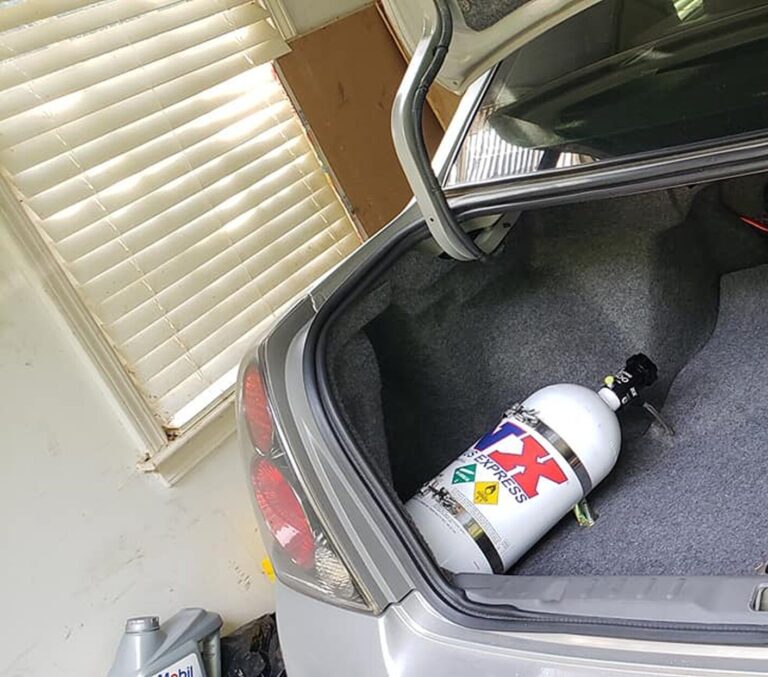
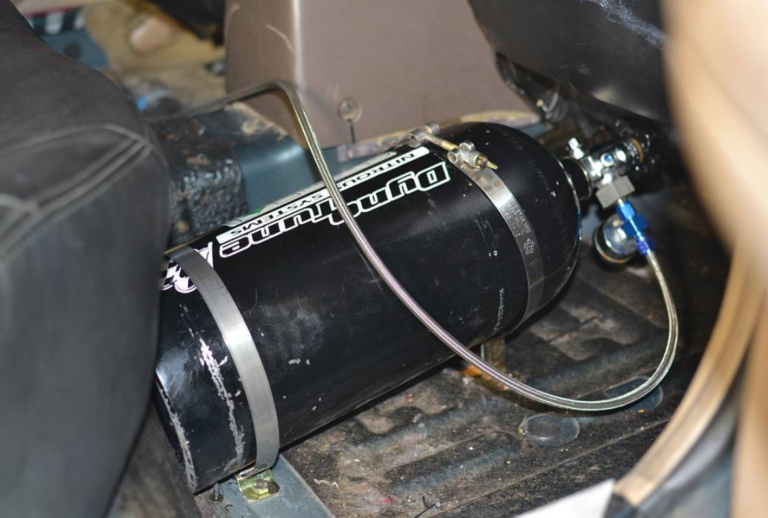
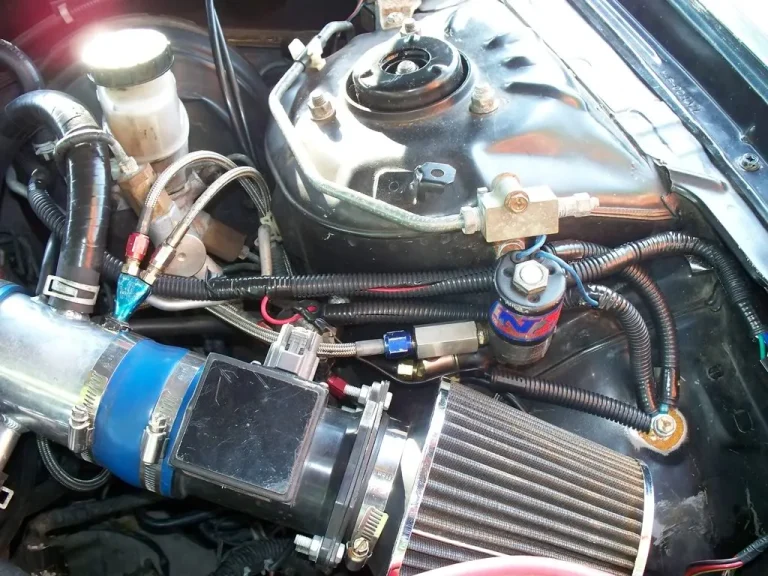
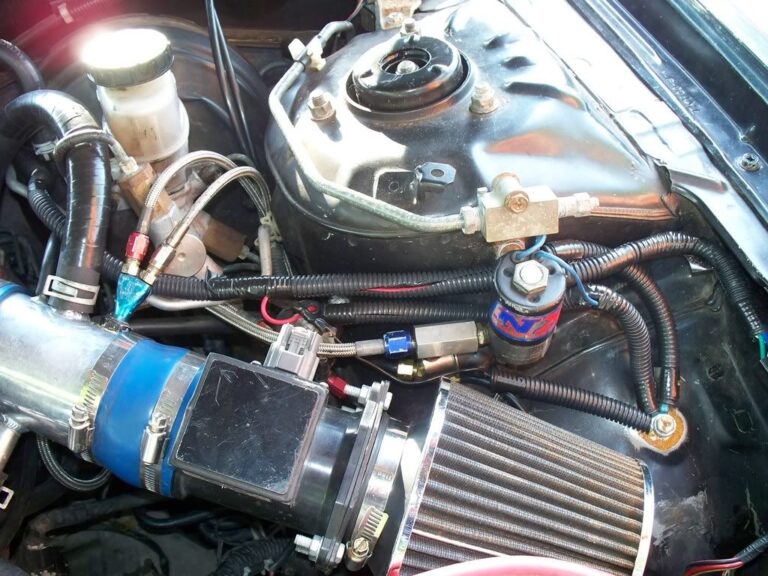
I’m currently using a 100 shot wet kit that produces around 400 WHP. The nitrous is injected near the throttle body in the intake; in the first video, you can see the CEL light flashing. On that run, I melted a spark plug.
Videos:
This video captures my final run of the day against a Scat Pack. By this time, the bottle pressure had dropped to 700, essentially reaching a cold state.
I explain how it works, what are the parts involved and go over some important safety precautions to allow nitrous to be a long term safe power adder.
How does it make more power?
Nitrous is injected into the engine through the intakes manifold. When nitrous goes into the cylinder and combustion occurs, the heat generated causes the nitrous molecules to split and release oxygen. The additional oxygen plus added fuel produces more powerful combustion pushing the piston down with more force. Nitrous accelerates the rate of combustion and therefore increases torque drastically. If you have not read it already you can go over to a previous article which discusses how an engine works to get a better idea of the internals function: what-is-engine-tuning
Nitrous is liquid when contained in the tank and expands once released. When using nitrous generally the bottle pressure should be in the 950psi to 1000psi range. When filling a bottle with nitrous you want to have the bottle as cold as possible, for example placing it in a freezer before filling. This allows for the nitrous molecules to be closer together and be able to pack in more nitrous into the bottle; another method would be to pump the nitrous but freezing is more common. When you warm up the bottle it expands and increases the pressure ready for use. The pressure can be raised to the target by heating the bottle with a heating blanket.
Benefits of Nitrous
When nitrous is injected into the intake manifold it cools down the air making it denser, this means more oxygen in addition to the oxygen the nitrous provides during combustion. The power and torque obtained from nitrous is instantaneous, unlike a turbo or supercharger.
Wet and Dry Systems
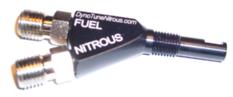
You may have heard of a wet nitrous kit, these are nitrous kits that inject nitrous and fuel into the intake. In a wet system, the nozzle responsible for spraying the intake has two inlets, one for fuel and one for nitrous.
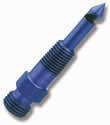
In a dry nitrous system, only nitrous is injected and the additional fuel delivery is handled by the injectors.
DynoTune Wet Nitrous Nozzle
DynoTune Dry Nitrous Nozzle
Solenoids and Nozzles
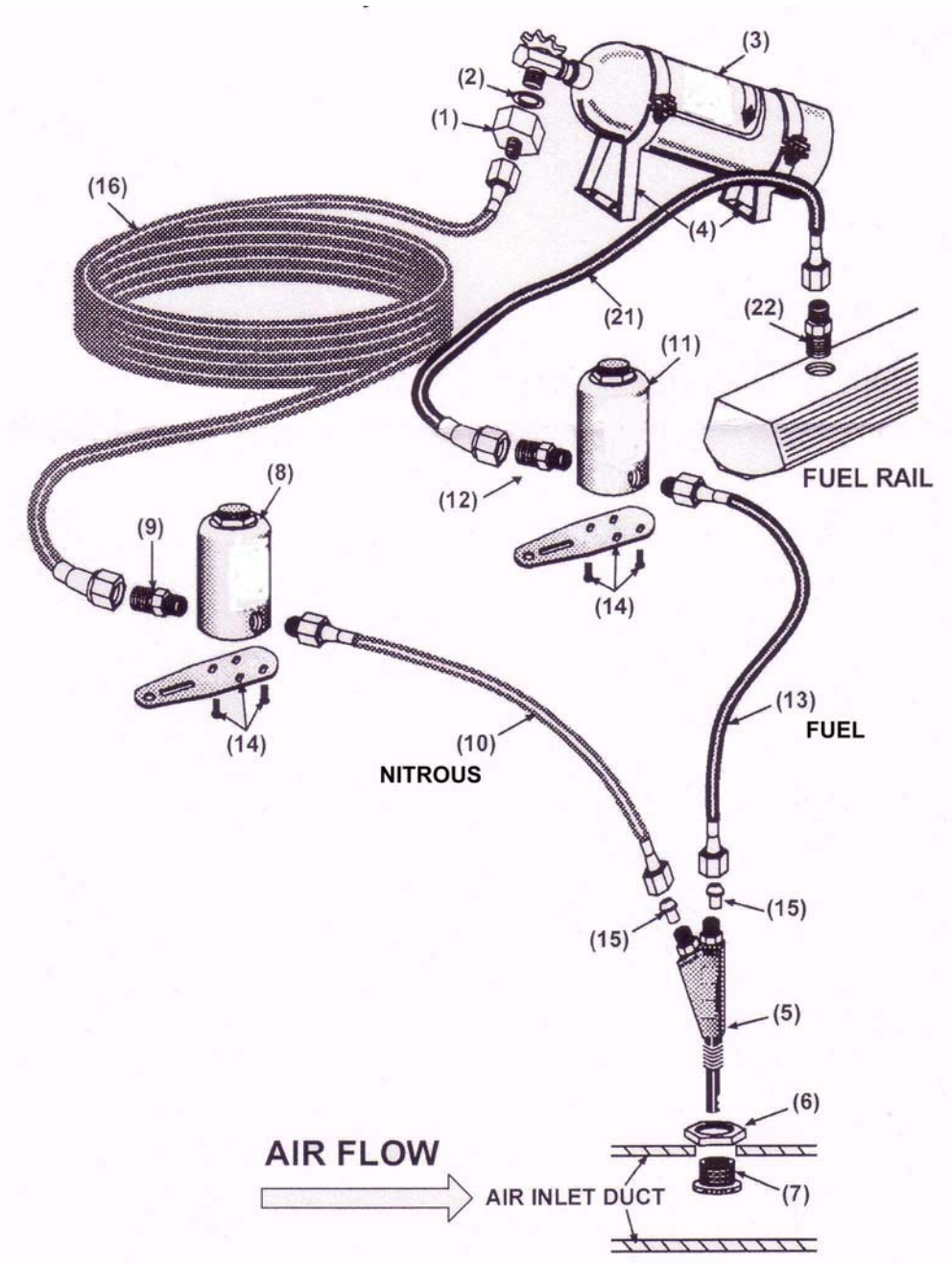
A nitrous system is simple. You start from the bottle, the bottle has an outlet which is usually a 4an fitting size. This connects to a nitrous stainless steel braided line. The line goes into a solenoid then exists the solenoid and goes into a nozzle which is mounted on the intake before the throttle body. When you give the solenoid 12v current, it opens the flow.
With the wet system, you have a T fitting on the existing fuel feed line that’s between the fuel filter and the fuel rail. From this T you then run a hose into a solenoid, and from the solenoid, a braided line goes into the nozzle that is mounted on the intake. When the nitrous is activated, the fuel solenoid also activates and allows flow from the car fuel line into the nozzle. Both nitrous and fuel are pushed into a single nozzle and spray together into the intake.
Here is a diagram by DynoTune Nitrous showing the plumbing for a wet nitrous kit:
DynoTune Nitrous Wet Kit Plumbing
Jets
Nitrous jets are what regulate how much nitrous is fed into the engine. These jets are placed at the nozzle where you connect the lines coming from the solenoids. You put the nitrous jet then you screw in the lines. In a wet system there is a nitrous jet and a fuel jet, in a dry system there is only a nitrous jet as there is no fuel delivery through the nozzle. To provide the proper mixture of nitrous and fuel you follow a chart that’s provided by the nitrous system you are using.
When you have a dry system you have to be sure that every time you change the nitrous jet you are also adjusting your injectors fuel delivery.
Here is are DynoTune’s recommended jet sizes for the desired horsepower using 43psi fuel pressure:
35 HP: 28 N/ 16 F
50 HP: 34 N/ 18 F
75HP: 42 N/ 24 F
100 HP: 48 N/ 28 F
150 HP: 58 N/ 34 F
N represents the nitrous jet, F represents the fuel jet.
The nitrous jet number is in inches; for example, a 48 jet is .048in.
Bottle Warmer and Pressure
A bottle warmer is a very good investment because it allows you to control the pressure of the tank. You want to have the nitrous between 950psi and 1000psi. It is highly recommended you get a warmer that has an automatic shut off switch to not overheat the bottle and cause the pressure to rise too high; this will result in too much nitrous being sprayed and run a very lean combustion.
Nitrous bottles come equipped with a safety burst disk that will release the nitrous once it excessed certain pressure; like leaving the warmer on without monitoring or leaving the nitrous bottle in the car during a sunny Miami day for example. For track use, you are required to use a blowdown tube that connects to the burst disk and then routes to the outside of the car (usually towards the ground).
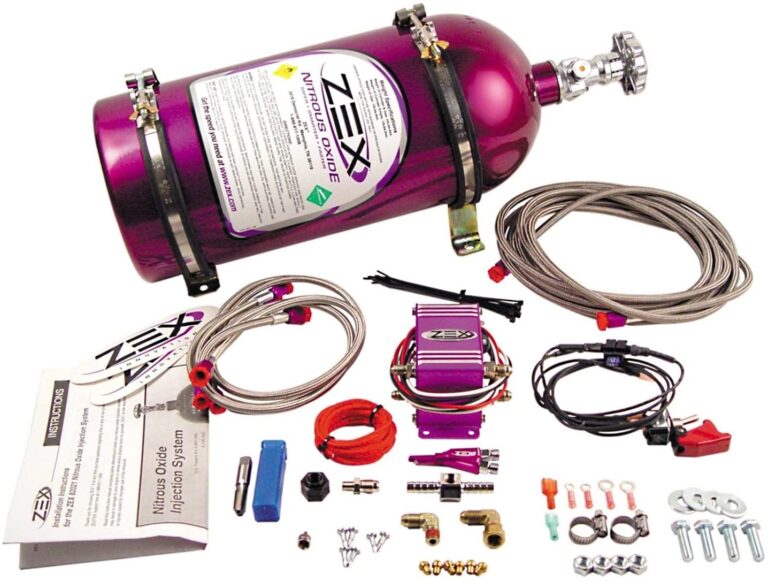
Parts
Bottle
16 foot braided stainless feed line, blue fittings
Nitrous and Fuel solenoids
2 foot Braided stainless Nitrous and Fuel feed lines, red and blue fittings
Braided stainless line for Fuel rail test port installation, red fitting
Jets
Wet Nozzle or Dry Nozzle
Relays, wire, and connectors.
Supporting Modifications
Exhaust
Nitrous produces a lot of exhaust flow, one important change you should make is to have an exhaust system that as least restrictive as possible. On a VQ I would say no less than 3 inch in diameter from the headers merge all the way to the outlet in the back. With nitrous the larger the diameter the better.
Fuel Pump
Since you are going to provide a lot of more oxygen you are going to need more fuel. This means that you most likely will need to upgrade the fuel pump to support the demanded delivery. The common pump one starts off with is usually 255lph.
Intake
On a nitrous car, the intake is not as critical as naturally aspirated because the added air(oxygen) is provided chemically rather than by airflow. However it is always good to have an acceptable intake upgrade that is meant for higher flow than factory.
Tips and Warnings
When you purchase a nitrous system the manufacture includes warnings that you should pay close attention to. For example in the case of DynoTune which we offer in our nitrous shop section, they took the time to explain details regarding tuning, reading spark plugs (I will have an article on this), and more.
Nitrous Backfire
When you have the nitrous bottle open and ready to use, never engage the nitrous while the car is idle or turned off. This will cause the nitrous and fuel to puddle in the intake manifold and valves and cause an explosion. The nitrous is not flammable on its own but when mixed with the fuel, the fuel can ignite and causing the nitrous to react as well. It will be a violent explosion sending your intake manifold, piping, and even hood flying along with a fire. (“Danger to manifold” is a real thing).
Timing and AFR
When it comes to tuning, I treat nitrous like the turbo. I keep the AFR in the low to mid 11:1 and I keep the timing a couple of degrees lower than without nitrous, depending on the amount of course. Like I mentioned before, nitrous adds a lot of torque due to how fast it accelerates combustion so you must retard timing when using nitrous. Consult with your tuner and the nitrous instructions regarding timing, reading your spark plugs is also a good idea to determine how well it’s handling it.
When to Spray
It is advised to engage the nitrous at over 3,000 RPM, this will prevent it from puddling; spraying at a low RPM the intake valves may not be opening fast enough to pull in the content into the cylinder. Spraying nitrous at a low RPM especially in a high gear will produce an enormous amount of torque that your rods may not be ready for (my fellow stock VQ35 block guys, please pay attention to this!).
Automatic Transmission
On an automatic, never engage have the nitrous spray during a downshift, it could easily be the last time the transmission ever downshifts.
Purge
For the best performance, it is a good idea to purge the line. When you first open the bottle the line connecting the bottle to the solenoids is full of air, when you activate the nitrous the initial result will be fuel and air without nitrous, you may feel the car bog due to being too rich at first. To solve this you install a solenoid between the main nitrous solenoid and the bottle and you activate the solenoid before you activate the nitrous (before racing). This will fill the line with nitrous and get it ready to be sprayed as soon as you activate the system.
Alright, I keep getting emails and posts about how NOS is going to destroy my car and take miles off my engine, so here’s some info that will hopefully become a sticky! (hint hint)
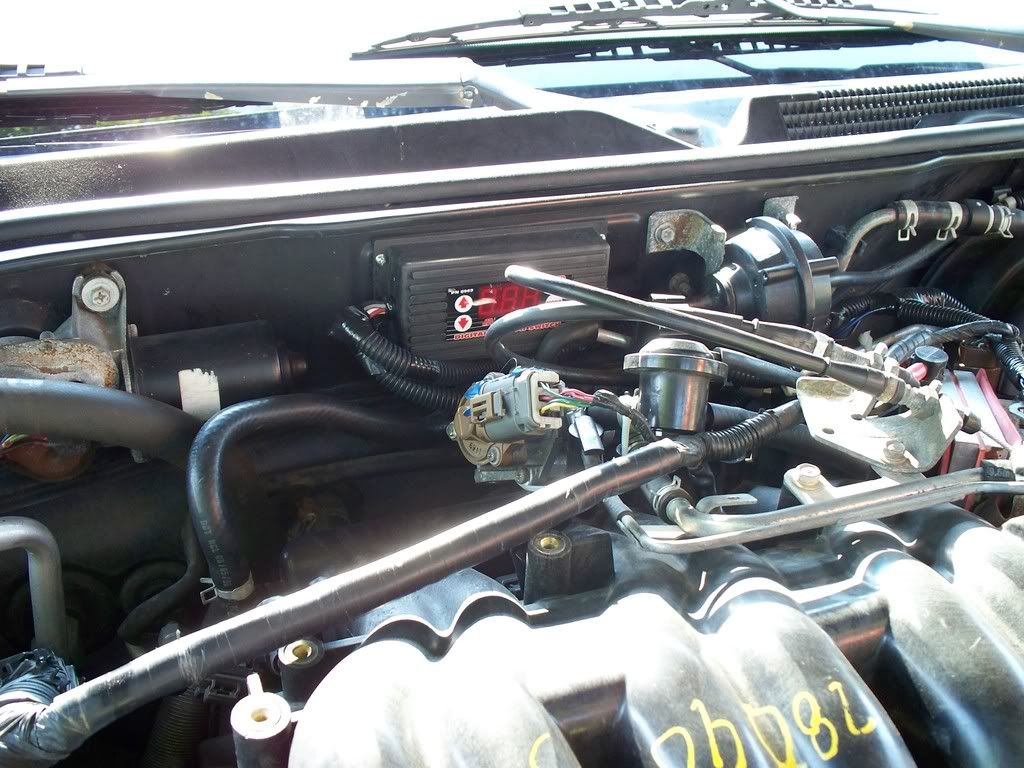
NOS kit #5124 is a universal kit that works great on the Nissan Maxima. You can use it in a basic 50 shot (.032 jet) without the addition of gauges or a fuel pump. The NOS jet connects to your intake plumbing and your fuel pressure regulator, to boost your power and raise your fuel pressure.
NOS is not combustible per se, it lowers your intake temp and adds more parts oxygen to the process, which increases your power. It can be used with either an auto or 5 speed, though I recommend getting a tranny cooler and vb mod for the auto, and a new clutch depending on what shot you use for the 5 speed. You can run a 50-60 shot without adding much else, though once you go over that, I would recommend at a minimum, a fuel pressure gauge, EGT, and a new fuel pump. The stock pump can not reliably provide enough fuel pressure over a 70 shot.
NOS is like anything else, abuse it you lose it. It is not on all the time like a supercharger or turbo and can be used safely for many many miles. The only time I have heard of anyone damaging anything was through negligence or running too high a shot of NOS. FYI, the picture of the blown-up maxima, was because he wired his bottle heater wrong, it was on all weekend, and he added an extra disc to his relief valve. NOS is inherently safe, it’s the users that get dangerous. The fastest times I’ve seen posted so far are 12.6 and 12.8, 5 speed and auto, with 120-125 shots I believe, but this was with other extensive mods and experience.
Right now I am running:
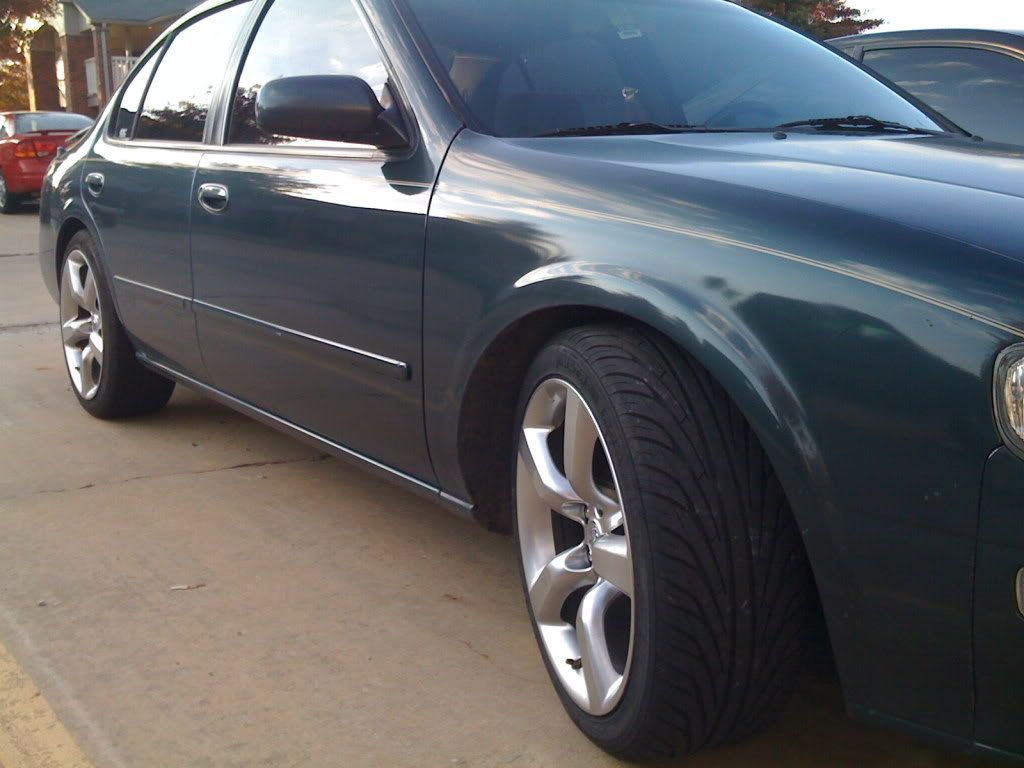
1997 GXE
4-Sped Automatic Transmission
Warpspeed Y-Pipe
Place Racing CAI
Stillen Exhaust
Transgo VB mod
Tranny cooler
Walbro 255lph High flow fuel pump
NOS
.042 jet
Step colder NGK platinum plugs
Autometer gauges
Best Track Times:
Auto: 15.3 @ 91 MPH
Auto w/NOS 13.9 @ 101 MPH
5spd NA 15.2 @ 92 MPH
I hope this provides you all with some info. Good luck to all!